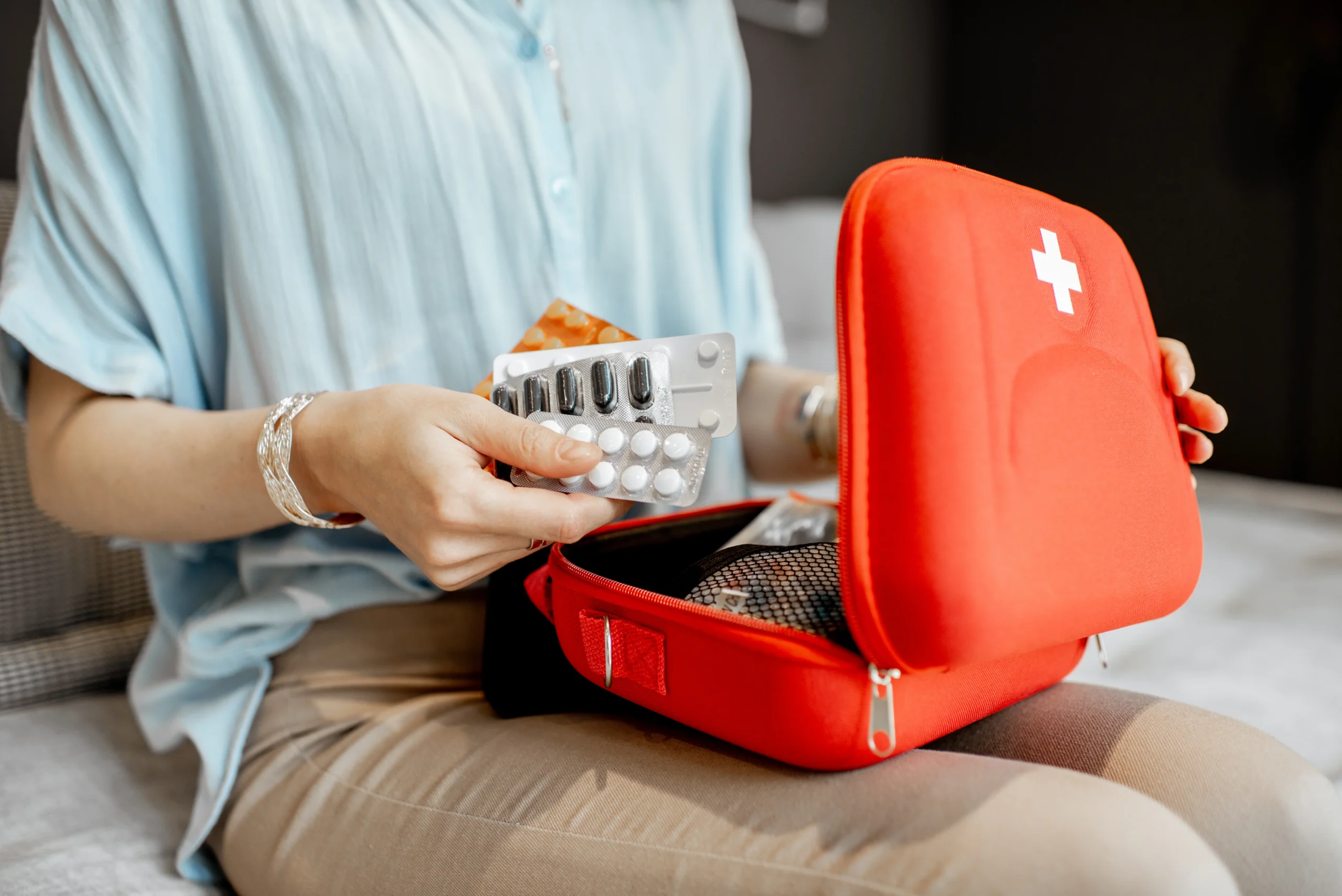
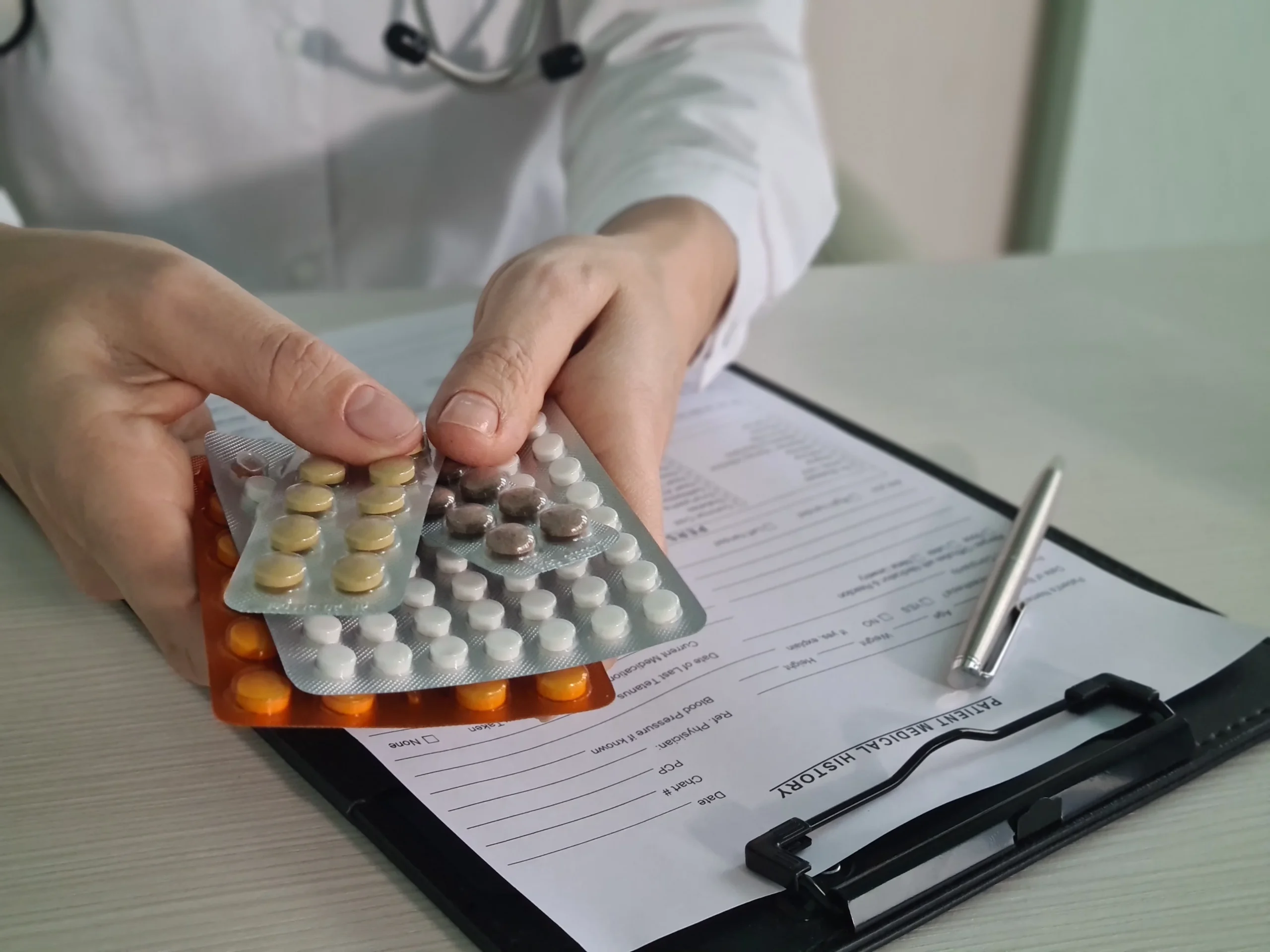
A wildfire evacuation can separate a household from its usual pharmacy, prescriber, power source, and internet connection. Before warnings reach your area, organize a portable medication supply, a printed medication list, and the contact information needed to keep care coordinated.
California wildfire evacuations can happen with little notice. Medication planning works best before smoke, road closures, power outages, or an evacuation order make the usual pharmacy routine harder to use.
The goal is not to stockpile medication. It is to keep a reasonable portable supply, accurate prescription information, needed medical supplies, and clear contact details together so a caregiver can explain the medication plan if the household has to leave quickly.
Quick Answer
CDC wildfire guidance recommends keeping a 7–10 day supply of prescription medicines in a waterproof, child-resistant container for evacuation. CDPH advises Californians to include medications, copies of prescriptions, and medical supplies in an emergency kit. Keep a printed medication list with drug names, strengths, directions, allergies, prescriber and pharmacy contacts, and special storage needs. Refill timing still depends on the prescription, insurer, medication type, prescriber, and applicable law.
Why Medication Planning Belongs on the June Wildfire Checklist
CDPH tells Californians to be ready to evacuate on short notice when wildfire threatens and to keep an emergency kit with medications, copies of prescriptions, and medical supplies. That means medication readiness should be completed before an evacuation order, not while a household is already packing.
A caregiver may have to coordinate several prescriptions, devices, refrigeration needs, refill dates, and prescriber contacts for one person. A short written plan reduces the number of details that must be reconstructed after leaving home.
Prepare before smoke arrives
Use a calm day to check medication quantities, labels, expiration dates, and contact information.
Keep the kit portable
Medication and records should be easy to take without repacking the whole medicine cabinet.
Follow evacuation orders
Medication preparation should support a fast departure, never delay one.
Build a Seven-Day Medication Supply Without Guessing About Refills
CDC recommends a 7–10 day supply of prescription medicines for wildfire preparedness. For this checklist, seven days is the minimum planning target, with extra days considered when the prescription, insurer, prescriber, and dispensing rules allow it.
Do not create that supply by skipping doses now, spacing doses farther apart, combining old prescriptions, or changing the prescribed schedule. If the current quantity will not cover the planned emergency supply, ask the pharmacy what refill date is on file and what options can be checked.
Before Fire Conditions Worsen
Check Refill Dates While Normal Pharmacy Access Is Available
Las Palmas Pharmacy can clarify refill status, remaining refills, transfer questions, pickup timing, and pharmacy records. Clinical treatment changes remain with the prescriber.
Keep a Printed Medication List With the Evacuation Kit
A phone-based list is useful, but a printed copy still works if a phone is lost, the battery is depleted, or internet access is unreliable. CDC emergency-preparedness materials recommend keeping an up-to-date medication list with dose information, generic equivalents, medical-supply needs, and known allergies.
The list should describe what the person is currently using, not every medicine ever prescribed. If a medication was stopped or replaced and the status is uncertain, confirm the current plan with the prescriber or pharmacy before revising the record.
Medication name, strength, dosage form, and the directions shown on the current prescription label.
Prescriber name and contact information for medications that may require a new order or clinical decision.
Usual pharmacy name, phone number, and any second pharmacy used for specialty or mail-order prescriptions.
Known medication allergies and important medical-supply needs, such as testing supplies or injection equipment.
Products requiring refrigeration or another labeled storage condition, plus the handling instructions you have been given.
Insurance information and caregiver contact details in case another pharmacy or care team needs to verify records.
Plan for Refrigeration, Heat Exposure, and Medical Equipment Before Power Fails
Some medications and supplies need temperature control or powered equipment. The correct storage range is product-specific, so the emergency plan should come from the prescription label, manufacturer information, pharmacist, or treating clinician rather than a household rule such as “put everything in a cooler.”
CDPH includes medical supplies in wildfire emergency kits. If a medication normally requires refrigeration, ask in advance what container, cooling method, travel time, and temperature limits apply. Keep the original packaging available when possible because it may contain storage and identification information.
- Identify temperature-sensitive items.
Mark which medications or supplies have special labeled storage requirements before wildfire conditions begin.
- Write down the storage instructions.
Keep product-specific directions with the printed medication list so another caregiver can follow them.
- Prepare transport supplies.
Use the storage container or cooling method recommended for that product; do not place medicine directly against ice unless instructed.
- Know who to call after a temperature problem.
If storage conditions are exceeded, keep the medication and packaging and ask the pharmacy for product-specific guidance.
Check Refill, Transfer, and Controlled-Medication Questions Before Evacuation
A printed list helps another pharmacy understand the medication record, but it does not function as a prescription and does not guarantee that every medication can be transferred or refilled somewhere else. Controlled medications and certain other prescriptions can have additional federal, state, prescriber, insurer, or dispensing requirements.
Before wildfire warnings intensify, caregivers can ask which prescriptions have refills remaining, which will soon need a new order, which products have special ordering lead times, and which prescriptions may have transfer restrictions.
Confirm what the pharmacy record actually shows rather than estimating from the bottle.
Identify medications that will require prescriber action before the current order runs out.
Ask early about controlled medications, specialty products, refrigeration, or limited stock.
Never ration a medication or alter its dose to make the supply last longer. If access becomes difficult during an evacuation, contact the pharmacy, prescriber, insurer, or emergency health resource appropriate to the situation.
When an Evacuation Order Comes, Take the Prepared Medication Kit and Leave
CDPH states that people should evacuate immediately when ordered. The purpose of advance medication planning is to make that departure faster: the prescriptions, records, supplies, and essential contacts are already together.
Before leaving, take the prepared medication container, printed list, prescription information, medical supplies, insurance information, and any product-specific storage equipment that is ready to go. Do not remain in a threatened area to finish sorting medications or wait for a routine pharmacy response.
- Take the current prescription supply and essential medical supplies already prepared for transport.
- Carry the printed medication list, pharmacy and prescriber contacts, allergy information, and insurance details.
- Keep medications in labeled containers when practical so another pharmacist or clinician can identify them.
- Protect medication and paper records from water, ash, excessive heat, and direct sunlight during transport.
- If a medication is lost, damaged, overheated, or left behind, contact a pharmacy or prescriber rather than improvising a replacement or dose plan.
For an immediate medical emergency, call 911. If local authorities issue an evacuation order, follow it promptly.
Frequently Asked Questions
Why does this checklist use a seven-day medication supply?
CDC wildfire guidance recommends storing a 7–10 day supply of prescription medicines for evacuation. Seven days is used here as the minimum planning target. Whether an additional refill can be dispensed depends on the prescription, refill date, insurer, medication type, prescriber authorization, applicable law, and pharmacy stock.
Should I keep the medication list on my phone or print it?
Keep both when possible. A digital copy is easy to update, while a printed copy remains available if the phone is lost, the battery is depleted, or service is unavailable. Keep the paper copy protected with the evacuation kit.
What belongs on a caregiver medication list?
Include current medication names, strengths, dosage forms, label directions, prescriber and pharmacy contacts, known medication allergies, medical-supply needs, and special storage requirements. Keep the list current and remove outdated entries only after their status is clear.
Can I refill every prescription early because wildfire season has started?
No. Early refill availability varies. Insurance limits, controlled-medication rules, refill timing, prescriber authorization, pharmacy stock, and other requirements may apply. Ask the pharmacy to review each prescription rather than assuming an emergency supply can be filled automatically.
What should I do with a refrigerated medicine during evacuation?
Follow that product’s labeled storage instructions and any directions provided by the pharmacist, manufacturer, or clinician. Ask before an emergency what transport method is appropriate. If the medicine is exposed to temperatures outside its recommended range, keep it and the packaging available and contact the pharmacy for product-specific guidance.
Should I delay evacuation if I cannot find all of the medications?
No. CDPH says to evacuate immediately when ordered. Take the prepared medication kit if it is readily available, but do not remain in danger to finish packing. After reaching a safe location, contact the pharmacy, prescriber, insurer, or emergency health resource if medication access needs to be restored.
Prepare the Medication Kit Before Wildfire Conditions Become Urgent
Las Palmas Pharmacy can help clarify prescription labels, refill status, pharmacy records, transfer questions, storage instructions, and information for a caregiver medication list. For treatment changes or a new prescription, contact the clinician managing the medication.