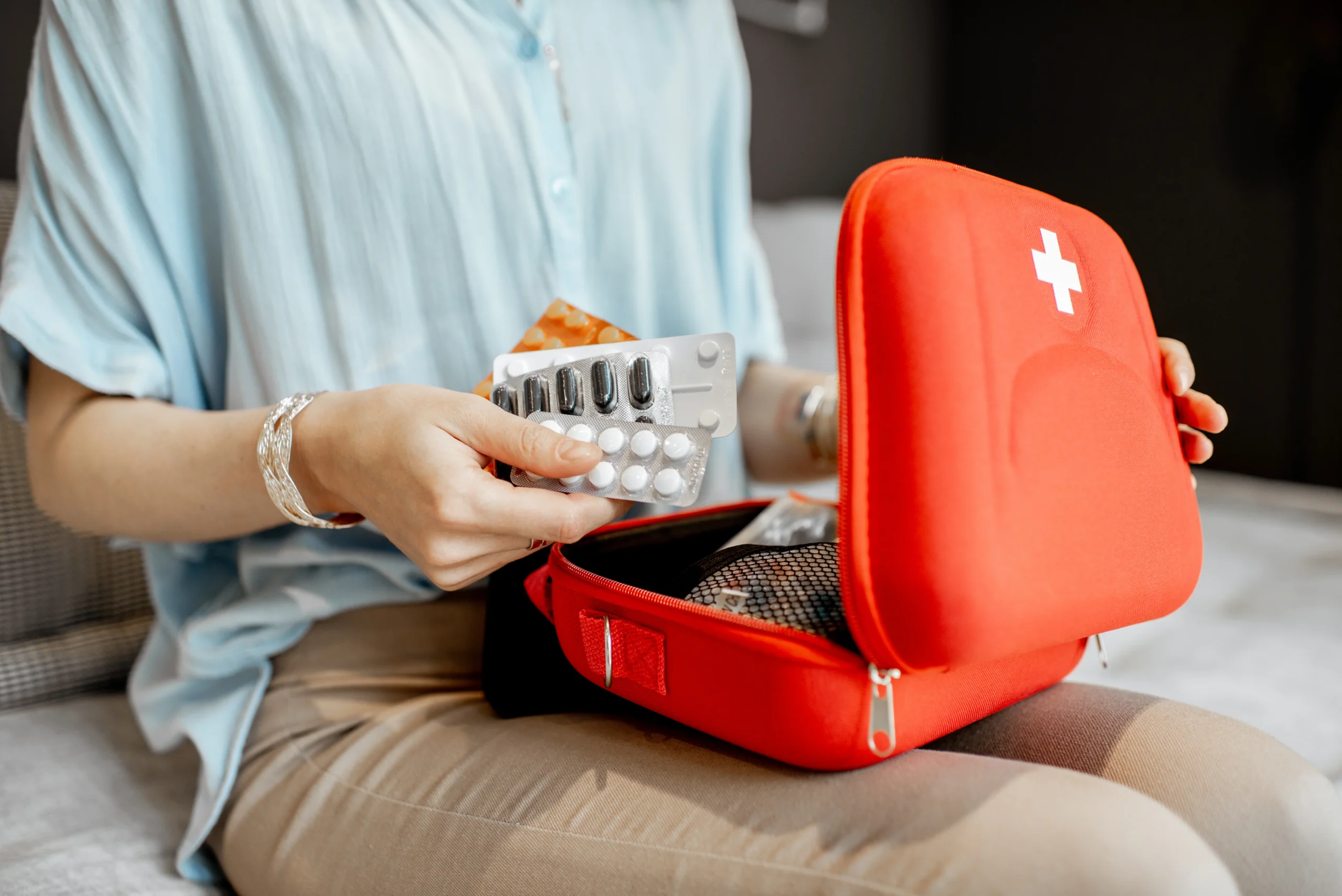

Extreme heat can make an older adult’s medication routine harder to manage. California caregivers can use a short set of questions to confirm heat-related medication concerns, fluid instructions, storage needs, refills, and the right contacts before a difficult hot spell begins.
A caregiver does not need to redesign an older adult’s treatment plan when temperatures rise. The more useful job is to make sure the existing plan is understandable, current, and practical during extreme heat.
California Department of Public Health guidance identifies older adults as a group that needs extra heat planning. Age-related changes, chronic medical conditions, and some commonly used medicines can affect sweating, thirst, blood pressure, hydration, alertness, or the body’s ability to regulate temperature. CDC guidance adds an important boundary: heat-related medication decisions should be individualized, and patients should not abruptly stop medicines without a clinician-directed plan.
Quick Answer
Before a period of extreme heat, caregivers can ask five practical questions: Which medicines may require extra heat planning? Are there clinician-directed fluid or sodium restrictions? Which products have specific temperature or refrigeration requirements? Are refills, pharmacy contacts, and power-outage plans current? What symptoms mean the person needs medical evaluation or emergency care? Keep the answers with the medication list. Do not independently skip, reduce, double, delay, restart, or reschedule prescribed medicine because the weather is hot.
Why These Medication Questions Matter in California in June
June is a practical checkpoint because summer heat can arrive before a household has tested its medication routine under stressful conditions. A caregiver may discover that a prescription label is hard to read, a refrigerated medicine has no outage plan, a refill is due during a trip, or the older adult has clinician-directed fluid restrictions that make generic hydration advice inappropriate.
CDPH notes that older adults may not adjust as quickly to sudden temperature changes. Its heat guidance also lists medication groups commonly used by older adults that can increase heat-related risk, including diuretics, beta blockers, antidepressants, antipsychotics, and anticholinergic medicines. These examples are a reason to ask questions, not a reason to change a treatment plan without the prescriber.
Use one current list
Include prescription medicines, OTC products, and regularly used supplements so the review is not split across several records.
Write down existing instructions
Record fluid limits, storage directions, and prior hot-weather instructions exactly as the clinician or label provides them.
Identify the right caller
Know which questions belong with the pharmacy and which need the clinician managing the older adult’s treatment.
Ask: Which Current Medicines Need Extra Heat Planning?
The caregiver’s first task is not to decide which drug is “safe” or “unsafe” in the heat. Ask the prescribing clinician to review the current medication list and identify any medicines or combinations that could affect thermoregulation, sweating, thirst, blood pressure, alertness, kidney function, or fluid balance.
CDC’s September 2025 clinician guidance discusses several medication groups that can interact with heat, including diuretics, anticholinergic agents, some psychotropic medicines, beta blockers, ACE inhibitors, ARBs, and some OTC products. The effect depends on the exact drug, dose, other medicines, health conditions, and the person’s usual response. That is why a list of drug classes cannot replace an individualized review.
Before the Clinician Review
Make Sure the Medication Names and Strengths Are Accurate
Las Palmas Pharmacy can help clarify prescription names, strengths, label directions, refill status, and the pharmacy record so the caregiver brings accurate information to the clinical discussion.
Ask: What Fluid and Sodium Instructions Apply During Hot Weather?
“Drink more water” is not a complete medication plan for every older adult. Some people have heart, kidney, endocrine, or other conditions that come with clinician-directed fluid or sodium instructions. Caregivers should know whether those instructions change during extreme heat and who has authority to change them.
CDC tells clinicians to consider fluid restrictions as part of hot-weather medication planning, especially when medicines can affect dehydration or electrolytes. This is a clinical decision. A caregiver should not cancel a fluid restriction, add electrolyte products, or change sodium intake based only on general heat advice.
Does this person have a written fluid or sodium restriction from a clinician?
Has the treating clinician explained what to do with that restriction on very hot days?
Are there symptoms—such as dizziness, weakness, fainting, or confusion—that should trigger a call for medical advice?
Who should the caregiver call first if the older adult cannot follow the usual fluid or medication plan?
Ask: How Should Each Medicine Be Stored During Extreme Heat?
Hot cars, direct sun, warm delivery areas, and power outages can create medication-storage problems. CDC advises clinicians to discuss storage and warns against leaving medicines in places that become excessively hot. It also recommends a power-outage plan for medicines that need refrigeration and medical devices that depend on electricity.
Storage requirements are product-specific. Do not move every medicine into the refrigerator because the weather is hot. Follow the label and manufacturer instructions. If a product may have been exposed to temperatures outside its labeled range, keep the medicine and packaging available and ask the pharmacy about the exact product and exposure rather than guessing that it is usable or unusable.
- Read the label before heat arrives.
Identify products with refrigeration, room-temperature, light-protection, or other specific storage directions.
- Decide where medicine will travel.
Avoid leaving medication in a parked vehicle or another location that can become much hotter than the surrounding air.
- Make an outage contact plan.
For refrigerated medicines or electricity-dependent devices, know who to call if power is interrupted.
- Verify questionable exposure.
Share the product name, storage instructions, approximate temperature conditions, and length of exposure with the pharmacist.
Ask: Are Refills, Pharmacy Records, and Care Contacts Ready?
Heat emergencies can make ordinary errands difficult. Before a forecasted hot period, confirm what medicines are actually due, how many refills remain, which pharmacy holds the current prescription record, and which prescriber manages each treatment question.
Do not assume that an early refill will automatically be covered or permitted. Insurance rules, controlled-medication requirements, prescription status, prescriber authorization, and dispensing rules can affect timing. The useful step is to identify a potential gap early enough to ask the pharmacy what information is needed.
Check which prescriptions are due during a heat event, trip, or period when transportation may be difficult.
Know When the Question Is No Longer a Routine Pharmacy Question
Caregivers should know the difference between a label or refill question and a possible heat-related medical emergency. CDC lists headache, nausea, dizziness, weakness, thirst, heavy sweating, raised body temperature, and reduced urine output among signs associated with heat exhaustion. New symptoms deserve appropriate medical attention, especially in an older adult with chronic illness or multiple medicines.
Heat stroke is an emergency. CDC lists confusion or altered mental status, loss of consciousness, seizures, and very high body temperature among warning signs. Call 911 when heat stroke is suspected. Do not delay emergency care while trying to resolve a routine medication question.
A Six-Question Caregiver Heat Check
Keep these questions with the medication list so another family member or caregiver can use the same plan.
Which current prescriptions or OTC medicines has the clinician flagged for extra attention during extreme heat?
What are the older adult’s current clinician-directed fluid and sodium instructions?
Which medicines have specific storage, refrigeration, or light-protection requirements?
What is the plan if power fails or a temperature-sensitive medicine is exposed to heat?
Are refill dates, pharmacy contact information, and prescriber contacts current?
Which symptoms require a clinician call, urgent evaluation, or 911?
Frequently Asked Questions
Can a caregiver decide to skip a medicine because the weather is extremely hot?
No. CDC advises against abruptly stopping medicines without a plan. If heat creates a concern about a prescription, contact the clinician managing that medicine for individualized instructions.
Which medicines are commonly mentioned in heat guidance for older adults?
CDPH and CDC discuss groups such as diuretics, beta blockers, anticholinergic medicines, some antidepressants and antipsychotics, and other medicines that may affect fluid balance, sweating, blood pressure, alertness, or temperature regulation. The exact risk depends on the person and medication regimen.
Should every older adult drink extra water during a heat wave?
Not necessarily. Some people have clinician-directed fluid or sodium restrictions. Caregivers should follow the person’s established instructions and ask the treating clinician how those instructions apply during extreme heat.
Can Las Palmas Pharmacy help with medication storage questions?
Yes. The pharmacy can clarify labeled storage directions and discuss what information is needed if a medicine may have been exposed to heat. Product-specific next steps depend on the medicine and exposure conditions.
Can the pharmacy guarantee an early refill before a heat emergency?
No. Refill timing can depend on the prescription, remaining refills, insurance rules, controlled-medication requirements, prescriber authorization, and other dispensing rules. Contact the pharmacy early if you see a possible access problem.
When is a heat-related problem an emergency?
CDC treats heat stroke as a medical emergency. Confusion or altered mental status, loss of consciousness, seizures, or very high body temperature are warning signs. Call 911 if heat stroke is suspected.
Write Down the Answers Before the Next Extreme-Heat Day
Las Palmas Pharmacy can help caregivers check prescription labels, storage directions, refill status, and pharmacy records. For medication changes, fluid instructions, new symptoms, or an individualized heat plan, contact the clinician managing the older adult’s care.