
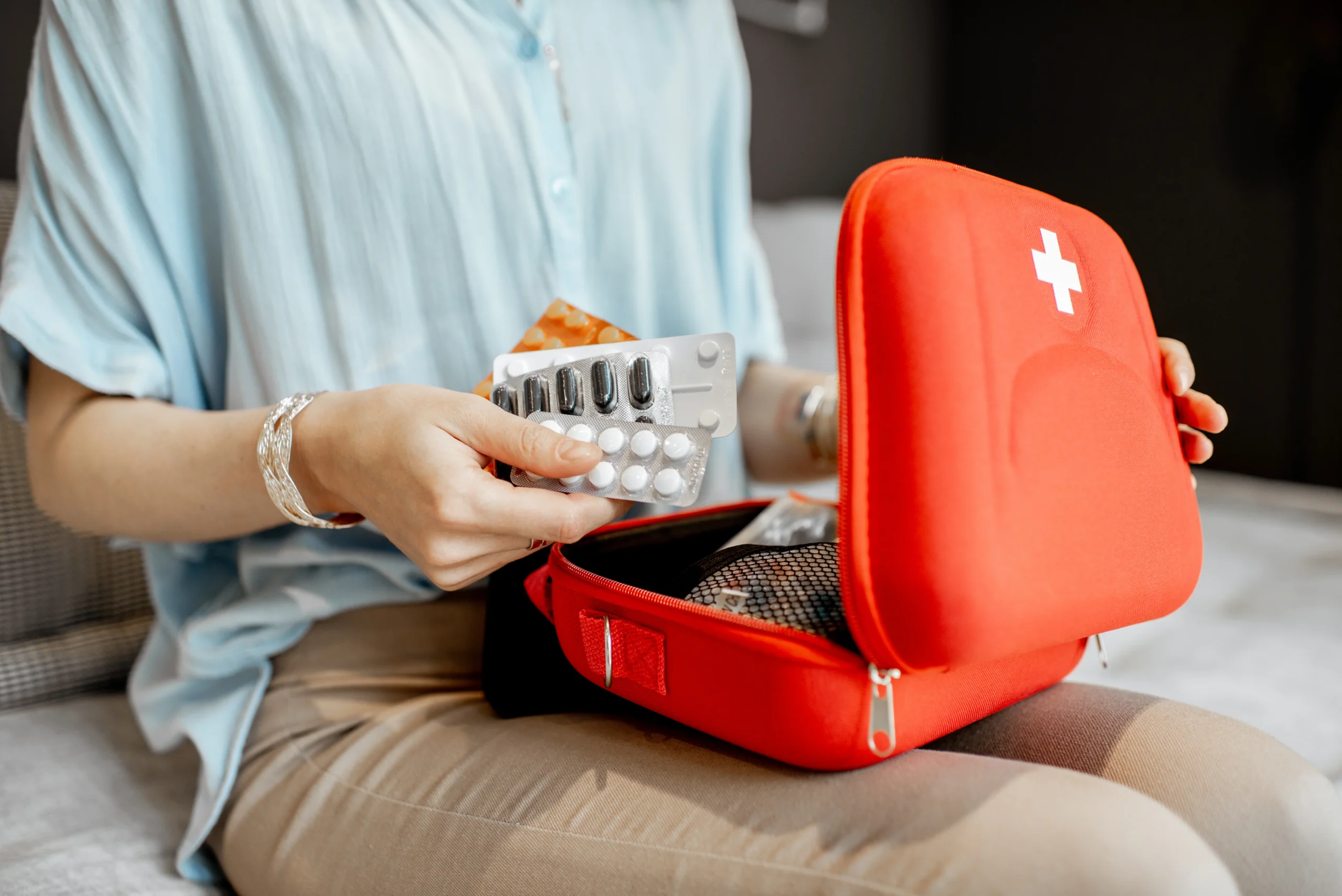
A holiday trip can fail at three points: the refill was not ready before departure, the medicine was packed in a way that made access or storage difficult, or the caregiver could not produce the prescription information when plans changed. A short pre-trip check can address all three.
Labor Day travel is short enough that caregivers sometimes treat prescription planning as an afterthought. The problem is that a three- or four-day trip can still overlap with a refill date, a holiday pharmacy closure, a delayed return, a lost bag or a change in the care recipient’s condition.
For a caregiver, the useful approach is not simply “bring the pill bottles.” Review the refill first, pack medicines for access and storage, and carry enough prescription information to answer questions if another pharmacy or healthcare professional becomes involved.
Quick Answer
Several days before Labor Day travel, compare the care recipient’s current supply with the prescribed directions and trip length, confirm which prescriptions still have refills, and ask the pharmacy about any fill that may fall during the trip. Pack current medicines so they remain accessible and within their labeled storage conditions. Keep a medication record with the exact drug name, strength, dosage form, directions, prescriber and pharmacy, plus insurance information and emergency contacts. If flying, TSA permits medications through screening and allows medically necessary liquids above the standard liquid limit with separate screening. Do not stretch doses, skip doses or change the schedule to make the supply last longer.
Check the Refill Before Labor Day Weekend Starts
A travel refill problem is easier to solve on a weekday before departure than after the regular pharmacy, prescriber office or insurer is closed for the holiday.
- Compare the current quantity with the trip
Use the prescribed directions to estimate whether the existing supply covers the travel dates and a reasonable delay in returning home.
- Check authorized refills
Ask the pharmacy whether refills remain and when the next claim is expected to process under the prescription and coverage on file.
- Identify prescriptions that need the prescriber
If no refills remain, a new prescription may be required. Handle that before departure rather than assuming another pharmacy can create new authorization.
- Ask about an early refill instead of assuming
Vacation or early-fill rules can depend on the medication, insurer, refill history, controlled-substance requirements and other claim rules.
Labor Day Does Not Guarantee an Early Fill
Medi-Cal Rx changed its early-refill policy on August 21, 2026 for members age 21 and older, and other plans have their own rules. A travel date by itself does not guarantee payment or early dispensing. Ask the pharmacy what the claim allows for the specific prescription.
Pack for Medication Access, Not Just Luggage Space
A caregiver may need a medicine during the drive, at an airport, at a hotel check-in or before checked luggage is available. Pack according to when the medicine may be needed and how it must be stored.
- Current medicines together
- Keep the care recipient’s active prescriptions in one organized area rather than dividing them across several bags without a reason.
- Labels readable
- Keep enough original pharmacy-label information available to identify the patient, medication, strength and directions.
- Needed doses accessible
- Do not bury a medicine that may be needed during transit at the bottom of luggage that will be inaccessible for hours.
FDA and U.S. Customs guidance for international travel favor original prescription containers or carrying a copy of the prescription or clinician documentation when original containers are not used. For a domestic caregiver trip, readable pharmacy labels are also useful if another pharmacy or healthcare professional needs to identify the medicine accurately.
Do not combine several people’s prescription medicines into one unlabeled container. Do not share medicines between travelers even if the names or strengths appear similar.
Document the Prescriptions Before Leaving Home
FDA travel guidance says patients should carry enough information about their medicines to avoid delays in care when they need medical attention away from home. The important details include the brand and generic name, dosage form, strength and how often the medicine is used.
- What is the exact drug name, strength and dosage form?
- What are the current label directions?
- Which prescriber manages the prescription?
- Which pharmacy currently dispenses it?
- What allergies or medication sensitivities should another clinician know?
- Where are the health-plan card and emergency contacts kept?
FDA also recommends keeping one current medication list that includes prescription medicines, OTC medicines, vitamins and supplements. A secure phone copy plus a printed backup can be useful when the caregiver and care recipient are away from their usual healthcare system.
Protect Temperature-Sensitive Medicines During the Trip
Storage instructions still apply during holiday travel. A medicine that requires refrigeration, protection from excessive heat or another specific condition should be packed according to its actual product labeling.
- Read the storage instructions before departure
Confirm the temperature range or other requirements for the exact medication rather than using a generic travel rule.
- Plan for the hottest part of the trip
Cars, trunks, parked vehicles and outdoor luggage areas can become much hotter than indoor room temperature.
- Do not automatically freeze or ice a product
Some medicines can be damaged by freezing or direct contact with ice. Use the manufacturer or pharmacy instructions for the specific product.
- Record an unexpected temperature exposure
If the medicine becomes too hot or too cold, note the approximate time and conditions and ask the pharmacy or manufacturer what applies to that product.
Appearance Does Not Prove Stability
A medicine can look normal after a temperature excursion. If storage conditions were outside the labeled range, ask about the exact product before deciding to continue using it or replace it.
If the Labor Day Trip Includes a Flight
TSA permits medications in pill, liquid and other medically necessary forms through airport security screening. TSA also recommends placing medicines in carry-on baggage when travelers may need immediate access.
- Solid medication
- Pills and other solid medicines are allowed through security screening, subject to normal screening procedures.
- Medically necessary liquids
- Liquid medicines can exceed the standard 3.4-ounce limit in reasonable quantities, but they should be declared for separate screening.
- Cooling accessories
- TSA permits cooling accessories for medically necessary liquids, with security-screening requirements applying at the checkpoint.
TSA does not require all medications to be in prescription bottles, but it notes that state laws can impose labeling requirements. Keeping readable prescription information with the medicine can also make caregiver handoffs and healthcare questions easier.
If a care recipient uses syringes, pumps, oxygen-related equipment or another medical device, check the current TSA and airline instructions for that specific item before travel day.
If Plans Change Away From Home, Recheck the Prescription Instead of Improvising
A delayed return, lost bag, damaged medication or unexpected extension of the trip can turn a planned supply into an access problem. Use the prescription record to find the right next step.
- Call the current pharmacy
Ask what the pharmacy can see about refills, fill dates, prescription status and possible transfer options.
- Contact the prescriber when authorization is needed
A transfer cannot create a new refill or replace a prescription that requires new prescriber authorization.
- Use the health plan for coverage questions
If the issue is an early-fill, network or claim problem, the plan may need to clarify what is covered away from home.
- Keep the prescribed schedule unchanged unless directed otherwise
Do not stretch, skip, double, split, borrow or substitute medication because the travel plan changed.
If the care recipient develops severe symptoms or a medical emergency while traveling, seek urgent or emergency medical care rather than waiting for a routine refill issue to be resolved.
Frequently Asked Questions
How early should a caregiver check prescriptions before Labor Day travel?
Check several days before departure, preferably while the pharmacy, prescriber office and insurer are open. That gives time to identify a refill, authorization or coverage issue before the holiday weekend.
Does vacation travel automatically qualify a prescription for an early refill?
No. Early-fill rules depend on the prescription, medication, insurer, refill history and other requirements. Medi-Cal Rx also changed its early-refill policy on August 21, 2026 for members age 21 and older. Ask the pharmacy about the specific claim.
Should medications go in carry-on baggage when flying?
TSA recommends keeping medicines in carry-on baggage when immediate access may be needed. Medications are allowed through security screening, with special procedures for medically necessary liquids and some devices.
What prescription information should a caregiver carry?
Carry a current medication list with the medication name, strength, dosage form, current directions, prescriber and pharmacy, plus allergies, emergency contacts and accessible insurance information.
What should I do if a refrigerated medicine gets too warm while traveling?
Record the approximate duration and conditions of the temperature exposure and contact the pharmacy or manufacturer for product-specific guidance. Do not assume appearance alone proves the medicine is still within its storage requirements.
What should a caregiver do if the trip is extended and medication will run out?
Contact the current pharmacy before the supply is exhausted. The pharmacy can review refill and transfer information; the prescriber may be needed for a new prescription, and the insurer may need to address coverage or early-fill questions.
Refill, Pack and Document Before the Holiday Weekend
A Labor Day medication plan works best when the refill is checked before departure, medicines are packed for safe access and the caregiver has enough prescription information to handle a delay, pharmacy question or unexpected healthcare visit away from home.