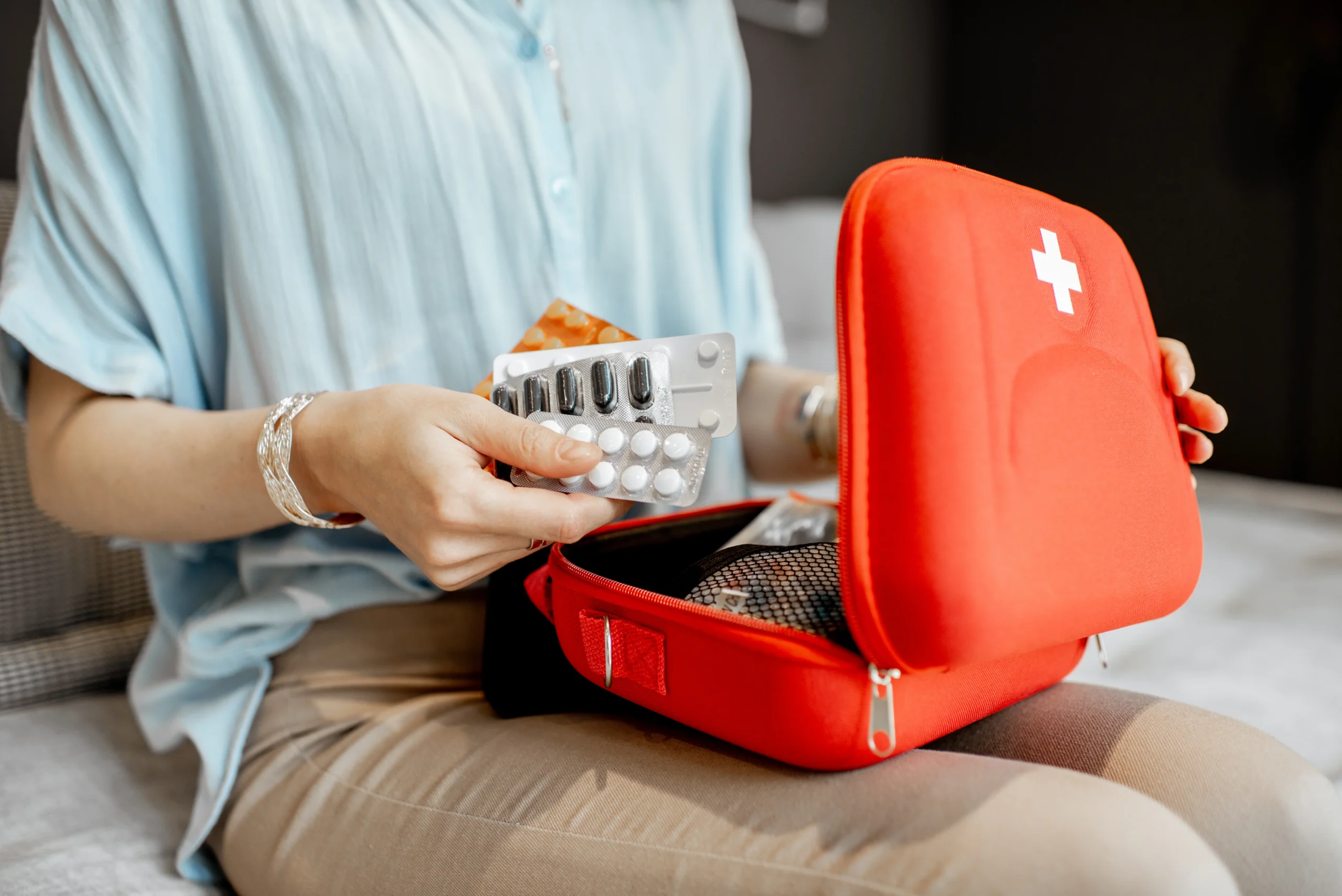

Before a trip, caregivers can reduce last-minute pharmacy problems by checking refill status, updating the medication list, confirming storage needs, and keeping pharmacy and prescriber contacts easy to reach.
Traveling with a person who relies on several prescriptions can turn a routine refill question into a time-sensitive problem. A delayed flight, longer stay, misplaced bag, temperature concern, or refill that is not yet eligible can be harder to sort out when the usual pharmacy, prescriber and insurance information are not close at hand.
A practical travel plan does not require changing the treatment schedule or building an oversized reserve. It starts with an accurate medication list, enough time to check refill status, readable labels, appropriate storage, and clear contact information for the pharmacy and prescribers involved in the person’s care.
Quick Answer
Before traveling with a care recipient, review each prescription against the trip dates. Check the medication name, strength, directions, quantity on hand, remaining refills, next expected fill date, storage requirements, prescriber contact and dispensing pharmacy. Keep an updated medication list with the traveler and keep medicines in their original labeled containers when possible. For air travel, keep medicines accessible rather than relying only on checked baggage, and review TSA rules for medically necessary liquids or cooling supplies. If the trip may require an early refill, transfer or schedule change, contact the pharmacy and prescriber before departure. An early fill is not guaranteed; insurance, legal, prescriber and controlled-medication rules may apply.
Why Travel Creates a Medication Planning Need
A trip changes the setting around a medication routine even when the prescriptions themselves stay exactly the same. The person may be sleeping in a different place, crossing time zones, spending more time outdoors, using different transportation, or relying on another family member for part of the day.
Those changes can expose gaps that are easy to miss at home. The current bottle may not contain enough doses for the entire trip. A refill may be due while away. A refrigerated product may need a transport plan. A caregiver may know the brand name but not the strength or directions. A backup caregiver may not know which prescriber manages a particular medicine.
Trip dates
Compare departure and return dates with the quantity actually on hand.
Refill timing
Check remaining refills and when the next fill may be processed.
Storage
Identify medicines that require refrigeration or other specific handling.
Caregiver handoff
Make sure another responsible person can read the current medication list.
Check Refills Before Leaving — Not at the Gate or Hotel
Start with the prescription label and the pharmacy record. For each medicine, check how much is on hand, whether refills remain, and whether the next fill date falls before, during or shortly after the trip. If the quantity may be short, contact the pharmacy early enough to determine what options actually apply.
A pharmacy can clarify refill status, remaining refills, transfer questions, pickup timing and claim messages. It cannot promise that an insurer will pay for an early fill or that a controlled medication can be dispensed outside applicable rules. A prescriber may need to be involved when a new prescription or treatment decision is required.
- Count the travel days.
Include the departure day, return day and a reasonable allowance for ordinary travel delay when discussing the trip with the care team.
- Check the supply on hand.
Use the actual labeled container and current quantity rather than relying only on memory.
- Review refill status.
Ask the pharmacy about remaining refills, expected processing dates and any insurance message already visible on the claim.
- Identify prescriptions that may need prescriber action.
If no refills remain or a new prescription is required, contact the prescriber before travel rather than assuming the pharmacy can extend the prescription.
- Ask about controlled-medication limits separately.
Legal, plan, prescriber and dispensing requirements may restrict timing, transfer or quantity. The pharmacy cannot override those rules.
Build a Caregiver-Ready Medication List
A travel medication list should be useful to someone other than the person who created it. If another caregiver, urgent-care clinician or pharmacist needs to read it, the list should identify each medicine clearly without requiring access to the medicine cabinet at home.
- Medication name: include both brand and generic name when known.
- Strength and dosage form: record what appears on the prescription label.
- Label directions: copy the current directions exactly rather than rewriting them from memory.
- Prescriber: note which clinician or practice manages the prescription.
- Pharmacy: include the pharmacy name and phone number used for the current prescription.
- Allergies: keep known medication allergies visible on the same record or an attached health card.
- Storage notes: flag refrigeration or other handling instructions that appear on the label or were provided by the pharmacy.
Keep one copy with the care recipient or caregiver and another secure copy that can be reached if a phone is lost or the primary bag is unavailable. Update the list when a prescription is started, discontinued or changed by the prescriber; do not keep an old version circulating after the medication record has changed.
Labels, Packing and Storage During Travel
FDA advises keeping medicines in their original labeled containers whenever possible. Clear labeling can help a caregiver identify the medicine and can be useful during travel screening or when questions arise away from home. For flights, FDA also advises carrying medicines with you rather than placing the entire supply in checked luggage.
TSA permits medications in pill, liquid and other forms through screening. Medically necessary liquids, medications and creams can exceed the usual 3.4-ounce carry-on limit, but they are subject to screening. Cooling accessories for medically necessary items may also be screened under TSA procedures.
Keep labels readable
Do not separate a prescription from the information needed to identify it.
Keep essential medicines accessible
For air travel, avoid placing the only supply in checked baggage.
Protect from heat and moisture
Follow the label and pharmacy instructions instead of leaving medicines in hot vehicles or direct sun
Refrigerate only when directed
Use the temperature range and handling instructions provided for that medicine.
Questions for the Health Plan, Prescriber and Pharmacy
Different parts of the refill problem belong to different organizations. Asking the right party first can reduce delays.
If crossing time zones could affect the dosing schedule, ask the prescriber or pharmacist before the trip. Do not independently move doses closer together, skip a dose, or double a dose to match the new clock.
What to Do if Travel Plans Change
Trips do not always end on the scheduled date. Weather, family needs, transportation problems or illness can extend a stay. The safest response is to contact the pharmacy and care team early rather than waiting until the last dose.
- Recheck the remaining supply.
Use the labeled container to determine what is actually available; do not ration doses to create extra days.
- Call the dispensing pharmacy.
Ask about refill status, remaining refills, transfer options and any visible insurance restrictions.
- Contact the prescriber when required.
A new prescription, authorization or treatment decision may need to come from the clinician managing the medication.
- Contact the health plan for coverage questions.
Ask what network, travel-fill or claim rules apply rather than assuming reimbursement or an early fill will be approved.
- Keep controlled-medication rules separate.
Do not share, ration, change quantities, or alter use to bridge a refill. Applicable legal and dispensing requirements still apply during travel.
If medication is lost or stolen, document what happened and contact the pharmacy, prescriber and insurer as appropriate. Replacement is not guaranteed and may depend on the medication, prescription status, insurance rules and applicable law.
Frequently Asked Questions
How early should I check prescriptions before traveling with a care recipient?
Check before the final days leading up to departure. Review the trip dates, quantity on hand, remaining refills and expected next fill for every prescription. If something may run short, contact the pharmacy and, when needed, the prescriber or health plan before travel.
Can a pharmacy automatically fill a prescription early because we are traveling?
No. Early fills are not automatic. Insurance rules, refill timing, prescription status, prescriber requirements, medication type and applicable law can affect what is allowed. The pharmacy can review the prescription and claim status and explain what additional steps may be needed.
What should be on a caregiver medication list for travel?
Include the medication name, strength, dosage form, current label directions, prescriber, dispensing pharmacy, relevant storage instructions and known medication allergies. Keep the list current and remove outdated instructions after the prescriber changes the regimen.
Should prescription medicines go in checked luggage when flying?
FDA advises carrying medicines with you when flying rather than relying on checked luggage. TSA permits medications through security screening, including medically necessary liquids that exceed the usual carry-on liquid limit, subject to screening procedures.
What if the trip crosses time zones and the medication is taken on a schedule?
Ask the prescriber or pharmacist before departure if the clock change could affect the dosing schedule. Do not move doses closer together, skip doses, or double doses on your own to match local time.
Can a California prescription be taken into another country?
Not always. Other countries may restrict certain medicines, quantities or dosage forms even when the prescription is legal in California. Check the destination’s official rules before travel and ask the prescriber or pharmacist what documentation may be appropriate.
Check Refill Status Before the Suitcase Is Packed
Las Palmas Pharmacy can help clarify prescription labels, refill status, remaining refills, transfer questions, storage, pickup and the pharmacy medication record. Treatment changes remain with the prescriber managing the care recipient’s medication plan.