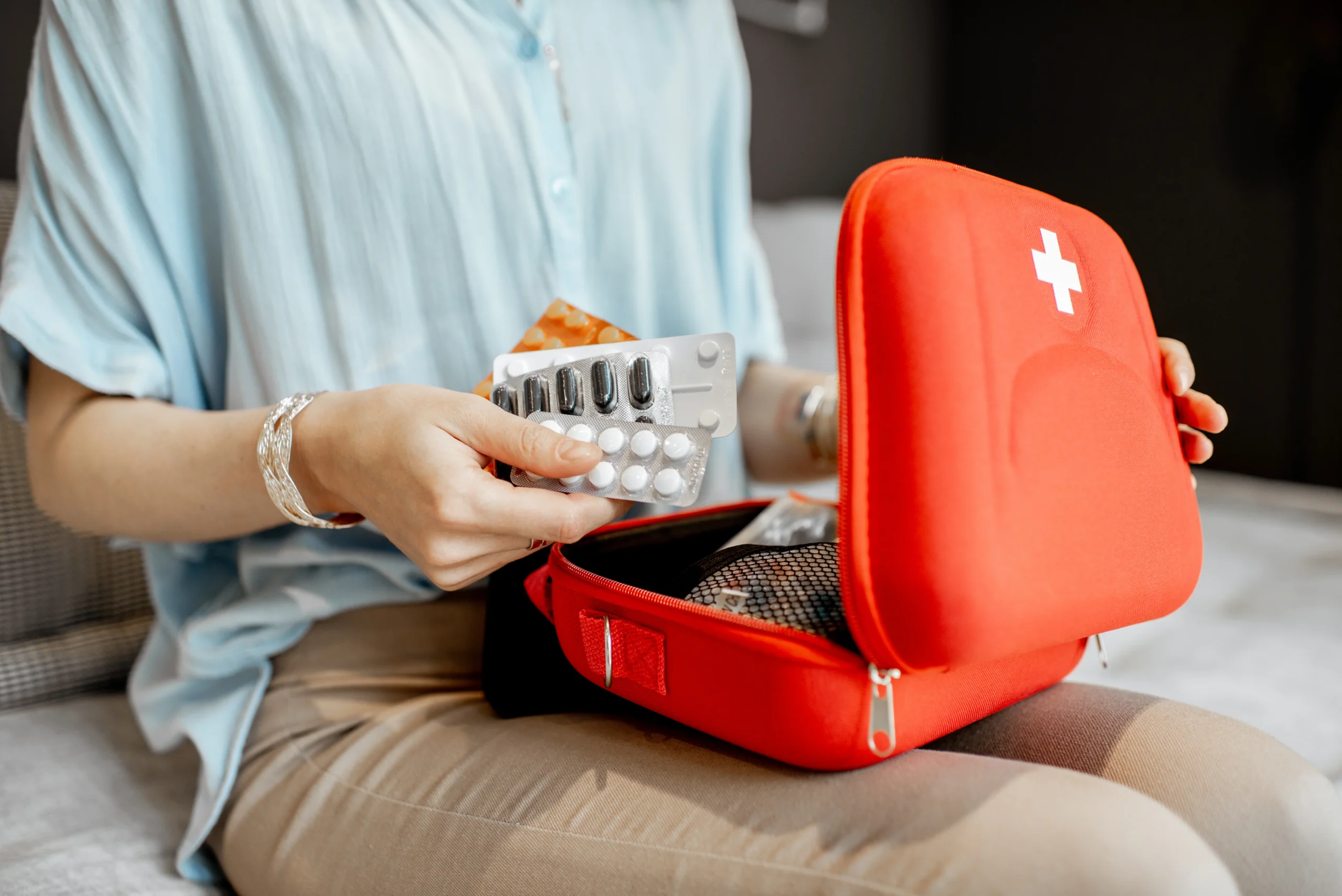

When several prescriptions travel with one person, the safest paperwork is one current record that matches the containers in the bag. Build it before departure so a delay, refill question, lost bag, or urgent visit does not depend on memory.
A summer trip becomes harder to manage when medication information is split across pharmacy apps, old visit summaries, refill texts, pill organizers, and memory. For a traveler taking several prescriptions, one current medication record can connect those pieces before departure and give another pharmacist or clinician a clearer starting point if something changes during the trip.
The record is not a substitute for the original prescription container, the pharmacy dispensing record, or the prescriber’s treatment plan. Its job is simpler: show, in one place, what the traveler is actually using and who can confirm the details.
Quick Answer
Before a summer trip, make one medication record that lists each prescription and other medicine being used, its strength, labeled directions, prescriber, pharmacy contact, allergies, and important storage needs. Compare that record with the current pharmacy labels before packing. CDC advises travelers to take enough medicine for the trip plus extra for delays, keep medicines in original labeled containers, and place them in carry-on belongings. Refill timing, insurance coverage, controlled-medication rules, and international entry requirements can vary, so confirm those details before departure rather than changing a medication schedule or stretching a supply on your own.
One Medication Record Gives the Trip a Single Source of Truth
FDA recommends keeping one medication list that includes prescription medicines, over-the-counter products, vitamins, and supplements. Its consumer guidance says the list should include the name and strength of each medicine, what it is used for, and instructions for when and how much is taken. FDA also recommends keeping a copy available and sharing it with a trusted caregiver or family member.
That approach is especially useful during travel. A hotel room, airport, road trip, family visit, or urgent-care stop may place the traveler away from the pharmacy that usually fills the prescriptions. A current record can help another professional identify what needs to be confirmed without relying on a partial memory of brand names or tablet colors.
Reconcile the Record Against Every Current Label Before Departure
The useful version of a medication record is the one that matches what is actually in the travel bag. A list copied from an old portal can be wrong after a dose change, new prescription, discontinued medicine, manufacturer change, or switch from one dosage form to another.
Set the containers next to the record and check the basic identifiers one by one. If the written record and a pharmacy label do not agree, ask the dispensing pharmacy or prescriber to clarify the difference before travel.
Build the Record Around the Questions Another Professional May Need to Ask
A medication record does not need to be complicated. It needs enough detail to identify the product and explain the current routine accurately. FDA also recommends including allergies and emergency contacts so the list can be useful if the traveler cannot provide all the information personally.
What is the exact medication name, strength and dosage form?
What directions are printed on the current pharmacy label?
Which prescriber is responsible for the current prescription?
Which pharmacy filled it, and what is that pharmacy’s phone number?
Does the medicine need refrigeration, protected storage, a device, needles, batteries, or other supplies?
What allergies, emergency contacts, and insurance information should travel with the record?
Include nonprescription medicines, vitamins, and supplements if they are part of the traveler’s current routine. Keeping them off a separate list reduces the chance that a clinician sees only the prescription portion of the medication picture.
Pack the Medicines So the Containers and the Record Still Tell the Same Story
CDC travel guidance recommends keeping medicines in their original, labeled containers and placing them in carry-on belongings instead of checked luggage. TSA permits medications through security screening and allows medically necessary liquids in amounts above the usual 3.4-ounce limit, with separate screening requirements.
A pill organizer may be useful in some home routines, but it is not a good substitute for having identifiable labeled medication available during travel. For international travel, CDC’s Yellow Book specifically recommends original labeled containers because destination or transit-country officials may need to identify the medicine.
- Keep the primary medication record accessible.
Carry a printed copy or a phone copy that can be shown without opening every bottle first.
- Keep medicines with their identifying labels.
Original pharmacy packaging gives another pharmacist, clinician, TSA officer, or customs official more information than an unlabeled container.
- Separate the record from checked luggage.
If a suitcase is delayed or lost, the traveler should still have the medication information and pharmacy contact details.
- Mark special storage needs before packing.
Ask the pharmacy how the specific product should be protected from heat or kept cold; do not assume every refrigerated medicine can sit directly on ice.
- Check destination rules for international trips.
Some medicines allowed in the United States may be restricted elsewhere, and transit-country rules can matter too.
Check the Supply, Refill Window, and Coverage Before the Travel Date
CDC advises travelers to bring enough medication for the entire trip plus extra in case travel is delayed. That planning should happen early enough to discover a refill-too-soon message, expired prescription, prescriber follow-up requirement, stock problem, mail-order timing issue, or controlled-medication restriction before departure.
An early fill is not guaranteed. Insurance plans, pharmacy law, prescription status, controlled-substance rules, and prescriber authorization can all affect what can be dispensed and when. If the available quantity will not cover the trip, contact the pharmacy and prescriber rather than stretching doses, skipping doses, sharing medication, or creating a different schedule independently.
Before You Leave
Compare the Travel Dates With Every Refill Date
Las Palmas Pharmacy can clarify refill status, prescription expiration, transfer questions, labeled storage instructions, and what information is available in the pharmacy record.
June 2026 also sits just before two California pharmacy-access changes. Effective July 1, nonresident pharmacies serving California must meet new pharmacist-in-charge requirements, and effective July 23 certain Medi-Cal ordering, referring, and prescribing providers must have active Medi-Cal enrollment rather than relying on Medicare enrollment alone. Those rules do not mean every traveler will have a mail-order or claim problem. They are another reason to confirm the dispensing pharmacy, prescriber, refill status, and plan contact information before depending on a refill away from home.
If Travel Plans Change, Use the Record to Rebuild the Medication Story
Flight cancellations, extended stays, lost baggage, family emergencies, or a change in destination can turn a routine trip into a refill question. The single medication record helps organize the conversation, but the next step still depends on the prescription, location, insurance, and pharmacy rules.
Start with the original dispensing pharmacy when possible. Share the traveler’s exact medication name, strength, current directions, remaining supply, destination, travel dates, and any message received from the insurance plan or destination pharmacy. That gives the pharmacy a clearer basis for explaining what can be handled through a refill, transfer, prescriber request, insurance call, or another lawful process.
Frequently Asked Questions
What should be on a travel medication record when I take several prescriptions?
Include each medication’s name, strength, dosage form, current labeled directions, prescriber, dispensing pharmacy and pharmacy phone number. FDA also recommends including nonprescription medicines, vitamins and supplements, plus allergies and emergency contacts. Add a storage or device note when a medicine needs refrigeration, temperature protection, needles, batteries or other supplies.
Should the medication record include over-the-counter medicines and supplements?
Yes. FDA recommends one medication list that includes prescription drugs, OTC products, vitamins and supplements. Keeping those items together gives a pharmacist or clinician a more accurate view of what the traveler is using.
Should I travel with a pill organizer or the original prescription bottles?
For identification and travel questions, keep the original labeled containers available. CDC recommends original labeled containers, and its international travel guidance advises against relying only on a pill organizer because individual medicines may be difficult to identify.
Can I get an early refill just because I am traveling?
Not automatically. Refill timing can depend on the prescription, insurance plan, remaining refills, prescriber authorization, pharmacy law, controlled-medication rules and stock. Contact the pharmacy early so it can explain which part of the refill process needs attention.
What should I do if my trip is extended and I may run out of medicine?
Contact the dispensing pharmacy and prescriber with the exact medication, current label directions, remaining supply, destination and new travel dates. Do not stretch doses, change the schedule, share medication or substitute another product independently to make the supply last longer.
Do California's July 2026 pharmacy rules mean I cannot refill a prescription while traveling?
No. The July 1 nonresident-pharmacy requirements and July 23 Medi-Cal prescriber-enrollment changes do not create a blanket ban on travel refills. They may affect particular pharmacy or claim workflows. If a refill or claim problem occurs, ask the pharmacy or plan for the exact message or reason before assuming the new rules caused it.
Make the Medication Record Before the Suitcase Is Packed
Bring the current labels, travel dates, refill questions, and one medication record together before departure. Las Palmas Pharmacy can help clarify prescription labels, refill status, transfers, storage instructions, pickup, and pharmacy record information.