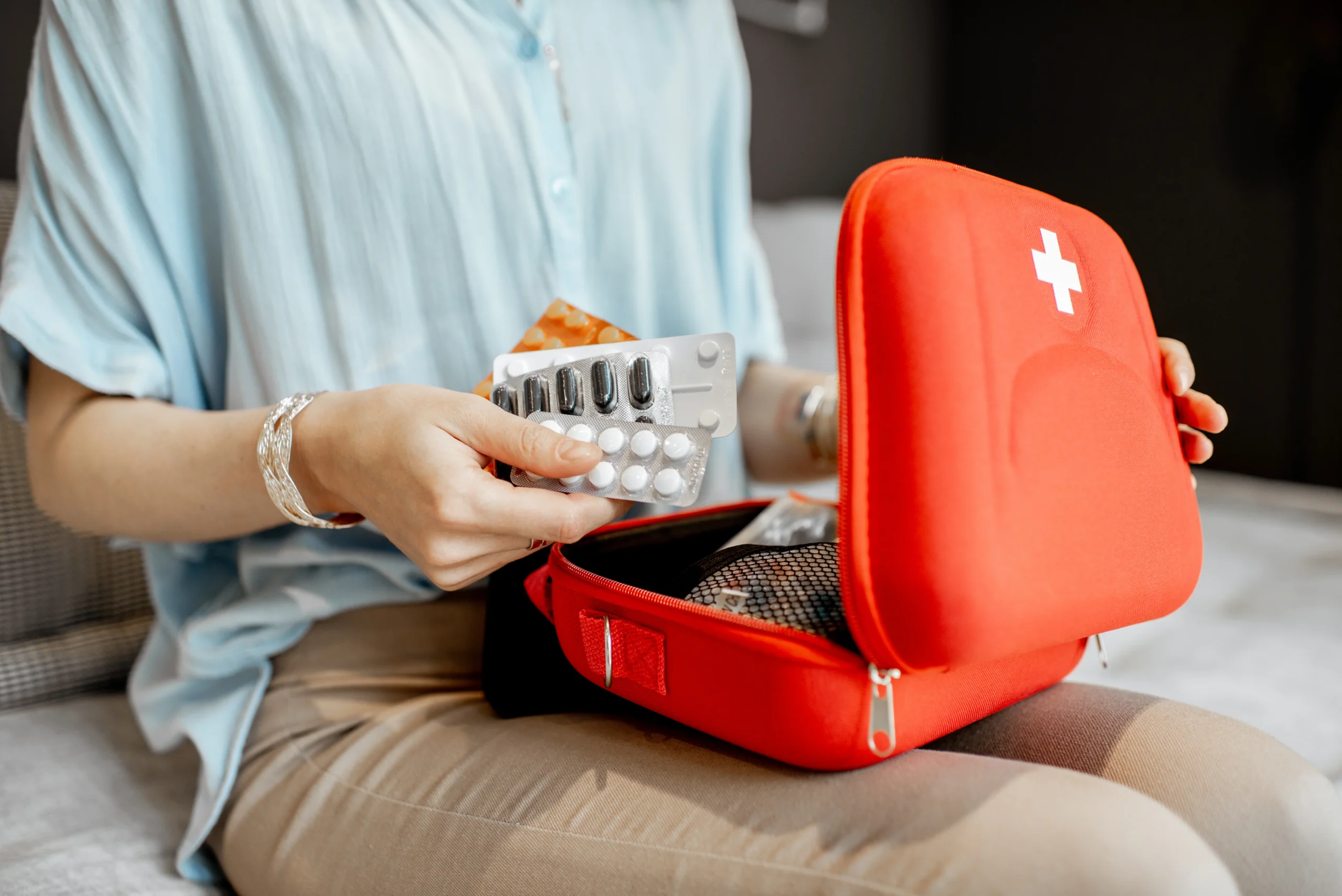

California’s July recall alerts covered multiple prescription drugs, emergency medicines, injections, eye drops, and devices. A caregiver does not need to guess from a drug name alone. A safe household check compares the exact product identifiers in the recall notice with the medicine actually on hand.
A recall headline can sound broader than the actual recall. During July 2026, the California State Board of Pharmacy posted alerts involving products such as divalproex sodium, levothyroxine, cetirizine, a glucagon emergency kit, buspirone, injections, eye drops, and other products. Each alert applied to defined products rather than every medicine with the same general name.
For caregivers, the useful task is not to search the medicine cabinet for a familiar name and panic. It is to conduct a structured household check, keep packaging and pharmacy labels together, and compare the product in hand with the identifiers in the official notice.
Quick Answer
Start with one current medication list, then physically check every place medicines are stored: kitchen or bathroom cabinets, bedside organizers, refrigerator bins, emergency kits, travel bags, caregiver totes, and backup supplies. If a July recall notice names one of the medicines, compare the exact strength, manufacturer or labeler, NDC, lot or batch number, and expiration date when those identifiers are provided. If the label does not show enough information, call the dispensing pharmacy rather than guessing. Follow the recall notice’s product-specific instructions and ask the pharmacist or prescriber before making changes to an ongoing prescription.
July Recall Alerts Show Why a Drug Name Is Only the Starting Point
The Board’s recall page added alerts throughout July. Examples included divalproex sodium on July 6, levothyroxine sodium tablets on July 15, cetirizine hydrochloride tablets on July 17, a glucagon emergency kit on July 27, and buspirone on July 30. Other alerts involved injectable drugs, eye drops, and medical devices.
The details vary by alert. The July 15 levothyroxine notice, for example, listed specific strengths, NDCs, lot numbers, package descriptions, and expiration dates. The July 30 buspirone notice identified a specific NDC, lot number, and expiration date. This is why a caregiver should never decide that an entire drug category is recalled based only on the medicine name.
- Same drug, different product
- Different manufacturers, strengths, package sizes, or lots can have different recall status.
- One notice may cover several lots
- uses the prescriber’s individual identifier when checking enrollment requirements.
- The scope may be limited
- A recall can be issued at the wholesale, retail, user, or consumer level depending on the notice.
Do Not Use the Medicine Name as the Final Match
FDA tells consumers to compare the lot number on their medication with the lot number in the recall notification. Other identifiers in a notice can include product description, strength, manufacturer or labeler, NDC, packaging, and expiration date.
Check Every Medication Location, Not Just the Main Cabinet
Caregiver households often have medication in more than one place. A recall check can miss a backup bottle, travel supply, refrigerated product, or emergency kit if the review stops at the daily pill organizer.
- Daily-use area
- Check the bottles or packages used for routine doses and keep the original labels available.
- Refrigerator
- Review any prescription or emergency medicine stored under refrigerated conditions without moving it outside its labeled storage range unnecessarily.
- Emergency kit
- Check rescue or emergency products, including kits that may stay packed until they are needed.
- Travel and caregiver bags
- Look for duplicate or backup supplies carried between homes or appointments.
- Refill overflow
- Check unopened or partially used containers from prior fills when they are still active supplies.
- Medication organizers
- If tablets have been removed from the original container, use the pharmacy record or labeled source container to identify the product instead of relying on appearance.
If more than one caregiver is involved, record which storage areas were checked and which products still need label confirmation. That reduces the chance that one person checks the main bottle while another overlooked supply remains in a separate location.
Match the Recall Notice in a Fixed Order
A repeatable order makes recall screening easier, especially when several household members use multiple prescriptions. Start broad and narrow the match only when each identifier agrees with the notice.
Enrollment Is the Prescriber's Administrative Responsibility
What a Caregiver Can Gather Before Making Calls
A short, accurate record can keep the same issue from being explained repeatedly to the pharmacy, prescriber, and Medi-Cal Rx. Do not send more personal information than a party needs to address the claim.
- Drug or product name
- Confirm the medicine or device named in the official recall notice.
- Strength and dosage form
- Check whether the recalled strength and form match the product on hand.
- Manufacturer or labeler
- Look for the company named in the notice; this may differ from a familiar brand name.
- NDC or product code
- Use the National Drug Code or other identifier when the notice provides one.
- Lot or batch number
- FDA specifically advises consumers to compare the medication lot with the recalled lot.
- Expiration and package details
- Confirm dates, pack size, or kit components when the notice uses them to define the recall.
A mismatch at one of these defining identifiers may mean the product in the home is outside the recall scope. When the information is hard to read or incomplete, do not make that determination from memory.
If the Household Label Does Not Show a Lot Number, Ask the Dispensing Pharmacy
Some patient prescription labels do not display every manufacturer or lot detail used in a recall notice. That does not mean the product cannot be checked. The dispensing pharmacy may have purchasing, dispensing, manufacturer, or lot-related records that help determine whether the filled prescription is affected.
Keep the prescription bottle, carton, blister pack, syringe box, device package, or emergency-kit packaging until the recall status is resolved. Do not transfer the contents into an unmarked container simply to make the comparison easier.
Bring the Label, Not a Guess
Follow the Recall Instructions Before Changing an Ongoing Prescription
FDA explains that recall actions depend on the recall and its classification. Some notices tell consumers to stop using and return a product; other recalls are managed at a retail or wholesale level and may not require a patient to stop therapy. FDA also notes that, in some situations, stopping a medicine can be more harmful than continuing it until a replacement plan is arranged.
For that reason, do not independently skip doses, double later doses, change the schedule, borrow another person’s medication, substitute a different strength, or discard the only supply before reading the product-specific instructions and contacting the pharmacy or prescriber when needed.
- Read the official recall notice from the Board, FDA, manufacturer, or dispensing pharmacy.
- Confirm that the product identifiers actually match.
- Ask the pharmacy what the notice requires for the affected prescription and whether replacement coordination is needed.
- Contact the prescriber when the recall affects treatment continuity or when clinical instructions are needed.
- If someone has severe symptoms or a medical emergency, seek urgent or emergency care rather than waiting for a recall-status call.
Six Questions Caregivers Can Ask When a Recall Appears
- Does the recalled manufacturer or labeler match the prescription that was dispensed? prescription active and are refills available?
- Can you confirm the NDC and lot or batch number for this fill?
- Does the recall include this exact strength, dosage form, and package?
- What instructions did the recall notice give for affected patients?
- If replacement is needed, what pharmacy or prescriber steps have to happen next?
- Do any other active prescriptions in the household use products from the same recall notice?
Frequently Asked Questions
If my medication name appears on the July recall list, does that mean my bottle is recalled?
No. A recall usually applies to defined products, manufacturers or labelers, strengths, NDCs, lots, batches, packages, or expiration dates. Compare the exact identifiers in the official notice or ask the dispensing pharmacy to help verify them.
What should I look for on a medication recall notice?
Start with the product name and strength, then check the manufacturer or labeler, NDC or product code, lot or batch number, expiration date, package description, recall level, and the instructions provided for affected products.
What if my prescription bottle does not list the lot number?
Contact the dispensing pharmacy. Pharmacies may have records that can help identify the manufacturer, NDC, lot, or other dispensing details associated with the prescription. Keep the labeled container and packaging available while the question is checked.
Should I stop taking a prescription as soon as I hear about a recall?
Do not use a blanket rule. FDA says recall instructions vary, and stopping some medicines can create its own risk. Follow the specific recall notice and contact the pharmacist or prescriber when you need guidance about an ongoing prescription.
Were there multiple medication recalls posted in California during July 2026?
Yes. The California State Board of Pharmacy posted numerous July alerts involving prescription drugs, emergency medicines, injections, eye drops, and devices. Each alert had its own product scope and identifying details.
Where can California caregivers check current drug recalls?
The California State Board of Pharmacy maintains a recall subscriber-alert page, and FDA maintains drug recall announcements and an enforcement database. The dispensing pharmacy can also help determine whether a specific filled prescription matches a recall notice.
Turn a Recall Headline Into a Product Check
Use one medication list, check every storage location, and compare the exact identifiers before deciding that a prescription is affected. Las Palmas Pharmacy can help patients review label and dispensing details for prescriptions it dispenses and identify the next contact when a recall requires further action.