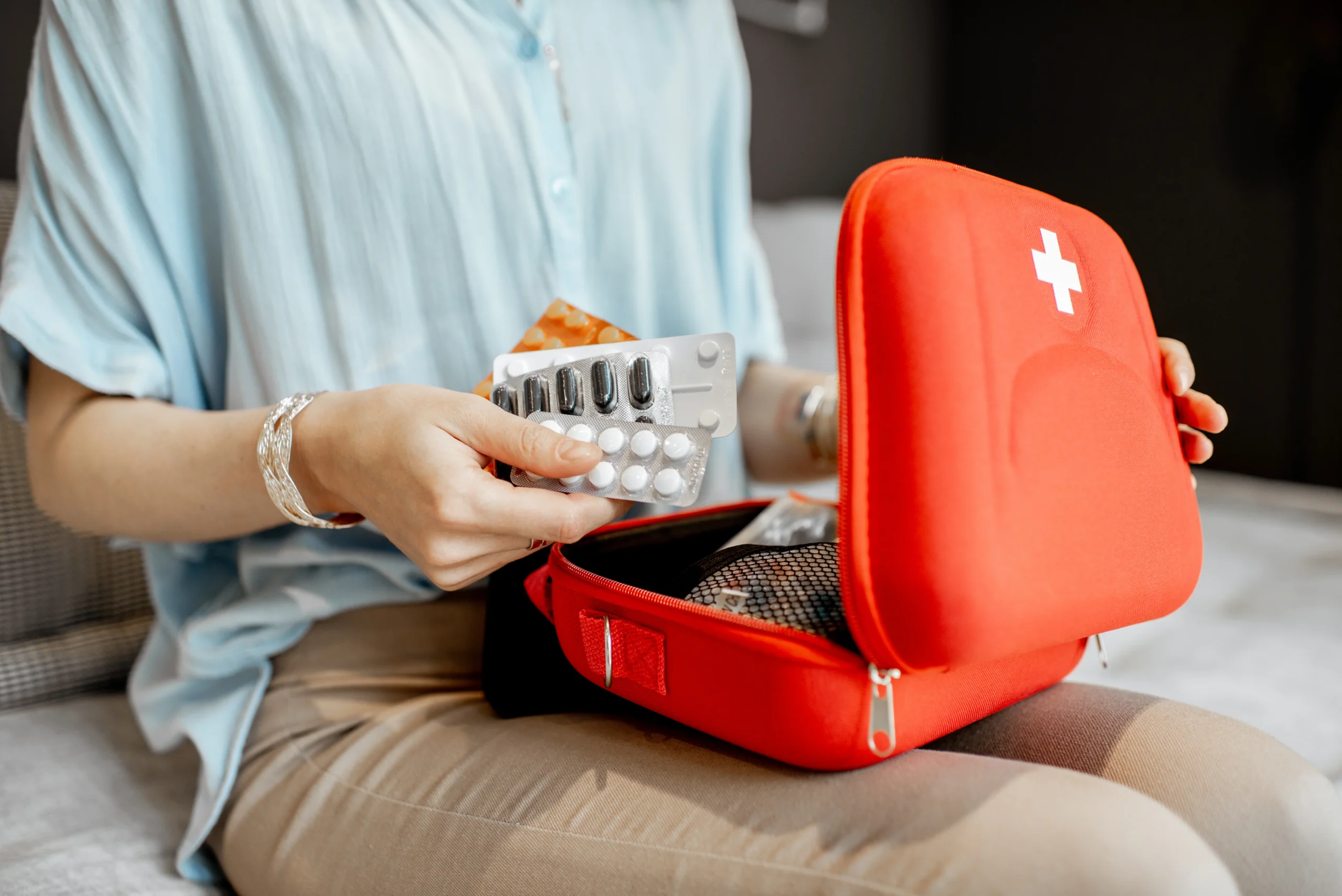

Travel changes meal times, sleep, transportation and access to the usual pharmacy. A written plan helps keep medication timing and storage from depending on memory when the day does not follow its normal routine.
Holiday travel can turn a familiar medication routine into a series of small decisions: Should the morning dose follow home time or destination time? Can the medication stay in a parked car? Is there enough supply if a flight is canceled? These questions are easier to solve before departure, while the prescription label and pharmacy are available.
Quick Answer
Before holiday travel, create a written medication plan with the medication name, strength, usual dose, usual timing, storage requirements, prescriber and pharmacy contact information. Keep medicines in labeled containers and carry essential medicines where they remain accessible during travel. For trips across time zones, do not invent a new dosing schedule: CDC advises travelers to ask their health care provider about changes, and notes that timing may depend on the interval since the last dose rather than simply following the destination clock.
Build a Written Medication Plan Before Packing
A travel plan should be short enough to use quickly. Include each regular medication, the exact strength and dosage form, how much is taken, the usual timing and any important storage instructions. Add the prescriber and pharmacy phone numbers in case a label or refill question comes up.
- Medication details
- Name, strength, dosage form and current directions
- Timing
- Usual dose time or dose interval
- Storage
- Room-temperature, refrigeration or other label instructions
- Supply
- Amount packed and refill status
- Contacts
- Prescriber and pharmacy phone numbers
- Travel note
- Time-zone, flight, driving or destination issue that could affect the routine
Check Supply, Refills and Documentation Before Leaving
CDC advises travelers to bring enough prescription and over-the-counter medicines for the trip and extra for possible travel delays. For international travel, CDC also recommends checking destination laws because some medications that are legal in the United States may be restricted elsewhere.
For domestic travel, insurance refill timing can still matter. If the normal refill date falls while you are away, ask the pharmacy and health plan what options are available before departure. A vacation plan does not automatically override refill or controlled-substance rules.
Count the supply instead of estimating.
Request eligible refills early enough for processing and any prescriber contact.
Keep medicines in original labeled containers when practical, especially for travel documentation.
Carry the current medication list and pharmacy contact information.
Pack essential medicine where it will remain accessible if checked luggage is delayed or lost.
Check destination rules before international travel, especially for controlled or restricted medicines.
Crossing Time Zones Requires Medication-Specific Timing Advice
CDC’s travel guidance says people crossing time zones should ask their health care provider about any change in medication timing and notes that medicines should be taken according to the time since the last dose rather than simply the local clock time. That principle still requires medication-specific judgment.
A once-daily medication, insulin, a seizure medicine, a sedating medicine and a medicine taken with food can raise different timing questions. Write down the agreed schedule before leaving instead of trying to calculate it during a flight or late-night arrival.
Do Not Use a Generic Time-Zone Formula
There is no single safe rule for moving every medication to a new time zone. Ask the pharmacist or prescriber about the specific prescription before changing timing, especially when a missed or closely spaced dose could matter.
Protect Medicines From Heat, Cold and Lost Luggage
CDC advises travelers to check how medicines should be stored and whether refrigeration is required because extreme temperatures can reduce the effectiveness of many products. Follow the prescription label and manufacturer-specific instructions rather than assuming all medicines tolerate the same conditions.
Avoid leaving medicines in a parked vehicle or unmonitored luggage when temperature is a concern. If refrigeration is required, plan the cooler, ice-pack and destination refrigeration arrangement before leaving. Do not place a medicine directly against frozen packs unless the product instructions allow it.
Six Questions to Answer Before Departure
- Do I have enough medication for the trip and a reasonable delay?
- Will a refill be due while I am away?
- Does any medication need refrigeration or protection from temperature extremes?
- How should dosing change if I cross time zones?
- Are any medicines restricted at my international destination or layover?
- Who should I call if the medication is lost, damaged or unavailable during the trip?
Before You Leave
Resolve the easy pharmacy questions while you are still home.
Las Palmas Pharmacy can clarify prescription labels, refill status, storage directions and pharmacy contact information. Ask the prescriber or pharmacist for medication-specific dose-timing guidance when your itinerary changes the usual schedule.
If Travel Plans Change, Keep the Prescription Plan Stable
Delays, missed connections and unexpected overnight stays do not automatically mean the medication schedule should change. Use the written plan, check the time since the last dose, and contact a pharmacist or prescriber when the next dose is uncertain.
If a medicine is lost, stolen, exposed to an unsafe temperature or damaged, avoid substituting a different product or doubling later doses. Contact the dispensing pharmacy and prescriber as appropriate, and involve the health plan if coverage or an out-of-area fill becomes part of the problem.
Frequently Asked Questions
Should I keep prescription medicine in my carry-on bag?
CDC recommends packing medicines in carry-on luggage so they remain accessible if checked baggage is lost or delayed. Keep products in clearly labeled containers and follow airline, security and destination requirements.
How should I change medication times when flying across time zones?
Ask the pharmacist or prescriber about the specific medication before travel. CDC notes that timing may depend on the time since the last dose rather than simply switching to the destination clock, but the right schedule depends on the medicine.
Can I refill a prescription early for vacation?
Possibly, but early fills depend on the prescription, remaining refills, insurance rules and controlled-substance requirements. Contact the pharmacy before departure rather than assuming a vacation automatically allows an early fill.
Can medicines stay in a hot car during a road trip?
Many medicines can be affected by temperature extremes. Follow the product label and pharmacy instructions and avoid leaving medicines in unmonitored vehicles when heat or cold may exceed the recommended storage range.
What should I carry for international travel with medication?
CDC advises keeping medicines in original labeled containers and checking destination and layover-country rules. Some countries may require a prescription or clinician letter, and some U.S. medicines may be restricted abroad.
What if I miss a dose while traveling?
Do not automatically double the next dose. Follow the medication’s instructions and contact a pharmacist or prescriber if the correct next step is unclear, especially for medicines where timing is important.
Write the Medication Plan Before the Trip Starts
A short written schedule removes guesswork when travel changes the day. Contact Las Palmas Pharmacy before departure for refill, label and storage questions, and confirm medication-specific timing changes with the appropriate health professional.