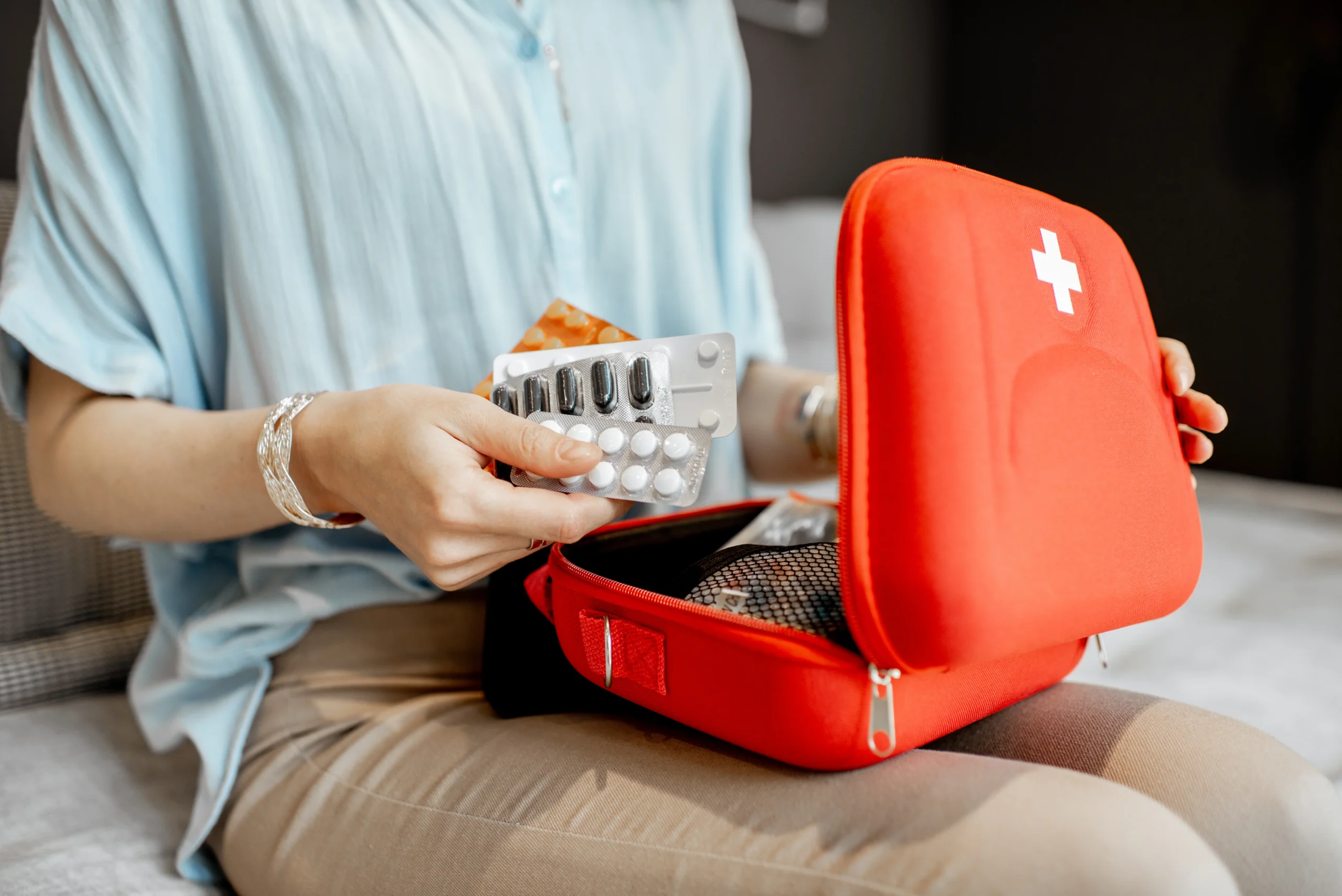

A summer trip is easier to manage when every prescription, refill question, storage note, and pharmacy contact is organized before departure. Build one current medication record and one refill timeline that the caregiver can use from packing day through the return home.
Traveling with a care recipient can involve several prescriptions, more than one prescriber, medical supplies, storage requirements, insurance limits, and a caregiver who needs accurate information away from home. The safest place to start is not a larger packing list. It is one medication record that matches what is currently being used and one refill timeline tied to the actual trip dates.
CDC advises travelers to bring enough medicine for the trip plus extra in case travel is delayed and to keep medicines in original labeled containers in carry-on baggage when flying. Those recommendations work best when the caregiver has already checked which prescriptions are current, how much is on hand, what may be due for refill, and who should be called if plans change.
Quick Answer
Before summer travel, make one current medication list for the care recipient and compare every prescription with the departure date, return date, quantity on hand, and refill status. Keep medicines in original labeled containers when possible and carry them with you during air travel. Ask the pharmacy early about refill or transfer questions because early fills, insurer rules, controlled-medication restrictions, and destination laws vary. Do not ration doses, double doses, change timing, or alter treatment to make a supply last.
Build One Current Medication Record Before You Count What to Pack
A caregiver record should reflect the care recipient’s current treatment, not every bottle that happens to be in the home. Compare the active medication list with prescription labels and recent pharmacy records. If an older bottle, different strength, or discontinued-looking prescription creates uncertainty, ask the pharmacist or prescriber before treating it as part of the travel supply.
For each current medicine, record the name, strength, directions exactly as labeled, prescriber, dispensing pharmacy, and any storage note that matters during travel. Include relevant prescription devices or supplies that must accompany the medicine. Keep important allergy information with the health record if it is already documented for the patient.
- Current prescriptions
- List only medicines that are confirmed as part of the current care plan.
- Who manages each prescription
- Record the prescriber and pharmacy contact so the caregiver knows where a question belongs.
- Storage and supply notes
- Add refrigeration, device, packaging, or other label-based instructions that affect travel preparation.
Create One Refill Timeline That Matches the Entire Trip
Turn the medication list into a planning document by adding the trip dates, quantity on hand, and next refill status for each prescription. The purpose is to spot a likely gap before departure rather than discover it after the household is already away.
CDC recommends taking enough medicine for the full trip plus additional supply for possible delays. That does not mean every prescription can automatically be filled early. Insurance limits, remaining refills, prescriber authorization, medication type, controlled-substance rules, and destination requirements can all affect what is possible.
- What date does the trip begin and what date is the care recipient expected home?
- How much of each current prescription is actually on hand today?
- Will any prescription run low before the return date or during a reasonable delay?
- Does the pharmacy record show refills remaining, or is a new prescription needed?
- Does the plan or insurer have an early-refill or vacation process that must be requested?
- Does any controlled or restricted medicine require extra checking before crossing a state or national border?
Bring the Trip Dates When You Ask About a Refill
Las Palmas Pharmacy can compare the pharmacy record with your travel dates and explain refill status, remaining refills, transfer questions, label information, and what may need the prescriber or plan.
Pack Medicines So the Caregiver Can Identify and Protect Them
CDC advises keeping medicines in their original labeled containers and packing them in carry-on baggage during air travel. FDA travel guidance also points travelers toward original prescription containers and documentation when medicines are not in their original containers.
TSA permits medications in pill, liquid, and other medically necessary forms through airport screening. Medically necessary liquids can exceed the usual 3.4-ounce limit, although they must be presented for screening as required. TSA screening rules are not the same as a destination’s medication-entry laws, so international travelers should check the rules for the destination and any country where customs will be crossed in transit.
Temperature-sensitive medicines need a separate storage plan based on the product label or instructions from the pharmacist or clinician. Do not assume that a hot vehicle, hotel refrigerator, cooler, or checked bag is suitable for every medicine.
Make the Medication Record Useful to the Person Providing Care
A list is only useful if the caregiver can find it and understand which information is current. Keep a paper or secure electronic copy with the travel medicines and give the accompanying caregiver access to the same current version. If care responsibilities will change during the trip, identify who is responsible for keeping the medicines and who will contact the pharmacy or prescriber if a question arises.
Avoid relying on bottle color, tablet appearance, or memory as the primary identification method. The labeled container and current record provide better reference points, especially when several prescriptions have similar names or when a substitute caregiver becomes involved for part of the trip.
One Record Means One Current Version
If a prescription changes before departure, update the caregiver copy instead of leaving several versions in different bags, phones, or notebooks.
Decide What Happens if the Trip Is Delayed or the Route Changes
A refill plan should include a contact plan. Save the pharmacy phone number, prescriber contact information, insurance or pharmacy-benefit number if relevant, and the location of the current medication list. For international travel, CDC advises checking whether the destination restricts any prescription medicines and carrying appropriate documentation when needed.
If a delay creates a possible shortage, contact the pharmacy rather than stretching doses or changing the schedule. A pharmacist can check the prescription record and dispensing options; a prescriber may be needed for a renewal, replacement prescription, or treatment decision. Controlled medications and cross-border travel may have additional limits that cannot be assumed from ordinary refill rules.
When a medication schedule could be affected by a major time-zone change, ask the clinician or pharmacist before departure how the prescribed schedule should be handled. Do not make a timing change independently.
Ask the Right Questions Before the Care Recipient Leaves Home
Use the final pre-trip check to separate pharmacy questions from clinical and travel-law questions.
- Ask the pharmacy
- Refill status, remaining refills, transfer options, labels, storage directions, pickup timing, and pharmacy records.
- Ask the prescriber
- Renewals, treatment changes, symptom concerns, time-zone scheduling questions, or a medicine that may not cover the full trip.
- Check travel authorities
- TSA screening information and destination or transit-country restrictions for medicines and medical supplies.
For a medical emergency during travel, seek appropriate emergency care rather than waiting for a routine pharmacy response.
Frequently Asked Questions
How early should a caregiver check prescriptions before summer travel?
Start early enough to compare trip dates, the quantity on hand, remaining refills, insurance or plan rules, and any prescriber renewal needs. There is no single early-refill window that applies to every prescription, so ask the pharmacy before the departure date rather than assuming an early fill will be available.
Should every medicine be listed even if the care recipient only uses it occasionally?
The travel record should reflect the current care plan. Include current prescription and nonprescription products the care recipient may need during the trip, along with relevant instructions already provided by the clinician or label. If you are unsure whether an old prescription is still current, verify it before adding it to the travel supply.
Can prescriptions be packed in a weekly pill organizer for a flight?
CDC recommends keeping medicines in original labeled containers during travel, especially for international trips. A pill organizer may be useful in ordinary routines, but the original labels make medicines easier to identify and may be important for travel documentation. Check destination rules before international travel.
Can medically necessary liquid medication go through airport security?
Yes. TSA permits medically necessary liquids, medications, and creams in carry-on bags in quantities above the usual 3.4-ounce limit, subject to screening procedures. Tell the TSA officer about medically necessary items as required at the checkpoint.
What if a prescription will run out while the care recipient is away?
Contact the pharmacy before departure with the trip dates and current supply. The pharmacy can check refill status and possible dispensing or transfer options. The insurer, prescriber, medication type, destination, and applicable law may affect what can be done. Do not ration or change the prescribed schedule to make the supply last.
Can a caregiver travel internationally with the care recipient's controlled medication?
Rules vary by medicine and destination. CDC advises checking medication laws for the destination and transit countries because some medicines that are legal in the United States are restricted elsewhere. Keep medicines with the person for whom they were prescribed, in appropriate labeled containers, and obtain required documentation before travel.
One Record and One Refill Timeline Make Travel Questions Easier to Solve
Before packing, confirm the care recipient’s current medication record, compare supply with the full trip, and flag any refill or storage question early. Las Palmas Pharmacy can help with prescription records, refill status, labels, transfers, storage information, pickup timing, and pharmacy availability.