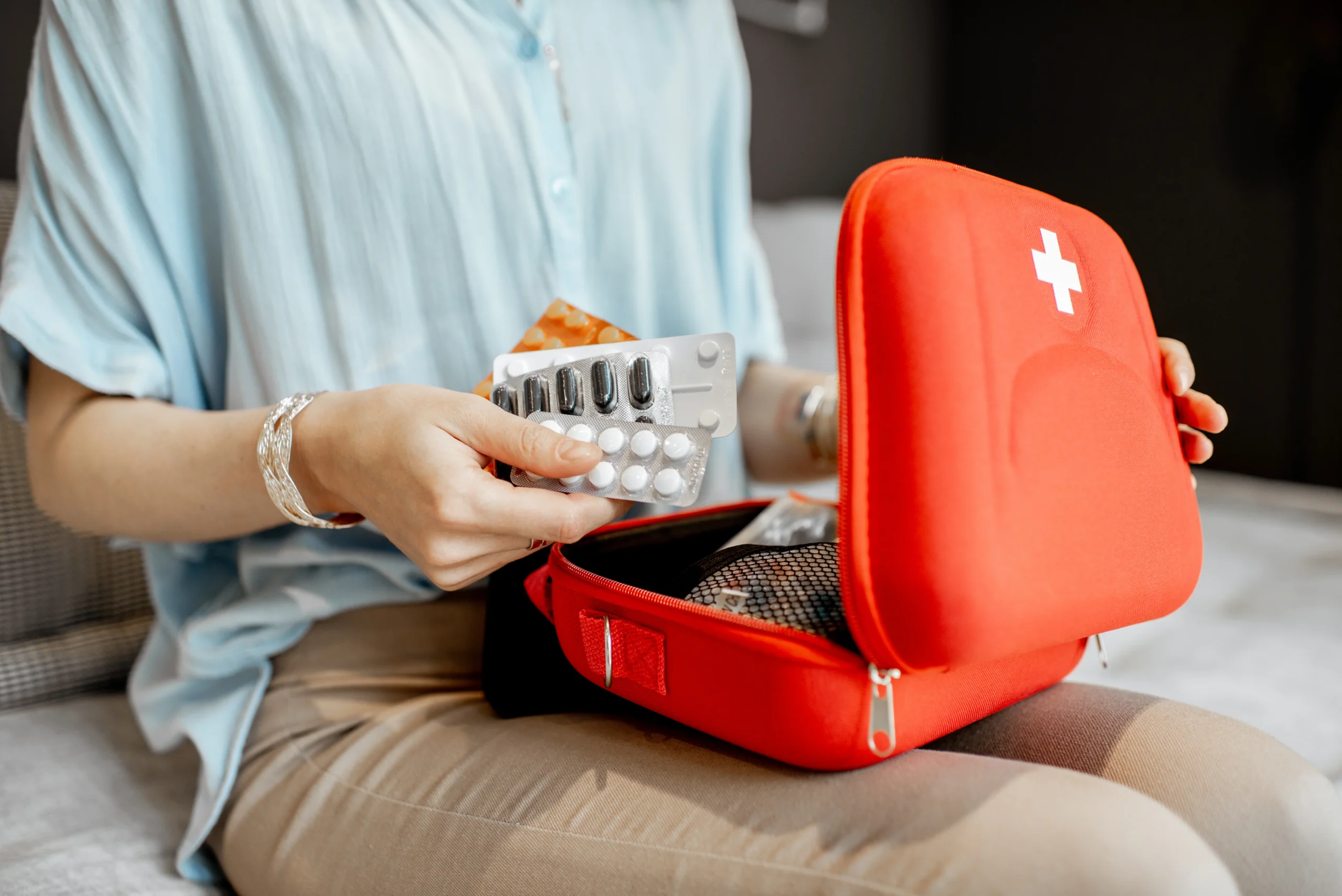

A spring medicine-cabinet check is more useful when it starts with the medication record. Match every current prescription to the list, add OTC medicines and supplements, flag old strengths or uncertain entries, and only then separate expired or unused products for appropriate disposal.
Spring cleaning often starts with shelves, drawers and cabinets. For medicines, the safer order is different: update the medication record first, then use that record to decide which bottles belong in active storage and which products need clarification or disposal.
That sequence helps prevent a common problem—a household throws away an old-looking bottle before realizing it was the only container showing the current strength, or removes an entry from the medication list without confirming that the prescriber actually stopped it.
Quick Answer
Start the spring medicine-cabinet review with one current medication list. Include prescription medicines, OTC products, vitamins and supplements, and record the current name, strength and directions for each prescription. Compare every bottle and package with that list. If an older strength, duplicate-looking entry or discontinued-looking prescription is unclear, keep the label available and ask the pharmacy or prescriber before changing the list or treatment. FDA advises not to use medicines after their expiration date. For most expired or unused prescription and OTC medicines, use a drug take-back location or mail-back option first. California’s Board of Pharmacy provides a locator for registered collection receptacles and pharmacies offering mail-back envelopes.
Why Spring Is a Useful Time to Reset the Medication Record
Medication lists can become outdated quietly. A specialist changes a strength, an urgent-care visit adds a short-term prescription, a refill leaves an older bottle in the cabinet, or a new vitamin never gets added to the list.
FDA recommends reviewing and updating the medication list whenever something changes, such as a new prescription, a different dose or a medication being stopped. A spring review gives households a fixed point in the year to catch changes that were never recorded.
- Prescription changes
- New strengths, dosage forms or prescribers can leave older entries visible in the cabinet or portal.
- OTC additions
- Seasonal allergy, cold, pain or sleep products may be used without ever making it onto the medication record.
- Supplement drift
- Vitamins, minerals and herbal products can change over time and should be included in the same working list.
The objective is not to make the cabinet look neat. It is to make the active medication record accurate enough to share with pharmacists, prescribers and caregivers.
Update the Medication List Before Removing Anything From the Cabinet
FDA says a medication list should include prescription medicines, nonprescription medicines, vitamins and supplements, along with information such as the name, strength and instructions for use.
MedlinePlus likewise recommends keeping a medicine record and bringing the list—and the medicines in their bottles—to provider appointments and pharmacy visits.
The Cabinet Is Not the Medication List
A bottle being present does not prove a medicine is still active, and a medicine missing from the cabinet does not prove it has been discontinued. Use the current label, medication record and professional confirmation together.
- Write down every current prescription.
Copy the exact medication name and strength from the current label rather than relying on memory.
- Add current OTC products.
Include routinely used pain relievers, allergy medicines, stomach products and other nonprescription medicines.
- Add vitamins and supplements.
Record products that may otherwise be missing from the list a clinician or pharmacist sees.
- Add the prescriber and pharmacy when useful.
Those details make refill and clarification questions easier to route later.
- Date the review.
A last-updated date helps caregivers recognize which copy is current.
Match Each Current Bottle and Package to the Updated List
Once the working list is ready, compare it line by line with the physical products. This step is about identification, not deciding treatment.
Look for exact medication names, strengths, dosage forms and label directions. If the cabinet contains several bottles of the same medication, determine which labels represent the current prescription and which belong to older fills.
- Does the medication name on the bottle appear on the current list?
- Does the strength match the strength currently documented?
- Are the dosage form and label directions the same as the current prescription?
- Is this an older refill container for the same active prescription?
- Does the product have a clear expiration date and readable label?
- If the bottle and list disagree, has the discrepancy been flagged for clarification?
Flag Old Strengths, Duplicate-Looking Bottles and Uncertain Entries
A spring review often uncovers an older strength beside a newer one, two bottles with different directions, or a medication that appears in a portal even though the family believes it was stopped.
Do not resolve those differences by guessing. Keep the original labels available and write “needs clarification” beside the uncertain entry until the pharmacy or prescriber confirms what is current.
- Older strength
- May represent a prior prescription rather than an instruction to combine strengths or choose between them.
- Duplicate-looking name
- Brand, generic or related medicines can look duplicative without actually being the same prescription.
- Possible discontinuation
- Confirm the stop instruction before removing the medicine from the active list solely from memory.
Keep the Old and New Labels Available When You Ask
Las Palmas Pharmacy can compare prescription names, strengths, directions, refill status and pharmacy records. Treatment changes remain with the appropriate prescriber.
Separate Expired and Confirmed Unused Products After the List Is Updated
Once current medicines have been identified, move expired products and medicines confirmed as no longer needed into a separate secured area while disposal is arranged.
FDA advises consumers not to use medicines after the expiration date. It also recommends take-back options for most expired, unwanted or unused prescription and OTC medicines.
Expired and Discontinued Are Not the Same Category
An expired medicine should leave active household use. A discontinued prescription should be removed from the active treatment list only after the discontinuation is confirmed. One product can be both, but the recordkeeping question and the disposal question are separate.
What Not to Do During a Spring Medication Reset
Cleaning the cabinet should reduce confusion, not create a new medication error.
- Do not throw away an unclear prescription before confirming what the current treatment record should show.
- Do not combine pills from different prescription bottles to save space.
- Do not restart an old prescription because it was rediscovered during cleaning.
- Do not remove a medication from the active list solely because it has not been used recently.
- Do not use an expired product because its appearance has not changed.
- Do not flush medicines as the default disposal method.
Choose a Safe Disposal Route for Medicines Leaving the Household
The California State Board of Pharmacy maintains a locator for registered drug-collection receptacles and pharmacies that offer mail-back envelopes. FDA likewise identifies take-back and mail-back as the preferred disposal options for most unused or expired prescription and OTC medicines.
If those options are not readily available, follow current FDA instructions for the specific product. FDA maintains a limited flush list for certain medicines; flushing is not the routine disposal method for all medicines.
- Search for a registered take-back location.
Use the California Board of Pharmacy locator or another authorized collection resource.
- Ask whether mail-back is available.
Some pharmacies provide envelopes that send unused medicines to an authorized disposal program.
- Keep sharps separate.
Needles, syringes and lancets require a sharps-disposal route rather than an ordinary medicine take-back bin.
- Remove personal information from empty packaging.
FDA advises scratching out identifying information before disposing of empty prescription containers.
Six Questions to Ask a Pharmacist During the Spring Review
- Which strength and directions are current in the pharmacy record for this prescription?
- Is this older bottle simply a previous refill, or was the prescription replaced?
- Does this prescription still have refills available?
- Which information should stay on my active medication list?
- Does this pharmacy offer a take-back receptacle or mail-back envelope?
- Which questions about stopping or changing a medicine need to go back to the prescriber?
Frequently Asked Questions
What should be on a current medication list?
FDA recommends including prescription medicines, OTC drugs, vitamins and supplements. Useful details include the medication name, strength, why it is used and instructions for when and how it is taken.
Should I remove an old prescription from the list if I find a newer bottle?
Not automatically. A newer bottle may reflect a refill, a new strength or a changed prescription. Compare the labels and confirm uncertain differences with the pharmacy or prescriber before changing the active list.
Can I use a medicine after its expiration date if it still looks normal?
FDA advises not to use medicines after the expiration date. Move expired products out of active household use and arrange an appropriate disposal option.
What is the preferred way to dispose of most unused medicines?
A take-back location or prepaid mail-back option is preferred for most unused or expired prescription and OTC medicines. California’s Board of Pharmacy provides a locator for registered collection bins and participating mail-back pharmacies.
Should I flush expired medicine during spring cleaning?
Do not use flushing as the default. FDA maintains a limited flush list for certain medicines when take-back is not readily available. Follow current instructions for the specific medicine.
Can Las Palmas Pharmacy help update my medication list?
Las Palmas Pharmacy can help clarify prescription names, strengths, label directions, refill status and pharmacy records. Decisions to stop, restart or change treatment should be made with the appropriate prescriber.
Make the List and the Cabinet Tell the Same Story
Spring cleaning works best when current medications are easy to identify, uncertain entries are flagged instead of guessed at, and expired or unused products leave the household through an appropriate disposal route.