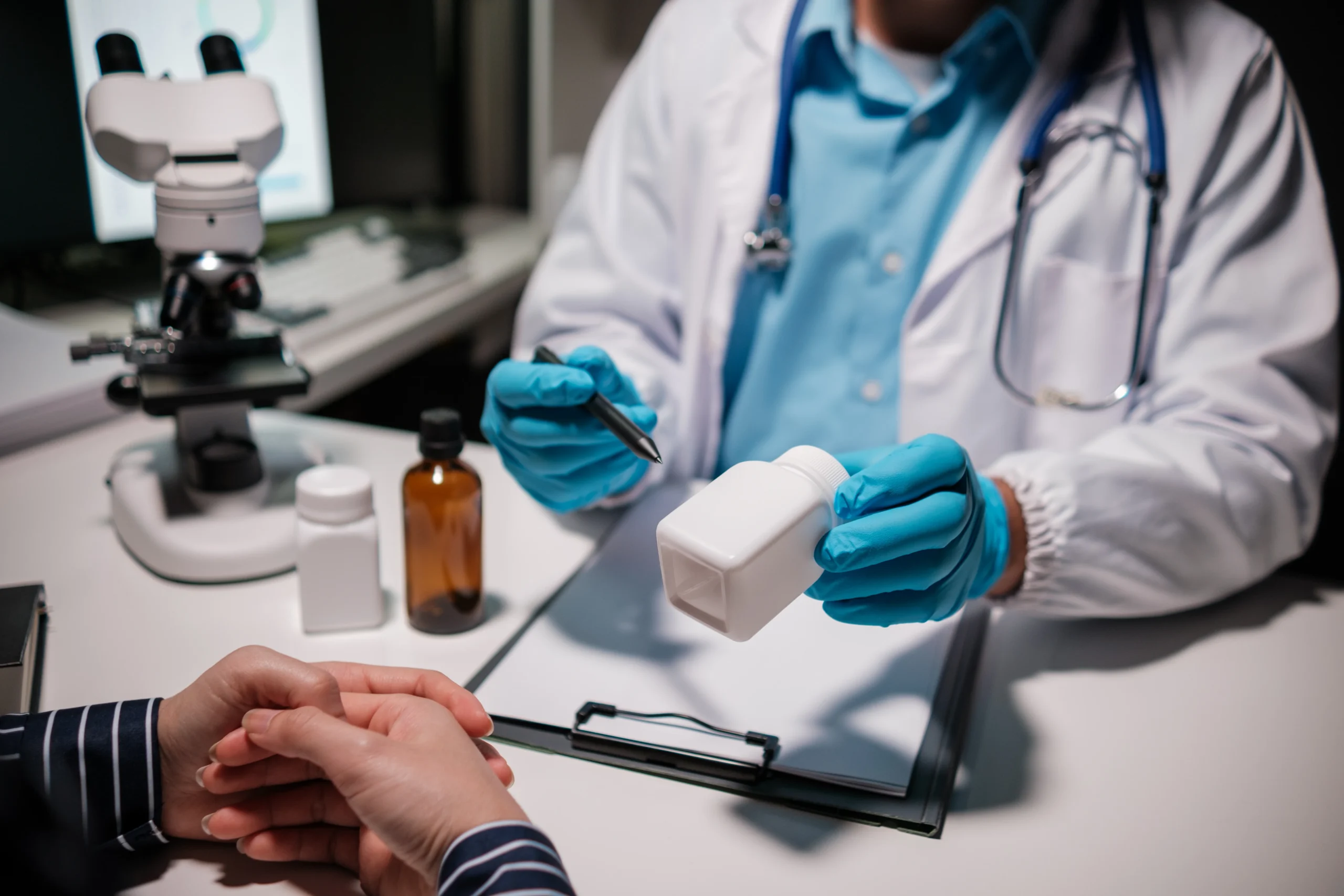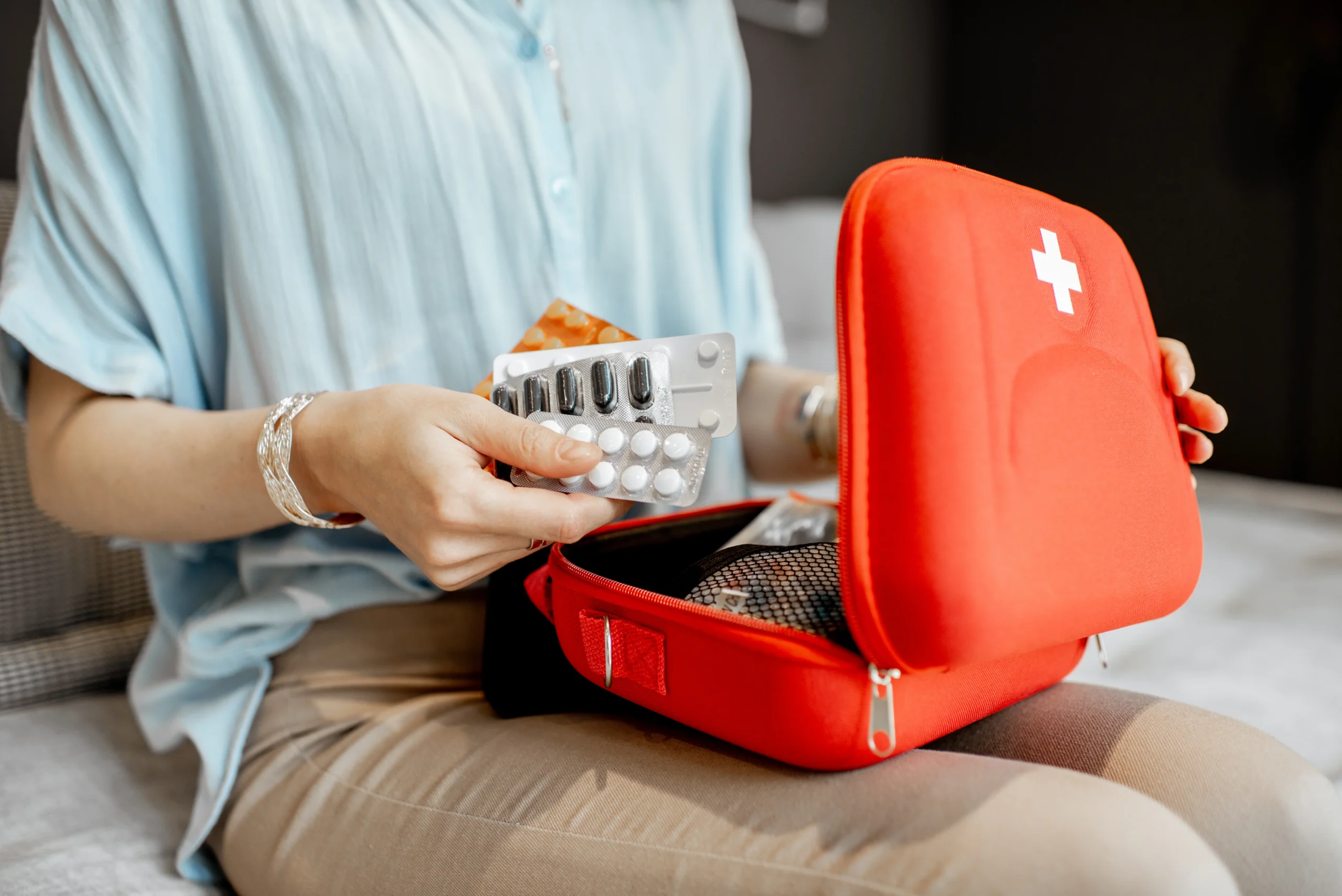

Holiday visits can put medicines in unfamiliar places—guest-room nightstands, purses, backpacks, suitcases and kitchen counters. A five-minute storage check can make prescription and over-the-counter medicines much harder for young children to reach.
Medicine storage often works because everyone in the household knows the routine. Holidays can disrupt that routine. Grandparents arrive with pill bottles in a handbag. A guest leaves cold medicine beside the bed. A child sees a gummy supplement on a counter. Someone packs prescriptions into a small organizer for an overnight stay.
CDC’s 2025 Up and Away materials note that approximately 100 young children are taken to emergency rooms each day after getting into medicines left within reach. The same guidance specifically reminds families to talk with houseguests about purses, bags, coats and other travel items that may contain medicine.
Quick Answer
Before holiday guests arrive—or before you visit a home with children—move all prescription medicines, OTC products, vitamins and supplements to a place young children cannot see or reach. Do not rely on a purse, suitcase, nightstand or child-resistant cap as the main safety measure. Relock bottle caps after every use, keep medicines in appropriate containers, and ask visitors to store medication-containing bags in the designated safe area. If you think a child may have swallowed a medicine or supplement, call Poison Help at 1-800-222-1222 right away.
Why Holiday Visits Can Create Medication Storage Gaps
California Poison Control warns that holiday visitors may leave medication on a nightstand or inside personal items that children can reach. Its holiday guidance advises keeping medicines locked up, out of sight and out of reach, and treating purses and bags as potential sources of medicine exposure too.
The risk is not limited to prescription bottles. CDC’s Up and Away campaign includes OTC medicines, vitamins and other supplements—including gummies—in the same safe-storage message. A product does not become harmless because it came from a grocery aisle or looks familiar to an adult.
Holiday schedules also make ordinary mistakes easier. Someone may take a dose and leave the bottle on the bathroom counter because they plan to use it again later. A guest may keep a weekly organizer beside the bed. A child may explore a suitcase while adults are cooking or talking in another room.
Important Distinction
Safe storage is separate from medication use. This article is about preventing unintended access. It does not change how or when a prescription should be taken. Follow the medication label and the instructions from the pharmacist or prescriber.
Create One Medication Safe Zone Before Guests Arrive
The simplest holiday strategy is to decide where medicines will go before anyone walks through the door. CDC recommends choosing a storage place that young children cannot reach or see. Depending on the home, that may be a high cabinet, closet shelf or locked storage area.
A designated safe zone is especially useful in a multigenerational gathering because it gives visitors a clear answer when they ask, “Where should I put my medicines?” It also helps adults avoid spreading bottles, creams, patches, drops, gummies and OTC products through several rooms.
- Choose the storage area.
Select a place that is genuinely out of children’s sight and reach, not simply an adult-height nightstand or dresser.
- Tell every guest.
Ask visitors to move medicines from purses, backpacks, coat pockets and travel bags into the safe area when they arrive.
- Return medicine after every dose.
CDC advises putting medicines away each time, even when another dose will be needed later.
- Keep emergency information visible to adults.
Save Poison Help at 1-800-222-1222 in caregiver phones so adults know whom to call if an exposure is suspected.
Do Not Treat Purses, Backpacks or Guest-Room Nightstands as Safe Storage
Adults often think of a zipped purse or suitcase as “put away.” A curious child may see it differently. CDC specifically advises asking guests to keep purses, coats, backpacks and other travel bags that contain medicines up and away and out of sight.
California Poison Control makes the same point in its medicine-safety guidance for grandparents and other adults who take medications: when children are visiting, bags and purses containing personal items that could be harmful should be kept out of sight and reach.
Is anyone carrying prescription medicine in a purse, backpack, tote or coat pocket?
Has a guest placed medicine on a nightstand, bathroom counter or low dresser?
Are vitamins or gummy supplements sitting where a child could mistake them for candy?
Are loose pills, pill organizers or travel containers accessible in a suitcase or bedroom?
05
Did anyone leave a cough, cold, pain or allergy product beside a bed or sofa?
Does every adult know the designated medication storage area in the home?
Medication Storage Question
Not Sure How a Specific Medicine Should Be Stored?
Check the prescription label first. Las Palmas Pharmacy can help clarify labeled storage directions, child-resistant packaging questions, refill needs and medication-disposal options.
Child-Resistant Packaging Helps, but It Is Not a Substitute for Safe Storage
CDC advises relocking a medicine bottle’s safety cap every time. If the cap turns, twist it until it clicks or cannot be tightened further. But the same CDC guidance also notes that children may still be able to open child-resistant packaging.
That is why the storage location matters just as much as the cap. FDA also advises that child-resistant closures need to be properly re-locked after use and that medicines and dietary supplements should be stored where children can neither see nor reach them.
- Use the cap correctly
- Close and re-lock child-resistant packaging after every use.
- Store up and away
- Keep the container where young children cannot see or reach it.
- Be careful with organizers
- Travel boxes and weekly pill organizers may not have child-resistant features.
If a medicine has special storage directions, such as refrigeration or protection from heat, follow the product label and pharmacy instructions. Do not move it to an unsuitable location simply to place it higher.
OTC Medicines, Vitamins and Gummies Need the Same Holiday Storage Discipline
Cold and flu season overlaps with holiday gatherings, so homes may have more OTC products out than usual. Cough syrups, pain relievers, allergy products, sleep aids, antacids, vitamins and supplements can all end up on counters or bedside tables when adults are using them frequently.
CDC tells families to store medicines, vitamins and supplements—including gummies—up and away after every use. FDA also cautions against calling medicine “candy,” because children may remember that comparison if they later find the product on their own.
Keep products in their appropriate containers with labels intact. The label identifies the product and active ingredients and provides directions and warnings that may matter if an adult needs to identify what a child may have accessed.
Do Not Forget Gummies
A gummy vitamin or supplement may look and smell like candy to a child. Treat it as a medication-safety item and store it with the same care as other medicines.
When You Are the Holiday Guest, Ask Where to Store Your Medicines
Safe storage matters when traveling too. CDC’s 2025 travel guidance recommends asking the host where medicines can be stored safely when visiting a home with children. It also warns that pill organizers and baggies may lack the child-safety features of original child-resistant containers.
Before leaving home, consider how you will keep the medication secure at the destination. If the medicine requires refrigeration or another special condition, ask the pharmacy about labeled storage instructions before the trip rather than improvising after arrival.
Bring the amount of medication needed for the trip, plus the information needed to identify each medicine correctly.
Ask the host for an out-of-sight, out-of-reach storage location as soon as you arrive.
Do not leave medicine in a purse, backpack, suitcase pocket or bedside area accessible to children.
Follow temperature and refrigeration instructions on the label or from the pharmacy.
If You Think a Child May Have Taken a Medicine, Act on the Possibility
CDC’s Up and Away guidance says to call Poison Help at 1-800-222-1222 right away if you think a child might have gotten into a medicine, vitamin or supplement—even if you are not completely sure.
California Poison Control’s hotline is available 24 hours a day, 365 days a year. Have the product container or label available if you can do so safely, because the poison specialist may need information about what was involved.
For a life-threatening emergency, call 911. Do not wait for a routine pharmacy response when a child may have had an acute poisoning or is having severe symptoms.
- Poison Help
- 1-800-222-1222 for suspected poison exposures or urgent poison questions.
- 911
- Use emergency services for life-threatening symptoms or an immediate medical emergency.
- Pharmacy
- Use the pharmacy for non-emergency questions about labels, storage, refills and medication identification.
Five-Minute Holiday Medication Safety Checklist
Do this before children arrive, then repeat it after overnight guests settle in.
- Poison Help
- 1-800-222-1222 for suspected poison exposures or urgent poison questions.
- 911
- Use emergency services for life-threatening symptoms or an immediate medical emergency.
- Pharmacy
- Use the pharmacy for non-emergency questions about labels, storage, refills and medication identification.
Move prescription medicines, OTC products, vitamins and supplements out of children's sight and reach.
Ask guests to remove medicine-containing purses, bags and coats from accessible chairs, floors and beds.
Check guest-room nightstands, bathroom counters, kitchen counters and low dressers for medicines.
Relock child-resistant caps after every dose and return products to the safe area immediately.
Store gummy vitamins and supplements with medicines, not with snacks or candy.y.
Keep products in appropriate labeled containers and follow any special storage instructions.
Save Poison Help at 1-800-222-1222 in the phones of parents, grandparents and caregivers.
Dispose of unwanted or expired medicines through an appropriate take-back or disposal option instead of leaving them around the home.
Frequently Asked Questions
Is a child-resistant medicine bottle enough to keep a child safe?
No. Child-resistant packaging is designed to make a container more difficult for children to open, but CDC notes that children may still be able to open it. Relock the safety cap after every use and store the medicine up and away, out of children’s sight and reach.
Where should holiday guests keep prescription medicine in a home with children?
Use a location that children cannot see or reach, such as an appropriate high cabinet, closet shelf or locked storage area. CDC advises visitors not to leave medicine in purses, coats, backpacks or other travel bags where children can access them. If a medicine needs refrigeration or another special condition, follow its storage directions.
Do OTC medicines and vitamins need to be stored the same way?
Yes. CDC’s medication-safety guidance includes prescription medicines, OTC medicines, vitamins and supplements, including gummies. Keep them out of children’s sight and reach and return them to the safe storage location after every use.
Can I put medicines into a small bag or pill organizer for holiday travel?
Pill organizers can be useful for some adults, but CDC notes that many organizers and baggies do not have child-resistant features. If children will be present, keep the organizer or travel container in a location they cannot see or reach. Keep enough identifying information available to know exactly what each medicine is.
What should I do if I think a child swallowed medicine but I am not sure?
Call Poison Help at 1-800-222-1222 right away. CDC specifically advises calling even when you are not completely sure a child got into a medicine, vitamin or supplement. California Poison Control is available 24 hours a day. For a life-threatening emergency, call 911.
Can Las Palmas Pharmacy help with medication-storage questions before holiday travel or visitors arrive?
Las Palmas Pharmacy can help clarify prescription-label storage directions, refill timing, child-resistant packaging questions, medication identification and disposal options. For an actual or suspected poisoning, contact Poison Help or emergency services rather than waiting for a routine pharmacy response.
Preparing for Holiday Guests or Travel?
A short medication-storage check can help keep prescriptions, OTC products, vitamins and supplements out of children’s reach. Las Palmas Pharmacy can help with label, storage, refill and disposal questions before plans get busy.