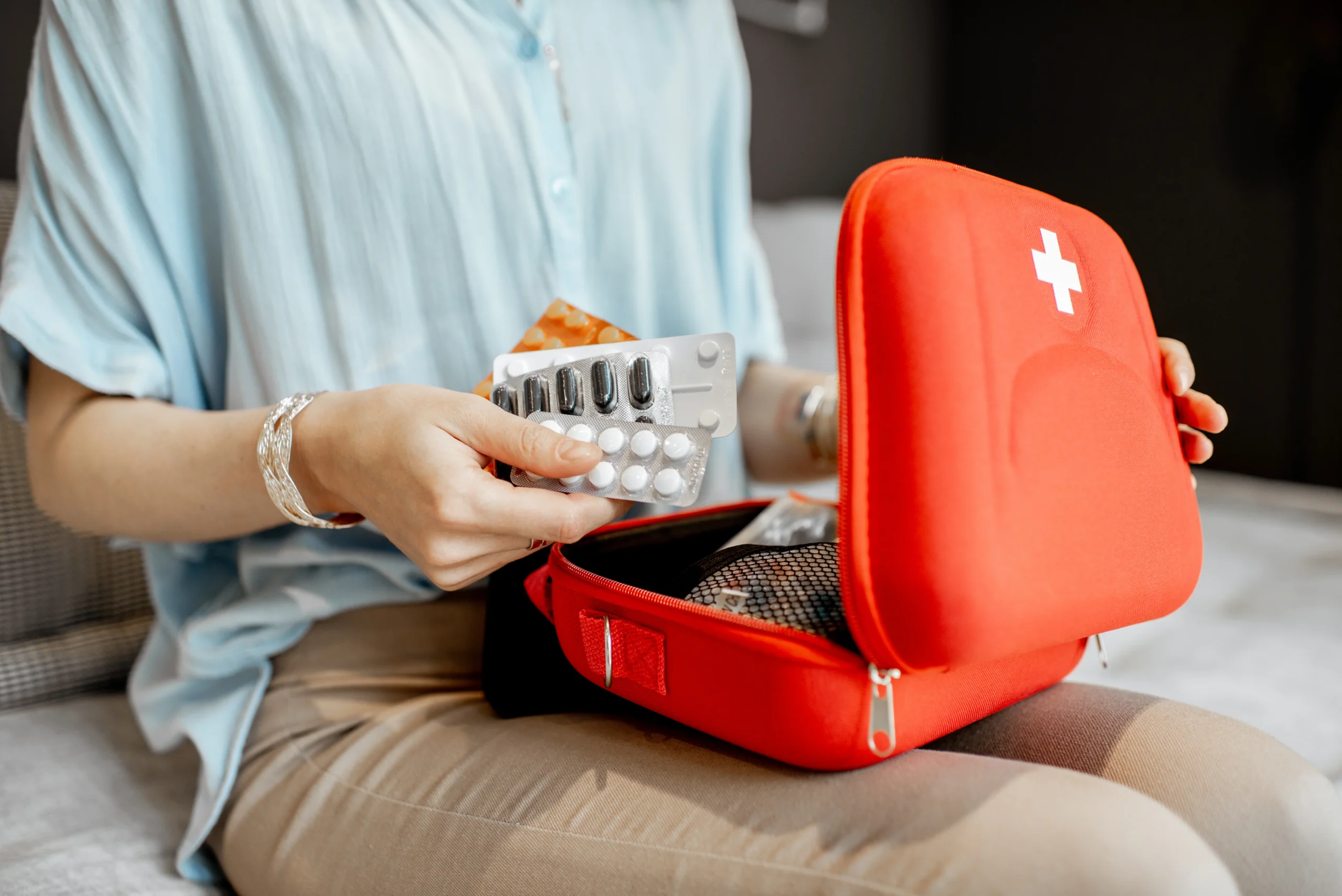

Before California’s hottest months arrive, caregivers can review an older adult’s medication list for heat-related concerns, storage requirements, fluid restrictions, and the right contacts to call when a hot-weather question comes up.
Heat planning for an older adult is not just about water, shade, and air conditioning. A medication list can contain clues that deserve a clinician’s attention before temperatures climb, especially when the person takes several prescriptions, has a fluid restriction, uses refrigerated medicine, or relies on devices that need electricity.
California public-health guidance notes that older adults may adjust less quickly to sudden temperature changes and that commonly used medicines can affect sweating, thirst, blood pressure, hydration, alertness, or the body’s ability to regulate temperature. The goal is not to decide that a medicine is “bad for heat.” The goal is to know which questions should be settled before the first difficult stretch of hot weather.
Quick Answer
Caregivers can use May to review one complete medication list with the older adult’s clinician and pharmacist. Flag prescriptions, OTC medicines, supplements, fluid restrictions, storage requirements, and any history of dizziness, dehydration, fainting, or confusion during hot weather. CDC and CDPH identify several medication groups that may increase heat-related risk, including diuretics, anticholinergic medicines, some antidepressants and antipsychotics, and certain heart or blood-pressure medicines. Do not stop, skip, reduce, double, or reschedule a medicine because of a hot day unless the prescribing clinician has given specific instructions. The pharmacy can clarify labels, storage, refill status, and the medication record; treatment changes belong with the prescriber.
Why May Is a Good Time to Review Medications Before Peak Heat
Waiting until an older adult feels unwell on a very hot day can turn a planning question into an urgent one. A pre-season review creates time to identify which medicines may deserve extra monitoring, what the person’s normal fluid guidance is, where temperature-sensitive medicine will be kept, and who should be called if symptoms or circumstances change.
CDPH highlights older adults as a population that needs extra heat planning. Its guidance notes that medications commonly used by older adults—including diuretics, beta blockers, antidepressants, antipsychotics, and anticholinergics—can contribute to problems such as dehydration, electrolyte imbalance, reduced sweating, decreased thirst, or cognitive effects. CDC similarly advises clinicians to review medication lists before hot weather and to make individualized plans rather than using blanket rules.
- Medication list
- Bring one current list that includes prescription, OTC, and regularly used supplement products.
- Fluid instructions
- Record any clinician-directed fluid or sodium restriction instead of assuming more fluid is always appropriate.
- Hot-day contacts
- Know which clinician manages treatment questions and which pharmacy holds the current prescription record.
Medication Types Worth Flagging for a Clinician Review
A caregiver does not need to classify every drug independently. Instead, use the medication list to ask whether any current prescription or OTC product could affect heat tolerance, hydration, sweating, blood pressure, alertness, kidney function, or sun sensitivity.
CDC’s clinician guidance gives examples of medicines that can interact with heat, including diuretics, anticholinergic agents, some psychotropic medicines, beta blockers, ACE inhibitors, ARBs, certain antidepressants, sedating medicines, and some OTC products. The effect varies by drug, dose, health condition, and combination with other medicines.
Do Not Turn a Risk List Into a Stop List
Being named in heat guidance does not mean a medicine should be stopped or reduced. CDC specifically advises against abruptly stopping medication without a plan. Any dose, schedule, fluid, or treatment change should come from the clinician managing that medication.
Build a One-Page Heat Medication Review Sheet
A short caregiver worksheet can turn a long medication list into a practical hot-weather plan. Keep it with the regular medication record so another family member or caregiver can use the same information.
- Which prescriptions or OTC products should the clinician specifically review for heat-related concerns?
- Does the person have a fluid, sodium, kidney, or heart-related restriction that changes general hydration advice?
- Which medicines require refrigeration or have storage limits that matter during travel or a power outage?
- Has the prescriber given any written hot-day instructions, and where are those instructions recorded?
- Who will check on the older adult during a heat event if the person lives alone or has memory or mobility limits?
- Which symptoms should trigger a same-day call, urgent evaluation, or emergency care?
Make Sure the Medication List Matches the Pharmacy Record
Las Palmas Pharmacy can help confirm prescription names, strengths, label directions, refill status, remaining refills, and storage instructions in the pharmacy record.
Check Storage and Power-Outage Needs Before the First Heat Emergency
Heat can create a second medication problem: storage. CDC advises clinicians to remind patients not to leave medicines in a car or another place that can become excessively hot. It also calls for a power-outage plan for medicines that require refrigeration and for medical devices that need electricity.
Do not assume the refrigerator is appropriate for every medication. Follow the prescription label, manufacturer instructions, and pharmacist guidance for the specific product. If a medicine may have been exposed to temperatures outside its labeled range, keep the packaging and ask the pharmacy how to verify next steps rather than guessing that it is safe or unusable.
- Read the storage directions.
Identify medicines that need refrigeration, protection from heat, or another specific storage range.
- Plan for an outage.
Know how temperature-sensitive medicine and electricity-dependent devices will be handled if power is interrupted.
- Protect medicines during errands.
Avoid leaving the medication supply in a parked vehicle or another area that can become very hot.
- Verify suspected heat exposure.
Ask the pharmacist about the specific product, packaging, storage instructions, and exposure details before deciding what to do.
What Caregivers Can Check on Hot Days Without Changing Treatment
A hot-day check-in can focus on the person and the plan, not on improvising medication changes. Confirm that the older adult has access to a cool environment, can follow the existing medication schedule, can reach their usual care contacts, and has not lost access to needed refrigeration or electrical equipment.
NIA recommends extra caution for older adults because age, chronic illness, dehydration, and multiple medicines can all increase heat-related risk. It also advises patients to ask their doctor whether any medication makes overheating or sun sensitivity more likely.
- Check the environment
- Confirm access to air conditioning or another reliably cool place during dangerous heat.
- Check the written plan
- Use clinician-provided medication and fluid instructions rather than changing doses or timing independently.
- Check the person
- Pay attention to new weakness, dizziness, nausea, confusion, fainting, or other signs of heat illness.
Know When a Heat Concern Needs Medical Help
Heat illness can progress quickly. CDC lists headache, nausea, dizziness, weakness, thirst, heavy sweating, higher body temperature, and reduced urine output among signs of heat exhaustion. Confusion, altered mental status, loss of consciousness, seizures, or a very high body temperature can signal heat stroke, which is a medical emergency.
If heat stroke is suspected, call 911. For less severe but concerning symptoms, follow the person’s clinician-directed plan and seek medical evaluation as appropriate. Do not use new symptoms as a reason to independently stop or alter prescription treatment.
Emergency Signs Need Emergency Care
Confusion, loss of consciousness, seizures, or other signs of possible heat stroke should not be handled as a routine pharmacy question. Call 911 for emergency medical care.
Frequently Asked Questions
Can some medicines make an older adult more vulnerable to heat?
Yes. CDPH and CDC identify several medication groups that can affect sweating, thirst, blood pressure, hydration, temperature regulation, alertness, or other factors relevant to heat. The effect depends on the specific medicine and the person’s health, so use the medication list for a clinician review rather than making changes independently.
Should an older adult stop a diuretic or blood-pressure medicine on a very hot day?
Not without specific instructions from the clinician managing that medicine. CDC advises against abruptly stopping medications without a plan. Any change in dose, schedule, or fluid instructions should be individualized by the appropriate clinician.
What should a caregiver bring to a heat-related medication review?
Bring one current medication list that includes prescriptions, OTC medicines, and regularly used supplements, plus known storage requirements, fluid or sodium restrictions, recent refill information, and any prior hot-weather symptoms or clinician instructions.
Can Las Palmas Pharmacy tell me which medicines are on the pharmacy record?
Las Palmas Pharmacy can help clarify prescription names, strengths, label directions, refill status, remaining refills, storage instructions, and the pharmacy medication record. Questions about changing treatment belong with the prescribing clinician.
What if a refrigerated medicine loses power during a heat event?
Keep the medication and packaging available and contact the pharmacy for product-specific storage guidance. Do not assume the medicine is automatically safe or automatically unusable, because allowable temperature excursions vary by product.
When should I call 911 for a heat-related concern?
CDC treats heat stroke as a medical emergency. Confusion or altered mental status, loss of consciousness, seizures, or a very high body temperature are among warning signs. Call 911 if heat stroke is suspected.
Review the Medication List Before California Heat Intensifies
Use the form above to ask Las Palmas Pharmacy about labels, refill status, pharmacy records, or storage instructions. For medication changes, fluid restrictions, or a personalized hot-weather treatment plan, contact the clinician managing the older adult’s care.