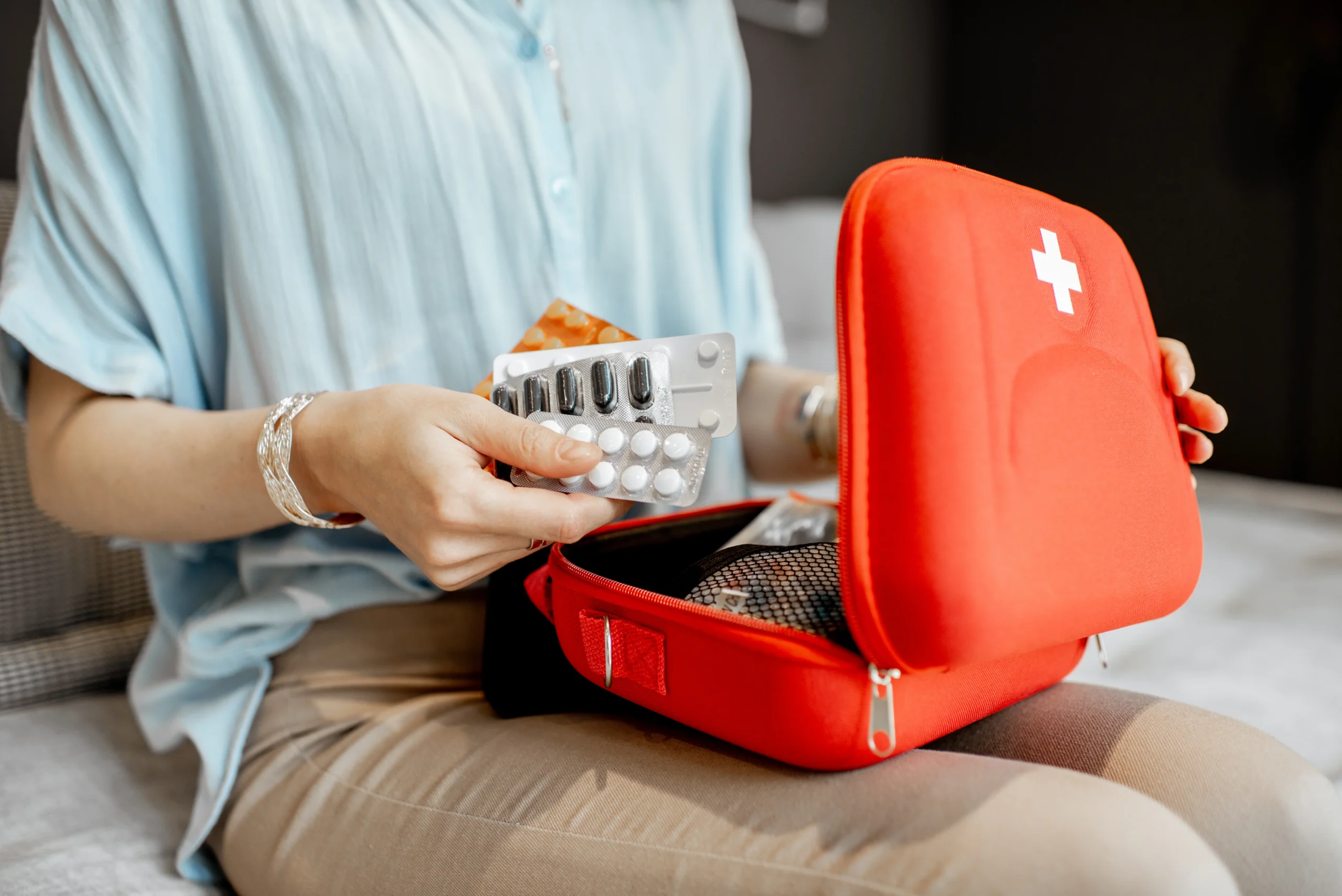

A recall headline can name a familiar medication without meaning every bottle is affected. Use the full notice to compare the exact drug, dosage form, strength, manufacturer or labeler, NDC when listed, lot or batch, and expiration information before deciding that a prescription matches.
The California State Board of Pharmacy’s recall subscriber page listed numerous drug and device alerts during May 2026. Some entries named a single strength, some listed several strengths or package configurations, and some identified a particular manufacturer. That variation is why a recall should be read as an identification task, not as a brand-name headline.
For patients and caregivers, the safest starting point is to keep the medication container, open the official recall notice, and compare each identifier that the notice provides. If the patient label does not show enough information to confirm a match, the dispensing pharmacy may be able to compare the notice with pharmacy inventory or dispensing records.
Quick Answer
Do not decide that a prescription is recalled based only on the drug name. Compare the exact dosage form and strength first, then the manufacturer or labeler, NDC or package code when listed, lot or batch number, and expiration date. FDA advises consumers to check the lot number on the medication label against the recalled lot in the notice. If your pharmacy bottle does not show the manufacturer lot, keep the bottle and contact the dispensing pharmacy. Follow the action stated in the official recall notice and do not independently stop, restart, replace, or change the dose or schedule of a prescription.
Why Recall Reading Mattered in California in May 2026
California’s Board of Pharmacy recall page showed multiple May entries involving prescription drugs and medical devices. The entries varied widely: some listed one strength, some several strengths, and some included an NDC or a specific package configuration. A caregiver who reacts only to a drug name can easily mistake an unaffected product for an affected one.
A May 13, 2026 FDA-posted notice provides a clear example. Sun Pharmaceutical Industries recalled one batch of doxorubicin hydrochloride liposome injection 50 mg/25 mL. The notice identified lot HAG2581B, NDC 72603-200-01, and an expiration date in May 2027. The lesson for consumers is not about that medication specifically; it is that a recall can be much narrower than the drug name in the headline.
A Familiar Drug Name Does Not Confirm a Match
The same active drug can be sold in different strengths, dosage forms, package sizes, NDCs, and manufacturer lots. Read every identifier the official notice provides.
Start With the Drug, Dosage Form, and Strength
Begin by comparing what the recall notice names with what is printed on the prescription label or original product packaging. A tablet is not the same product configuration as a capsule, liquid, injection, cream, patch, or inhalation product. Strength matters too: a recall may apply to one strength while other strengths of the same drug are not listed.
- Drug name
- Match the exact generic or brand name listed in the recall notice.
- Dosage form
- Check whether the notice names tablets, capsules, solution, injection, cream, device, or another form.
- Strength
- Compare units carefully, including mg, mcg, mg/mL, percentages, or other listed strengths.
If any of those fields do not match, do not assume the recall applies. If they do match, continue to the manufacturer, NDC, lot, and expiration details before drawing a conclusion.
Use Manufacturer, NDC, Lot or Batch, and Expiration to Narrow the Match
The next identifiers often determine whether a product is actually part of the recall. The manufacturer or labeler may be unfamiliar because the name on the pharmacy label can differ from the brand name a patient recognizes. An NDC can identify a particular labeler, product, and package configuration. The lot or batch number identifies a production group, and the expiration date can further narrow the affected product.
- Does the manufacturer or labeler on the record match the company named in the recall?
- Does the NDC or package code match exactly when the recall notice lists one?
- Is the lot or batch number included in the recall range?
- Does the expiration date match the date or range in the notice?
- Does the package size or count match the recalled configuration?
Do not treat one matching field as enough when the notice provides several. The exact combination is what matters.
What to Do When the Pharmacy Bottle Does Not Show a Lot Number
Many patients receive tablets or capsules in a pharmacy-labeled vial rather than the manufacturer’s original bottle. The patient label may show the drug, strength, directions, prescriber, quantity, and prescription number without showing the manufacturer’s production lot.
Keep the vial and call the pharmacy that dispensed it. The pharmacy may be able to compare its purchasing, inventory, lot, or dispensing information with the recall notice. If the product came in a manufacturer carton, blister pack, vial, pen, syringe, or other original packaging, keep that packaging because the lot, NDC, and expiration may be printed there.
Keep the Container and Recall Notice Together
Las Palmas Pharmacy can help compare pharmacy records with the drug, strength, manufacturer, NDC, lot, package, or expiration information named in an official recall.
What Not to Do After Seeing a Drug Recall Headline
A recall notice can require prompt action, but guessing can create a second medication problem. FDA notes that recall instructions depend on the recall and that, in some situations, stopping a medicine can be more harmful than continuing it while the correct next step is arranged.
- Do not assume every product with the same drug name is recalled.
- Do not discard the container before recording or photographing the label and product identifiers.
- Do not replace the medicine with a different strength, dosage form, brand, or product on your own.
- Do not stop, restart, stretch, double, or otherwise change a prescribed dose or schedule independently.
- Do not use a social-media screenshot as the final source when an official recall notice is available.
- Do not give a recalled or uncertain prescription to another person.
Safe Next Steps and Who to Contact
Once the identifiers have been compared, follow the exact action stated in the recall notice. Some notices direct users to stop using and return a product, while others provide different instructions depending on recall severity and where the product is in the supply chain.
- Pharmacy
- Use for dispensing records, manufacturer or lot questions, replacement logistics, and prescription-specific recall checks.
- Prescriber
- Use when the recall affects the treatment plan or a clinical decision is needed about another medication.
- Manufacturer or recall processor
- Use the contact information in the notice for product return, replacement, or company-specific questions.
- Use the contact information in the notice for product return, replacement, or company-specific questions.
If a person has symptoms or a medical problem that may be related to an affected product, follow the medical-contact instructions in the recall notice and seek appropriate urgent or emergency care when symptoms are severe.
Frequently Asked Questions
Does a recall of my drug name mean my prescription is definitely affected?
No. A recall may apply only to certain strengths, dosage forms, manufacturers, NDCs, lots, batches, package sizes, or expiration dates. Compare every identifier listed in the official notice.
Where can I find the lot number for a recalled medication?
The lot or batch may be printed on the manufacturer’s original bottle, carton, blister, vial, syringe, pen, or other package. A pharmacy-labeled vial may not display the manufacturer lot, so contact the dispensing pharmacy if the lot is not visible.
What is an NDC and why can it matter in a recall?
An NDC is a drug product code that can help identify the labeler, product, and package configuration. When a recall notice lists an NDC, compare it exactly rather than relying only on the drug name.
Should I stop taking a prescription as soon as I see it on a recall list?
Follow the instructions in the official recall notice and contact the pharmacy or prescriber promptly. FDA notes that recall actions vary and that, in some situations, stopping a medicine can be more harmful than continuing it while the correct next step is arranged.
Can two bottles with the same drug and strength have different recall status?
Yes. They may come from different manufacturers, NDCs, production lots, or expiration ranges. A recall can apply to one batch while another batch of the same drug and strength is not listed.
Can Las Palmas Pharmacy tell me whether a recalled lot was dispensed to me?
Las Palmas Pharmacy can review its own dispensing and pharmacy records and compare available product identifiers with an official recall notice. If another pharmacy dispensed the prescription, contact that pharmacy because it holds the relevant dispensing records.
Match the Exact Product Before You Act on a Recall
Keep the medication container and official recall notice together, compare the drug, strength, manufacturer, NDC, lot, package, and expiration details, and contact the dispensing pharmacy when any identifier is missing or unclear.