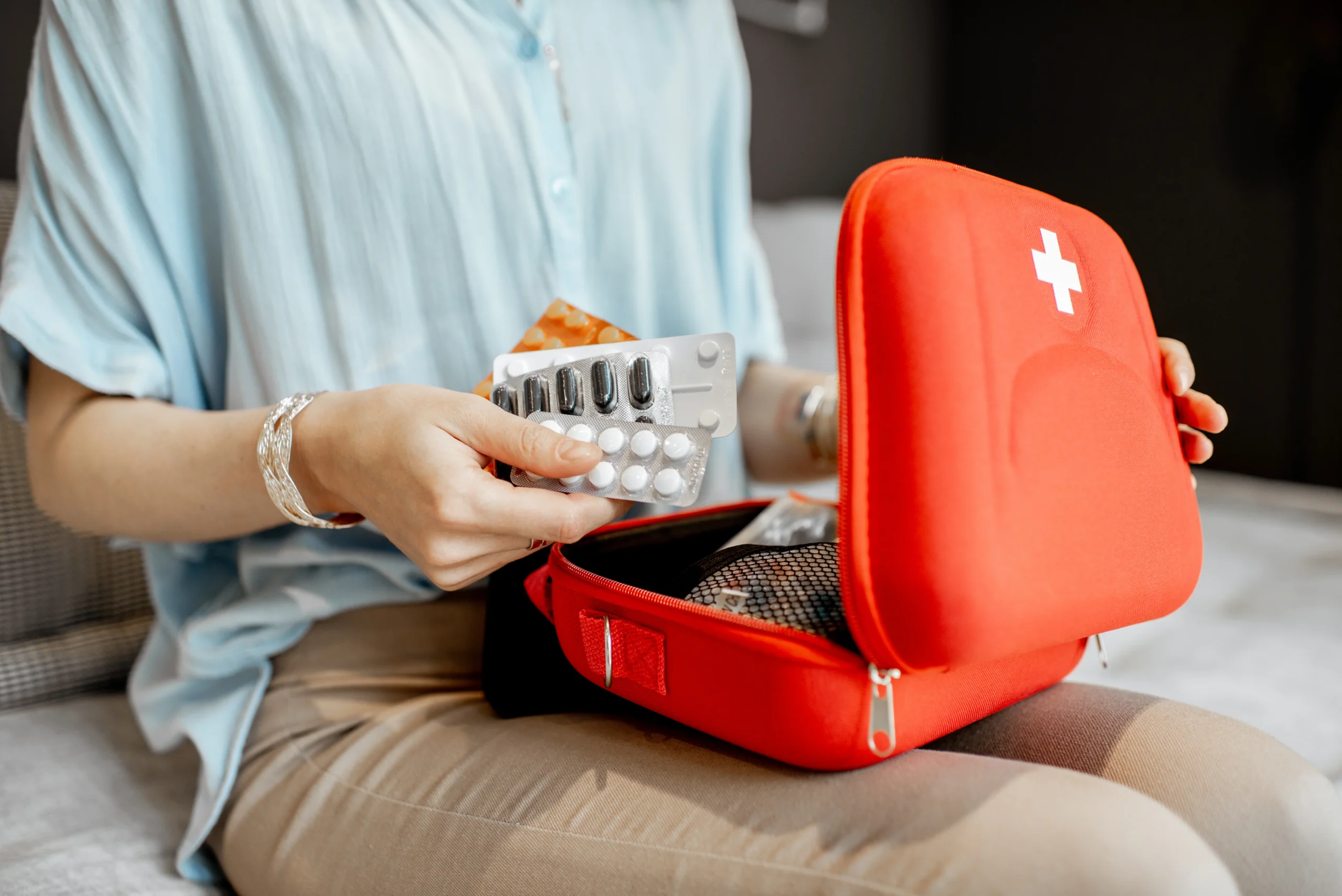

College move-in is a good time for a young adult to own one current medication record instead of relying on a parent’s memory, an old portal screenshot or several bottles in different places. The list should be simple enough to update and complete enough to use at a pharmacy, campus clinic or urgent-care visit.
A medication list is useful only if the student can find it, understand it and update it. FDA guidance recommends keeping an up-to-date list of prescription medicines, nonprescription medicines, vitamins and supplements and carrying a copy that can be shared with healthcare professionals.
For a college student, that list should become the source used during pharmacy calls, campus health visits and unexpected care away from home. It should not be a secondhand summary that only a parent understands. The student should be able to open the record and answer basic questions without guessing.
Quick Answer
Before move-in, create one medication list the student can manage without depending on a parent to interpret it. Include every current prescription medicine, OTC medicine, vitamin and supplement; the exact medication name and strength; what it is used for; the current label directions; allergies; emergency contacts; the prescriber; the dispensing pharmacy; and insurance information kept nearby. Save a secure copy on the student’s phone and consider a printed copy with the insurance card. Update the record whenever a medicine, dose, direction or prescriber changes. Do not edit the list to reflect a self-directed dose or schedule change that was never prescribed.
Build One Student-Owned Medication List Before Move-In
FDA says the best medication list is one that is easy to create, maintain and remember to share. That means a simple current record is usually more useful than several partial lists stored in different apps, messages and notebooks.
- Choose one main format
Use a phone note, secure app, printed sheet or another format the student can actually open and update without help.
- Start from current labels
Use the active pharmacy labels and current clinician instructions instead of copying an older family spreadsheet from memory.
- Include nonprescription products too
FDA recommends listing OTC medicines, vitamins and supplements because healthcare professionals need the full picture, not only prescription bottles.
- Make the student the updater
When a prescription changes, the student should update the record so the list does not stay frozen at the last parent-managed version.
One Current List Is Better Than Several Conflicting Lists
If a phone note, patient portal and printed sheet show different strengths or directions, use the current prescription label and prescriber information to reconcile the record rather than choosing whichever version looks newest.
What Every Medication Entry Should Include
FDA recommends recording the important facts about each medicine so the list can be used by doctors, pharmacists and other healthcare professionals.
- What is the exact medicine name and strength?
- What is the medicine used for?
- What are the current instructions for when, how and how much to take?
- Who prescribed the medicine?
- Which pharmacy currently dispenses it?
- Are there allergies, sensitivities or other important medication notes that should travel with the list?
Use the exact wording of current directions when possible. Abbreviating “take one tablet twice daily” into a shorthand that the student later misreads defeats the purpose of the record.
Keep emergency contacts with the medication list as FDA recommends. Insurance information can be stored nearby so the student can find it during an unexpected pharmacy or clinic visit without putting unnecessary sensitive details in the medication list itself.
Keep the List Current Instead of Rebuilding It From Memory
FDA recommends reviewing and updating the medication list whenever something changes, such as a new prescription, a different dose or stopping a medicine. The useful habit is to update the record at the same time the change occurs.
- New prescription
- Add the medicine, strength, directions, purpose, prescriber and pharmacy after the current prescription information is confirmed.
- Changed strength or directions
- Replace the old information rather than leaving two active-looking entries for the same medicine.
- Medicine discontinued
- Remove it from the active list or mark it clearly as no longer current so it is not mistaken for an active prescription.
The List Should Record the Plan, Not Rewrite It
Do not change a medicine entry because the student independently started taking less, taking more, skipping doses or changing the schedule. A discrepancy between prescribed directions and actual use should be discussed with the prescriber and pharmacist.
Prepare the List for Campus Health, Urgent Care and Emergencies
FDA notes that medication lists can help when different healthcare systems do not communicate with each other. That matters when a student’s home prescriber, hometown pharmacy and campus clinic use separate records.
- Keep a copy on the phone
FDA specifically suggests a phone photo or app as one way to carry the list so it can be shown when needed.
- Keep a backup with the insurance card
A printed copy can help if the phone is unavailable, damaged or out of power during an urgent visit.
- Include allergies and sensitivities
Those details should be easy to find when a new clinician or pharmacist is reviewing the current regimen.
- Know the home prescriber contact
The student should know which clinician manages each regular prescription if campus care needs clarification.
Do not use the medication list as a substitute for an emergency plan or diagnosis. Severe symptoms or medical emergencies require urgent or emergency medical care.
Add Pharmacy and Refill Information Without Turning the List Into a Refill Calendar
This article is about the student’s medication record, not a full refill-management system. Still, the record should identify which pharmacy currently holds or dispenses each regular prescription so the student knows where to ask a label, refill or transfer question.
- Pharmacy name and phone
- Record the dispensing pharmacy so the student does not have to search a parent’s text history when a prescription question appears.
- Prescriber name and office
- Keep the clinical contact with the entry because a prescription with no refills may require prescriber involvement.
- Insurance information nearby
- Keep the health-plan card or secure digital copy accessible for billing questions without placing unnecessary account details in an unsecured note.
California law also gives patients the right to request that an unfilled electronic prescription be transferred or forwarded to another designated pharmacy, subject to applicable state and federal requirements. If the student changes pharmacies near campus, ask the destination pharmacy about the specific prescription rather than assuming every refill or controlled prescription transfers in the same way.
The pharmacy can clarify the label, refill status, dispensing history and transfer process it can see. The prescriber handles treatment decisions, new prescriptions and changes to dose, route or schedule.
Run a Five-Minute Move-In Readiness Check
The student should be able to complete this check without a parent supplying the answers.
- Open the medication list
The student should know exactly where the current copy lives and be able to reach it quickly.
- Match one prescription to its label
Confirm the name, strength and directions on the list match the current bottle or package.
- Find the pharmacy contact
The student should know where to call for a refill-status, label or transfer question.
- Find the prescriber contact
The student should be able to identify who manages the prescription when a clinical or authorization question requires the prescriber.
- Find the insurance information
The student should know where the health-plan card or secure digital copy is stored before an unexpected clinic or pharmacy visit.
If the student cannot complete one of those steps, fix that record or contact gap before move-in. The goal is not perfect independence in every health decision. It is a medication record the young adult can actually use when care happens away from home.
Frequently Asked Questions
What should a college student put on a medication list?
FDA recommends listing prescription medicines, OTC medicines, vitamins and supplements, along with each medicine’s name, strength, purpose and directions. Include allergies and emergency contacts as well.
Should the medication list include medicines the student takes only occasionally?
Yes. FDA recommends keeping an up-to-date list of prescription and nonprescription medicines and dietary supplements, including products used only occasionally when they are part of the person’s current medication use.
Where should a student keep the medication list?
FDA suggests keeping a copy with you, such as on a smartphone or as a physical copy kept with the health insurance card. A secure primary copy plus a backup can be useful.
When should the list be updated?
Update it when a new medicine is prescribed, a strength or direction changes, a medicine is stopped, the prescriber changes or another important medication detail changes.
Should the student change the list if they start taking a medicine differently?
Do not rewrite the prescribed directions to match a self-directed dose or schedule change. Contact the prescriber and pharmacist to resolve the discrepancy and then update the list when the current plan is confirmed.
Can a college student transfer an unfilled electronic prescription to a pharmacy near campus?
California Board guidance states that an unfilled electronic prescription can be transferred or forwarded to another pharmacy designated by the patient or authorized requester, subject to applicable requirements. Ask the pharmacies about the specific prescription, especially for controlled drugs or prescriptions that have already been filled.
Give the Student One Record They Can Actually Use
A useful college medication list is current, portable and understandable without a parent translating it. Build it from current labels, keep it updated when care changes and make sure the student knows which questions belong with the pharmacy and which belong with the prescriber.