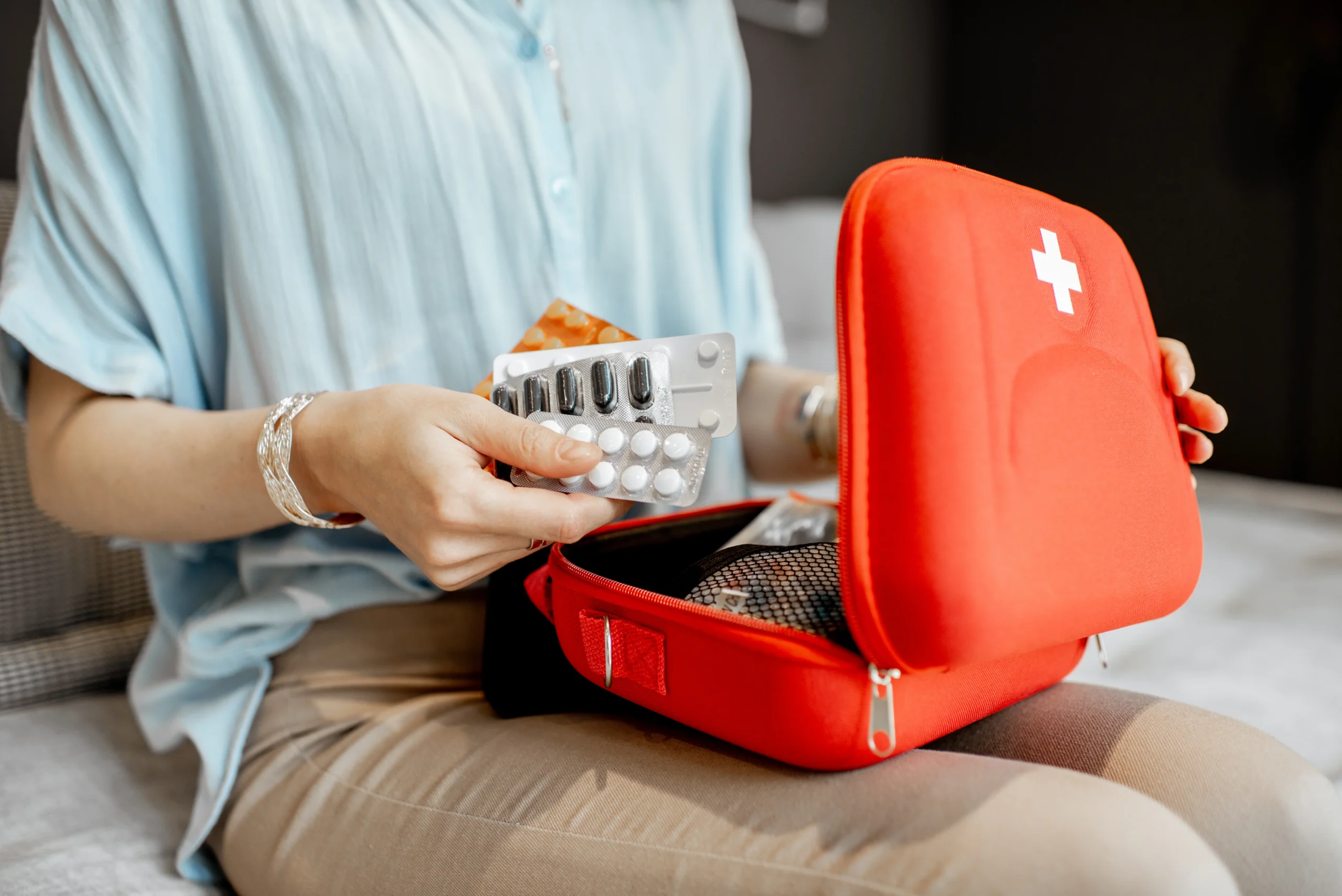

A long trip can shift medication responsibility from one caregiver to another for days or weeks. The handoff works better when refill needs, current labels, pharmacy contacts, storage notes, and the medication record are settled before the outgoing caregiver leaves.
A caregiver handoff is different from ordinary travel packing. One person is leaving, another person is taking over medication tasks, and the person receiving care may still have prescriptions due for refill, refrigerated products, device supplies, or insurance questions during that period. The safest handoff is one that makes those responsibilities visible before the trip begins.
FDA recommends keeping a current medication list and sharing it with a trusted relative, friend, or caregiver. For a long trip, that list becomes part of the handoff packet—but it should be paired with the actual labeled containers, refill status, pharmacy contact information, and clear boundaries about who will contact the pharmacy or prescriber if something changes.
Quick Answer
Before transferring medication responsibility to another caregiver, compare the current medication list with the prescription labels and count forward through the handoff period. If a prescription is likely to run out, contact the pharmacy before the handoff to ask what refill steps are available. Refill timing can depend on remaining refills, prescriber authorization, insurance rules, controlled-medication requirements, stock, and legal limits, so an early fill is never automatic. Give the next caregiver one current medication record, the labeled medicines and supplies, storage instructions, and the contact information needed to resolve questions.
Long Trips Create a Different Medication Risk: Responsibility Changes Hands
Many travel problems are logistical: a bag is delayed, a flight changes, or a refill is needed away from home. A caregiver handoff adds another question—who is now responsible for noticing that a prescription is almost empty, requesting a refill, picking it up, checking the label, or contacting the prescriber?
Do not leave those jobs implied. A short written handoff can prevent two caregivers from assuming the other person handled the same task, or from discovering too late that a prescription has no refill remaining.
Decide Who Is Responsible for Each Medication Task During the Trip
Before the outgoing caregiver leaves, write down who will handle the practical tasks that keep the medication plan running. The person receiving care may manage some of these independently; another caregiver may handle others.
Refill Before You Transfer Responsibility—When the Prescription Is Actually Due
The calendar title is a useful planning reminder, but it should not be read as a guarantee of an advance refill. Count how much medication is available and compare that amount with the dates of the caregiver handoff. If a prescription will likely run out during that period, contact the pharmacy before responsibility changes.
The pharmacy can clarify whether refills remain, when the prescription is eligible to be processed, whether the prescriber must send a new order, whether insurance or plan rules apply, and whether a transfer is possible. Controlled medications and certain other prescriptions can have additional restrictions.
For California households using out-of-state mail-order pharmacies, a separate Board of Pharmacy requirement takes effect July 1, 2026 for nonresident pharmacies serving California. For Medi-Cal members, DHCS also announced an ordering/referring/prescribing enrollment change effective July 23, 2026. These dates are reasons to verify contact and refill plans before a long handoff, not reasons to assume a future claim or shipment will fail.
Build One Handoff Record That the Next Caregiver Can Actually Use
FDA recommends a medication list that includes prescription and nonprescription medicines, vitamins, supplements, allergies, emergency contacts, medication names, strengths, reasons for use, and instructions. For a caregiver handoff, add the practical information needed to connect that list to the pharmacy and prescriber.
- Medication name, strength, dosage form, and current labeled directions.
- Prescriber name and office contact for each prescription when available.
- Dispensing pharmacy name, phone number, and prescription label information.
- Known medication allergies and the emergency contact the caregiver should call.
- Refill status or the approximate date when the current supply is expected to run low.
- Storage notes for refrigerated or temperature-sensitive medicines and any device or supply needs.
- Insurance or plan information needed for pharmacy questions, without placing unnecessary sensitive information on an unsecured sheet.
Caregiver Handoff Check
Review Refill Status Before the Outgoing Caregiver Leaves
Las Palmas Pharmacy can clarify prescription labels, refill status, transfers, pickup, storage instructions, and pharmacy record information before responsibility changes hands.
On Handoff Day, Transfer the Medicines, Supplies, Record, and Contact Path Together
Do not hand over a medication list in one place and the medicine bag in another. Review them together so the incoming caregiver can see which record entry belongs to which labeled container and which supplies go with each product.
Keep prescription identification available rather than relying only on loose pills or memory.
Include prescription medicines, OTC products, vitamins and supplements that are currently used.
Mark which items may need pharmacy or prescriber attention during the handoff period.
Transfer approved storage materials, devices, chargers, needles, or other supplies with the medicine they support.
Do not depend on the outgoing caregiver being immediately reachable from the road.
If the Trip Is Extended or the Caregiver Handoff Changes, Recheck the Plan Early
A delayed return date can turn an adequate medication supply into a refill problem. If the outgoing caregiver will be away longer than expected, the incoming caregiver should use the existing contact plan and ask the pharmacy what refill, transfer, insurance, or prescriber steps are available.
CDC travel guidance recommends carrying enough medicine for the planned trip plus extra for delays and keeping medicines in original labeled containers. That advice is useful for the traveler, but it also highlights why the caregiver staying behind should not depend on a precise return date when a prescription will become due near the end of the handoff period.
Do not stretch doses, skip doses, double doses later, change intervals, or substitute another product to make the supply last. If the available medication will not cover the revised handoff period, contact the pharmacy and prescribing clinician promptly for prescription-specific guidance.
FDA advises that the pet’s veterinarian is the primary source for veterinary medical advice. If the regular veterinarian cannot be reached during an urgent situation, an emergency animal hospital or animal poison control service may be appropriate depending on the problem.
Frequently Asked Questions
What should the outgoing caregiver give the next caregiver before a long trip?
Provide one current medication record, the current labeled prescription containers, relevant OTC medicines and supplements, storage and device information, refill notes, pharmacy contact information, prescriber contacts, allergies, and emergency contacts. Review the record against the labels before the handoff.
Should I refill every prescription early before transferring caregiver responsibility?
No. First check which prescriptions are likely to run out during the handoff period. Refill timing depends on the prescription, remaining refills, prescriber authorization, insurance or plan rules, controlled-medication requirements, stock, and applicable law. Ask the pharmacy what is available for each prescription.
What if a prescription has no refills left when the caregiver is about to leave?
Contact the pharmacy early enough to determine whether the prescriber needs to issue a new prescription. The pharmacy can explain the refill status and what information is needed, but the prescriber determines whether a new prescription or treatment change is appropriate.
Can the incoming caregiver change the medication schedule to make the supply last longer?
No. Do not stretch doses, skip doses, double later doses, change intervals, or alter the route or schedule to extend the supply. Contact the pharmacy and prescribing clinician if the available medication may not last through the handoff period.
Does the July 1 California nonresident-pharmacy rule mean my mail-order prescription will stop?
Not automatically. The July 1, 2026 rule adds California-specific requirements for nonresident pharmacies serving California. It does not mean every mail-order pharmacy will stop shipping or that every delay is caused by the rule. Verify the pharmacy’s status and ask the pharmacy or plan about any specific problem.
What should we do if the outgoing caregiver's trip becomes longer than planned?
Recalculate when each prescription may run low and contact the pharmacy before the supply becomes urgent. Ask about refill eligibility, transfers, plan requirements, prescriber authorization, and stock. Do not change the prescribed regimen to stretch the remaining medication.
Transfer Responsibility With the Medication Plan Already in Order
Before a long trip, review which prescriptions may run low, make one current handoff record, and place pharmacy and prescriber contacts where the incoming caregiver can find them. Las Palmas Pharmacy can clarify labels, refill status, transfers, pickup, storage instructions, and pharmacy record information.