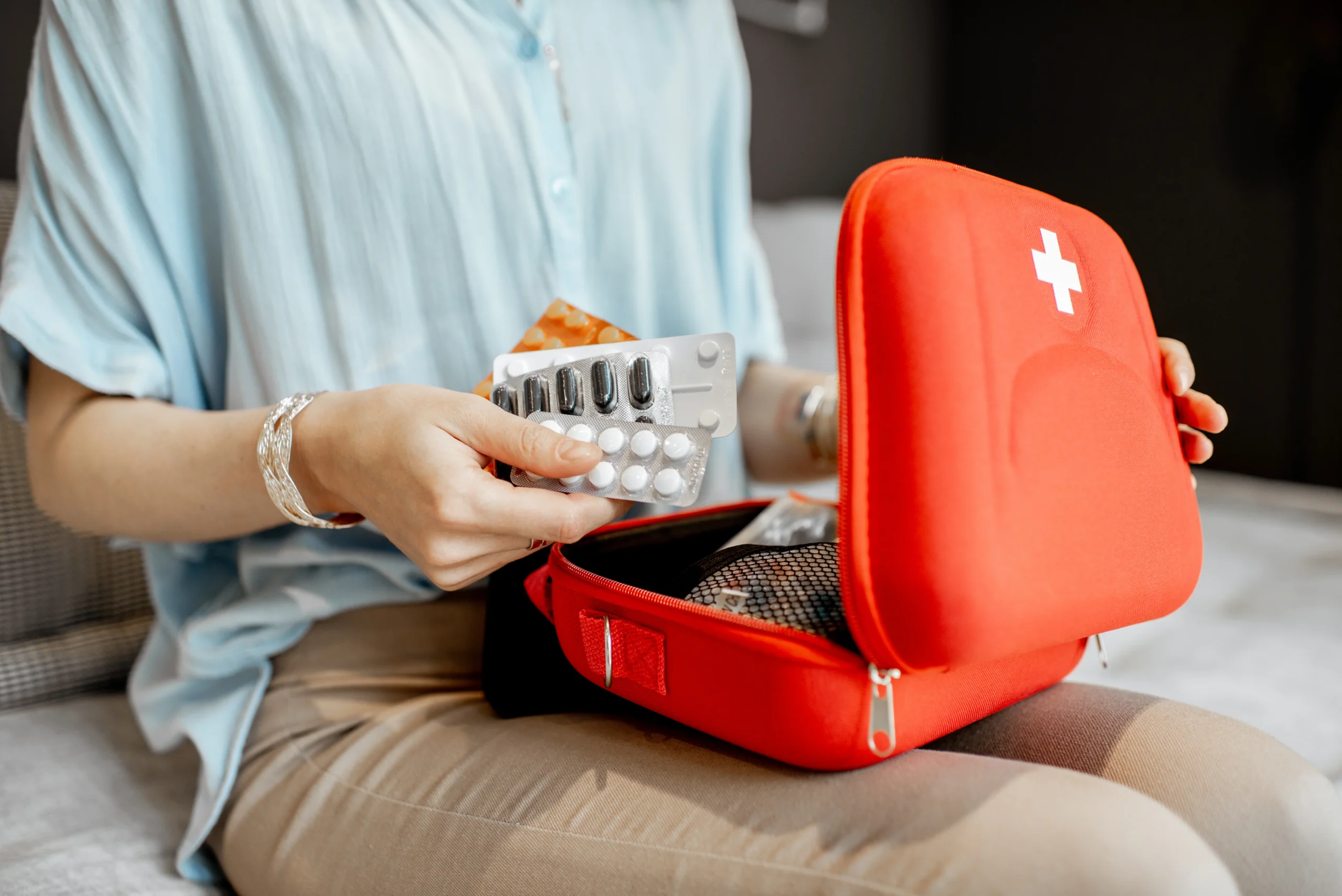

Wildfire smoke can worsen breathing problems before flames are close to home. Californians who use respiratory prescriptions can use May to check refill timing, medication records, storage, and evacuation supplies before smoke conditions change.
California wildfire smoke can travel well beyond the fire line. For people with asthma, COPD, or other lung conditions, smoke may worsen coughing, wheezing, shortness of breath, or other respiratory symptoms. Preparation is easier when prescription questions are handled before air quality changes or an evacuation order disrupts normal pharmacy access.
May is a useful time to review what is already prescribed, how much medication is actually available, where the current medication list is stored, and what would need to travel with the patient during an evacuation. The goal is continuity—not changing the treatment plan or accumulating medicine without checking refill rules.
Quick Answer
CDPH advises people with asthma or another lung disease to keep at least a seven-day supply of medication on hand during wildfire smoke conditions. Its smoke-readiness guidance uses a 7- to 10-day planning range. Check prescription quantities, refill status, expiration dates, storage instructions, and your current medication list before wildfire season. If a refill is not yet available, ask the pharmacy, insurer, and prescriber what options apply. Do not stop, increase, ration, or otherwise change respiratory medication without clinical direction.
Why Respiratory Prescription Planning Should Happen Before Smoke Arrives
CDPH explains that wildfire smoke contains fine particles that can irritate the respiratory system and affect the lungs and heart. The department advises people with asthma or another lung disease to keep at least a seven-day supply of medication on hand and to contact a health care provider if wildfire smoke worsens breathing problems.
Waiting until the air is already smoky can make ordinary pharmacy tasks harder. A local emergency may affect travel, pharmacy hours, delivery routes, power, or the ability to reach a prescriber. A refill that looks routine on a normal week can become more complicated when a household is preparing to leave quickly.
- Check supply early
- Count what is actually on hand rather than relying on the last fill date alone.
- Keep the record current
- List prescription names, strengths, directions, prescribers, and pharmacy contact information.
- Plan for disruption
- Know what must travel with the patient if smoke, road closures, or evacuation changes the routine.
Who Should Pay Closer Attention to Wildfire Smoke and Medication Access
Wildfire smoke can affect anyone, but public-health guidance calls for extra caution among people with asthma, COPD, heart disease, diabetes, chronic kidney disease, and other chronic conditions. Children, older adults, and pregnant people may also need added planning around smoke exposure.
For a household managing respiratory prescriptions, the medication review should be based on the person’s existing care plan. That may include prescribed inhalers, nebulized medications, or other respiratory medicines already ordered by a clinician. A pharmacist can help clarify what the current pharmacy record shows; the prescriber manages treatment decisions and action-plan changes.
Do Not Create a New Smoke-Day Regimen on Your Own
Having extra medication available for an emergency is different from changing how it is used. Follow the prescription label and the clinician’s asthma, COPD, or respiratory action plan. Do not increase doses, shorten intervals, ration medication, or restart an older prescription without appropriate clinical direction.
Build the Seven-Day Supply Plan Around What Is Actually Available
CDPH’s public messaging recommends at least a seven-day medication supply for people with asthma or another lung disease. CDC wildfire guidance recommends storing a 7- to 10-day supply of prescription medicines in a waterproof, child-resistant container that can go with you if you evacuate.
That does not mean every prescription can automatically be filled early. Refill timing may depend on the prescription, remaining refills, the insurer or pharmacy benefit, the prescriber, medication type, and applicable law. Controlled medications can have additional restrictions.
- Check the amount on hand.
Look at the actual remaining quantity, dose counter, or packaged supply instead of estimating from memory.
- Review refill status.
Confirm whether refills remain and when the next fill is available under the prescription and benefit.
- Identify prescriptions that need prescriber action.
If a prescription has no refills or needs renewal, contact the prescriber before smoke conditions disrupt normal access.
- Ask about an emergency supply when needed.
The pharmacy can explain what is possible under the prescription, plan rules, medication type, and California requirements.
- Keep medicines together for evacuation without altering storage requirements.
Use the labeled container and follow temperature, refrigeration, and other storage directions for each product.
Check Refills While Regular Pharmacy Access Is Still Available
Las Palmas Pharmacy can review refill status, prescription records, storage information, and transfer questions before a wildfire or smoke event affects your normal routine.
Check Medication Records, Devices and Storage Along With the Refill
A medication emergency kit is more useful when the information is as current as the medicines. Keep a written or securely stored electronic list that another caregiver or health professional could understand if the usual person is unavailable.
- Does the list show each current prescription name, strength, directions, and prescriber?
- Do inhalers or other devices have enough doses remaining for the planned emergency supply?
- Are expiration dates and package condition acceptable for medicines being placed in the emergency kit?
- Does any medicine require refrigeration or another storage condition that needs an evacuation plan?
- Are spacers, masks, nebulizer supplies, or other prescribed equipment part of the existing care plan and ready to travel?
- Does the caregiver have the pharmacy, prescriber, insurer, and emergency contact information in one place?
Keep medicines in their labeled containers when practical. If a product has special temperature or handling requirements, follow its label and pharmacist instructions rather than applying the same storage rule to every prescription.
When Smoke Conditions Worsen, Follow the Existing Respiratory Plan
CDC advises people with asthma or COPD to follow their health care provider’s advice and their established action plan during wildfire smoke events. Air quality can change quickly, so monitor official local air-quality information and follow instructions from emergency officials.
Smoke exposure should not be used as a reason to improvise medication changes. If the current plan does not explain what to do when symptoms worsen, contact the clinician managing the respiratory condition. The pharmacy can answer dispensing, label, refill, device, storage, and availability questions but cannot replace a clinician’s assessment of new or worsening symptoms.
CDPH advises seeking medical care immediately for chest pain, chest tightness, or shortness of breath during wildfire smoke exposure. CDC also directs people to emergency care for medical emergencies such as severe trouble breathing or chest pain.
Know Which Question Goes to the Pharmacy, Prescriber or Emergency Care
A simple contact plan helps caregivers avoid losing time when conditions are changing.
- Ask the pharmacy
- Refill status, prescription records, transfers, labels, storage directions, pickup, and medication availability.
- Ask the prescriber
- New symptoms, worsening breathing, treatment changes, action-plan questions, or a prescription renewal.
- Use emergency care
- Severe trouble breathing, chest pain, or another medical emergency needs immediate evaluation.
If local officials issue an evacuation order, follow it promptly. Bring the medication kit and current medication record if they can be taken safely without delaying evacuation.
Frequently Asked Questions
Why does California recommend a seven-day medication supply during wildfire smoke?
CDPH advises people with asthma or another lung disease to keep at least a seven-day supply of medication on hand because wildfire smoke can worsen breathing problems and an emergency can disrupt ordinary access to pharmacies, prescribers, transportation, or deliveries.
Does a seven-day recommendation mean my pharmacy can fill every prescription early?
No. Refill timing depends on factors such as the prescription, remaining refills, insurance or pharmacy-benefit rules, the medication type, prescriber authorization, and applicable law. Ask the pharmacy early so there is time to determine what applies to each prescription.
Should I use my respiratory medicines more often when wildfire smoke is heavy?
Use respiratory prescriptions according to the label and the care plan provided by your clinician. Do not increase doses, shorten intervals, or otherwise change the treatment plan on your own. Contact the clinician if the existing plan does not address worsening smoke conditions or symptoms.
What should I put on a respiratory medication list for an evacuation?
Include current prescription names, strengths, directions, prescribers, pharmacy contact information, allergies if documented in your care record, and important device or storage notes. Keep the list with the medication kit and update it when prescriptions change.
Can I keep inhalers or other respiratory prescriptions in a hot car as part of my emergency kit?
Do not assume a vehicle is an appropriate storage location. Follow each product’s labeled storage instructions and ask the pharmacist if you are unsure about heat exposure, refrigeration, or whether a product may have been stored outside its recommended conditions.
When should breathing symptoms during wildfire smoke be treated as an emergency?
CDPH advises immediate medical care for chest pain, chest tightness, or shortness of breath during wildfire smoke exposure. Severe trouble breathing, chest pain, or another medical emergency requires emergency evaluation; call 911 when appropriate.
Review Respiratory Prescriptions Before Smoke Changes the Routine
A seven-day plan starts with an accurate medication list, current refill information, proper storage, and a clear understanding of who to contact. Las Palmas Pharmacy can help with prescription records, refill status, transfers, labels, storage questions, and medication availability.