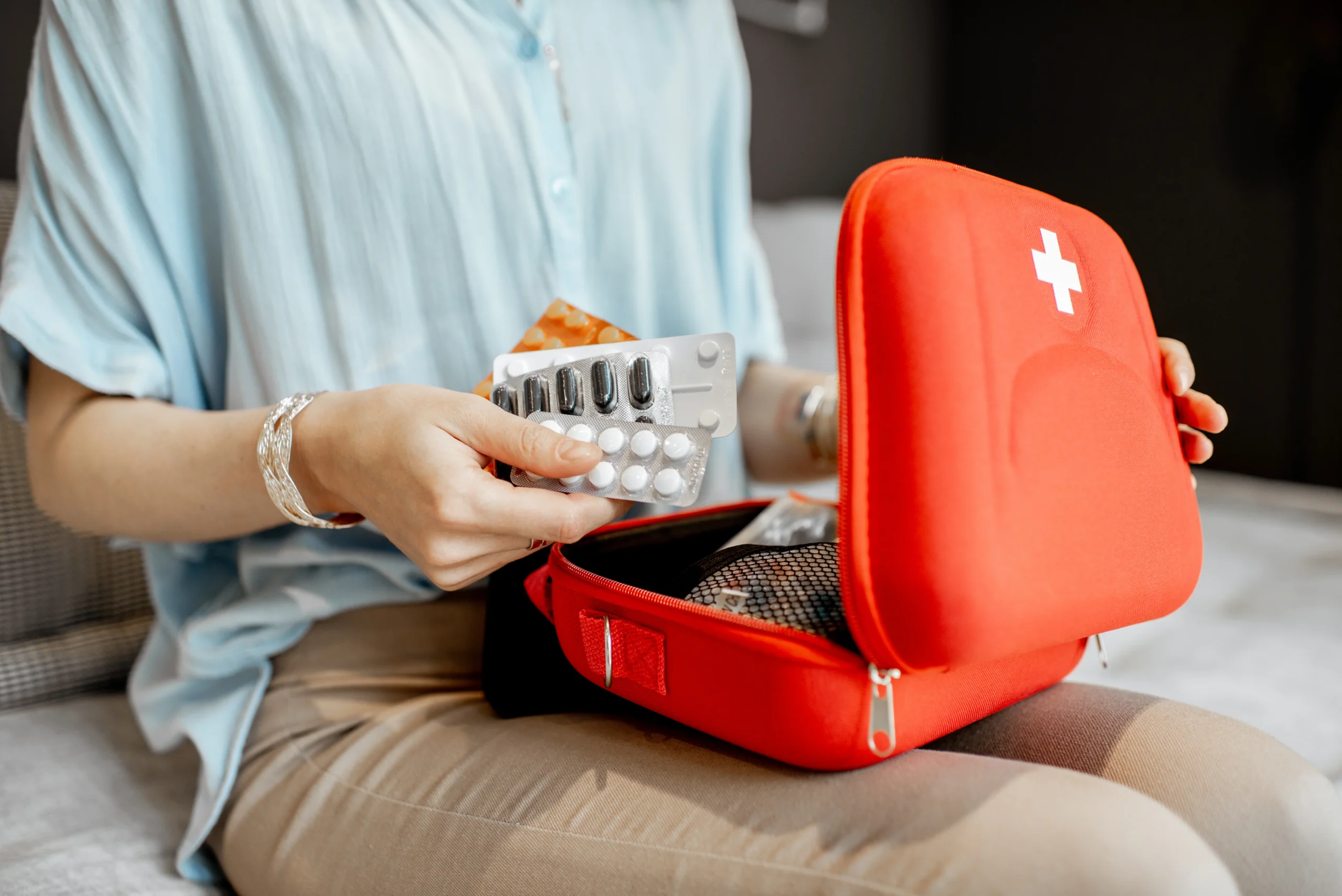

A full medication list may live in a binder or phone, but an emergency or caregiver handoff may happen when those are not available. A compact wallet card gives the next caregiver, pharmacist or emergency team a verified starting point.
A medication list is most useful when it can be reached at the moment someone needs it. During an emergency, hospital visit or caregiver handoff, the person who knows the medication routine best may not be present or may not be able to answer every question.
FDA says a current medication list can help first responders, pharmacists and healthcare professionals make more informed decisions and recommends keeping a copy with you. A wallet-sized card is one practical way to make that information portable.
Quick Answer
Create the wallet card from the current medication record—not from memory. Include prescription medicines, OTC products, vitamins and supplements, along with allergies, an emergency contact, the home pharmacy and key prescribers. For each prescription, use the exact medication name, strength and current directions from the label or verified record. Add a “last updated” date and keep a second copy with the caregiver. Update the card whenever a medicine is started, stopped or changed. The card should not replace prescription bottles, full medical records or prescriber instructions, and it should never be used to decide independently that a medicine should be stopped, restarted or changed.
Why a Wallet Medication Card Helps in Emergencies and Handoffs
FDA calls a medication list potentially lifesaving in an emergency, particularly if the patient cannot communicate. The list can give paramedics, emergency clinicians and hospital staff a clearer picture of what the person normally takes.
AHRQ also publishes a Medicine Wallet Card designed to be shown to doctors and pharmacists. The concept is simple: keep essential medication information with the patient instead of assuming every healthcare system, caregiver and pharmacy can see the same record.
- Emergency handoff
- A responder or hospital team gets a starting list when the patient cannot provide one reliably.
- Caregiver handoff
- A new or temporary caregiver can compare the card with current prescription labels rather than relying on verbal memory.
- Pharmacy or clinic visit
- The card can help reconcile medicines across offices and pharmacies that do not share the same information system.
The card works best when it is brief enough to carry but detailed enough to identify the current medicines accurately.
What to Put on a Wallet Medication Card
FDA recommends including emergency contacts, allergies and details about prescription and nonprescription medicines, vitamins and supplements. AHRQ’s medication-list tools likewise include medicine names, strengths, purpose, directions and emergency-contact information.
Use the Card for Identification, Not Full Clinical History
A wallet card should capture the medication facts most likely to help the next caregiver or healthcare professional. Keep longer medical records elsewhere.
- Patient name and emergency contact.
Include a trusted person who can help confirm the medication history if needed.
- Allergies or serious medicine reactions.
Keep this information visible rather than buried at the bottom of the card.
- Prescription name and strength.
Use the exact current label wording rather than descriptions such as “blood pressure pill.”
- Current directions.
Record when, how and how much the person currently takes according to the verified prescription instructions.
- OTC medicines, vitamins and supplements.
Add regularly used nonprescription products so the card reflects the full medication picture.
- Home pharmacy and key prescribers.
List useful phone numbers so a caregiver or healthcare professional can verify information quickly.
Build the Wallet Card From Verified Labels and Records
A card made from memory can preserve the same errors it is meant to prevent. Start with the current pharmacy labels, the most recent medication list and any prescriber changes that have been confirmed.
If an old bottle shows a different strength or directions, do not choose which version belongs on the card by guessing. Flag the difference and confirm the current prescription first.
- Does the medication name match the current pharmacy label exactly?
- Does the strength match the active prescription?
- Are the directions current, or are they copied from an older bottle?
- Have current OTC medicines and supplements been added?
- Are allergy and emergency-contact details still correct?
- Is the card dated so caregivers can tell whether it is the newest version?
Use the Current Prescription Labels When You Build the Card
Las Palmas Pharmacy can help confirm prescription names, strengths, refill status and pharmacy records before you copy information onto a wallet card.
Use One Dated Version for Caregiver Handoffs
NIA advises caregivers to keep a medication and supplement list handy and share it with other caregivers and healthcare providers. The handoff works best when everyone is using the same version.
Keep one wallet card with the patient and a duplicate with the primary caregiver. If another family member, home-care worker or temporary caregiver takes over, give them a copy of the same dated card rather than rewriting the list from memory.
- Patient copy
- Keep it in a wallet, card holder or another place the patient normally carries.
- Caregiver copy
- Use the same update date so both people know they are working from the same record.
- Backup copy
- A secure phone photo or digital file can provide another copy if the physical card is unavailable.
Update the Card Whenever the Medication Plan Changes
FDA recommends reviewing and updating the medication list whenever something changes, including a new prescription, a different dose or a medicine being stopped. The wallet card should follow the same rule.
Do not wait for the card to “expire” on a calendar. A medication change makes the old version outdated immediately, even if the card was printed yesterday.
- Replace changed information.
Update the medicine, strength or directions only after the change has been confirmed.
- Add newly started medicines.
Include prescription and nonprescription products that are now part of the current routine.
- Remove confirmed discontinued medicines.
Do not remove a medicine solely because an older caregiver believes it was stopped.
- Replace every duplicate copy.
Destroy or clearly mark old cards so they cannot be mistaken for the current medication record.
Know What the Wallet Card Should Not Replace
A compact medication card is a communication aid. It does not replace the prescription label, full health record, pharmacy profile or instructions from the prescriber managing the treatment.
The Card Does Not Authorize Medication Changes
Do not use a wallet card to decide that a medicine should be started, stopped, restarted, doubled, skipped or taken on a different schedule. Use it to identify the current regimen and the right contacts for clarification.
In an emergency, give the card to the healthcare team and answer questions when possible. The clinical team will decide how the information should be used in that situation.
Six Questions to Ask a Pharmacist Before Finalizing the Card
- What is the exact current name and strength of this prescription?
- Are the directions on this bottle still current in the pharmacy record?
- Was this older strength replaced, or does it represent a separate active prescription?
- Which pharmacy phone number should the caregiver keep on the card?
- Does the pharmacy record show a refill or prescriber change that should be reflected on the card
- Which uncertainty needs the prescriber rather than the pharmacy to resolve?
Frequently Asked Questions
What is a wallet medication card?
It is a compact medication record designed to travel with the patient. AHRQ publishes a Medicine Wallet Card, and FDA recommends keeping a current medication list with you so it can be shared with healthcare professionals or used in an emergency.
What information belongs on the card?
Include current prescription medicines, OTC products, vitamins and supplements, plus allergies, emergency-contact information, the home pharmacy and useful prescriber contacts. Use exact names, strengths and current directions.
Should I include medicines taken only when needed?
Yes, if they are part of the current medication routine. AHRQ’s medication-list tools include both regularly scheduled medicines and medicines taken only when needed.
How often should the wallet card be updated?
Update it whenever a prescription, dose, direction or treatment status changes, or when an OTC medicine or supplement is added or removed. Put a last-updated date on the card.
Can the wallet card replace prescription bottles during a caregiver handoff?
No. The card is a quick-reference tool. Keep current prescription labels available because they provide dispensing and instruction details that may not fit on a compact card.
Can Las Palmas Pharmacy help verify the information before I print the card?
Las Palmas Pharmacy can help clarify prescription names, strengths, directions, refill status and pharmacy records. Treatment decisions and uncertain stop/start instructions may require the prescriber.
Keep the Medication Record Where the Patient Goes
A wallet card turns the medication list into a portable handoff tool. Keep it current, date every revision, and make sure the patient and caregiver are carrying the same version.