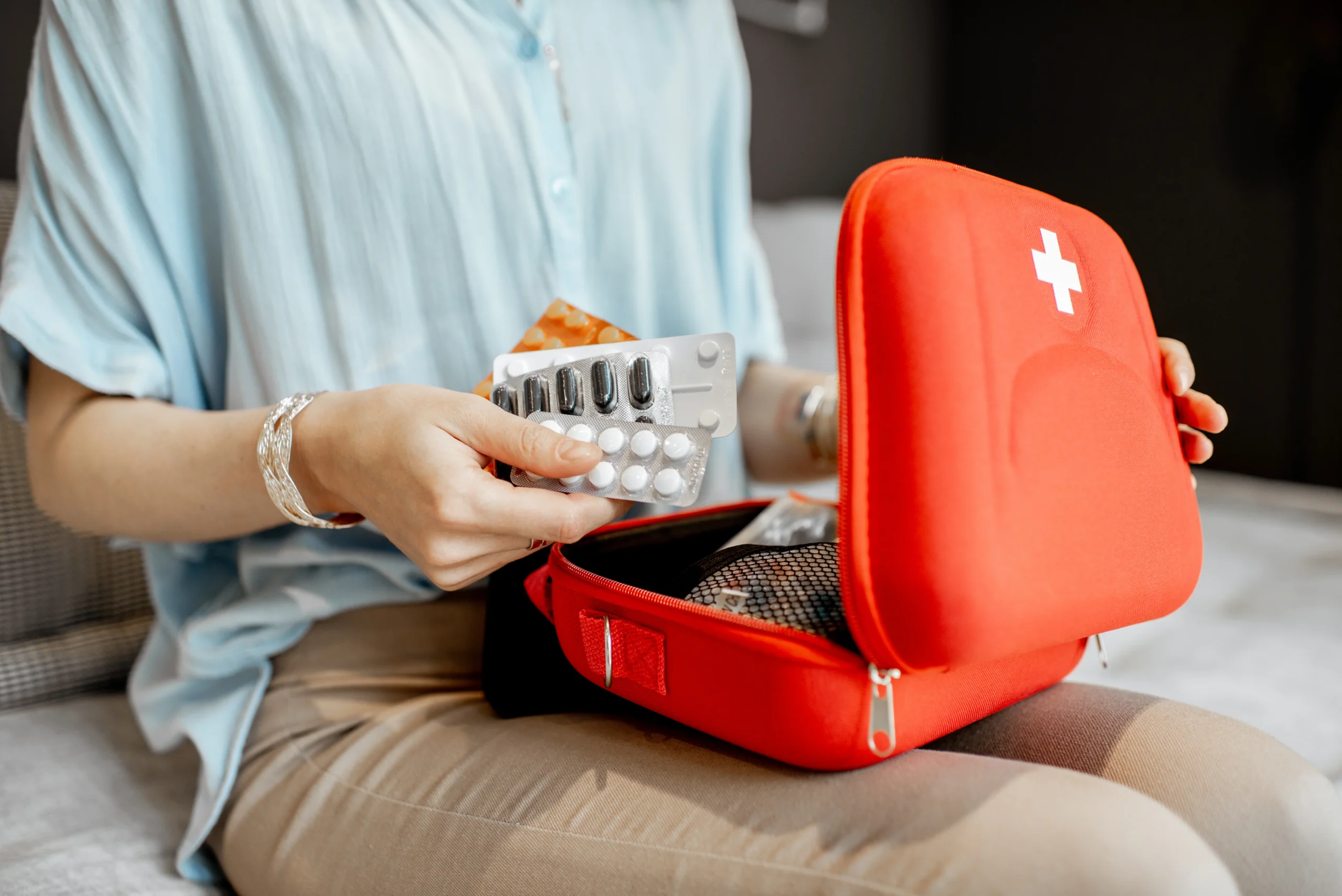

California clocks move forward one hour on March 8. Before Saturday night, compare medication alarms, pill organizers, caregiver notes and label directions so a missing clock hour does not turn into a guessed dose time.
Daylight saving time changes the clock, not the prescription. The challenge is that medication routines are often attached to clock times, meals, bedtime, waking, caregiver shifts or automated reminders. When one hour disappears overnight, those systems may no longer line up the way they did the day before.
The safest preparation is administrative: identify which medicines have timing instructions, make sure every caregiver is using the same schedule, and ask about any prescription whose timing cannot be interpreted confidently from the label.
Quick Answer
Daylight saving time begins Sunday, March 8, 2026. At 2:00 a.m. local time, clocks move directly to 3:00 a.m. Before the change, review the prescription label and update medication alarms, written schedules, pill dispensers and caregiver logs. Do not assume every medicine should automatically move one hour earlier or later. Some directions are tied to a routine clock time, while others may depend on intervals, meals or other instructions. If a dose normally falls near the missing 2:00–3:00 a.m. hour, or if a dose is missed, follow the medication-specific directions and contact a pharmacist or prescriber when those directions are unclear. Do not automatically double the next dose or shorten the interval.
Why Daylight Saving Time Is a Medication-Planning Issue
MedlinePlus recommends building a regular medicine routine and using tools such as alarms and medication charts to remember scheduled doses. Those tools are useful precisely because they reduce reliance on memory.
The spring clock change can disrupt the routine for one morning. A phone may update automatically while a bedside clock does not. A caregiver may write down “8 a.m.” while a pill dispenser is still programmed to the previous time. A person may wake later because the clock advanced during the night.
- Electronic alarms
- Phones may update automatically, but medication apps and device settings should still be checked.
- Manual clocks
- Kitchen, bedside and appliance clocks may need to be changed by hand before the next dose is due.
- Caregiver records
- A written schedule should match the alarms and the current prescription label after the time change.
The goal is not to invent a special daylight-saving dosing rule. It is to prevent conflicting reminders from creating a medication error.
What Happens in California on March 8, 2026
NIST states that daylight saving time begins March 8, 2026 at 2:00 a.m. local time. At that point, clocks advance to 3:00 a.m., so the civil clock does not display times between 2:00 and 2:59 a.m. that morning.
For many households, that change is simply a reminder issue. It deserves more planning when a medication is scheduled overnight, several times each day, by a defined interval, around meals, or according to another specific instruction.
The Missing Hour Does Not Create a Universal Medication RuleThe correct plan depends on the actual prescription directions. Do not move a dose, compress an interval or add a dose simply because the clock advanced.
Identify What Kind of Medication Schedule You Actually Follow
Before changing an alarm, read the current label. MedlinePlus recommends asking the pharmacist or provider when and how often a medicine should be taken and whether timing depends on meals or another instruction.
Use the wording on the prescription rather than assuming that every schedule means the same thing.
- Clock-time directions.
If your established plan uses a specific clock time, check whether the March 8 change affects that time and ask if anything is unclear.
- Defined intervals.
Directions written around an interval should not be converted into a different interval on your own because of daylight saving time.
- Meal-related directions.
If the label connects the medicine with food, meals or an empty stomach, keep that instruction in view when updating reminders.
- Bedtime or morning routines.
If timing follows waking or bedtime, verify that alarms and caregiver notes still match the intended routine after the clock change.
- Multiple instructions.
When timing depends on more than one condition, such as an interval plus another instruction, ask the pharmacist or prescriber before altering the plan.
Prepare the Medication Schedule Before Saturday Night
A five-minute review on March 7 is easier than trying to reconstruct a dose time after the clock has changed.
- Which medicines are normally taken at bedtime, overnight or early Sunday morning?
- Do any directions use a defined interval instead of a general routine time?
- Will the phone, pill dispenser, smart speaker or medication app update automatically?
- Do any manual clocks or written caregiver schedules need to be changed?
- Is more than one person responsible for administering or documenting doses?
- Is there any prescription whose timing is not clear enough to plan without asking?
Ask About the Exact Label—Not a Generic Clock-Change Rule
Las Palmas Pharmacy can help explain label directions, medication reminders, refill status and pharmacy records. Prescriber input may be needed when the treatment plan itself must change.
If a Dose Normally Falls Between 2:00 and 3:00 a.m., Ask Before the Clock Moves
On March 8, the local clock moves from 1:59 a.m. to 3:00 a.m. A scheduled time inside the missing hour therefore needs medication-specific interpretation rather than a guess made after the fact.
Have the prescription name, current label, usual administration time and surrounding dose times available when you call. Those details let the pharmacist or prescriber answer the actual scheduling question instead of working from an incomplete description.
- Do not add a catch-up dose
- A missing clock hour does not by itself authorize an extra dose.
- Do not compress the schedule
- Do not shorten the time between doses unless the prescription-specific instructions allow it.
- Ask before the weekend
- If the question is predictable, clarify it before the overnight clock change rather than waiting until the dose is due.
If a Dose Is Missed or the Timing Becomes Unclear, Use Medication-Specific Instructions
MedlinePlus advises patients to know what to do if a dose is missed and to check with a healthcare provider or pharmacist when that instruction is unclear. Its general medication-organization guidance also warns against automatically taking a double dose.
That approach applies to daylight saving time too. Do not create a universal “one hour late” or “one hour early” rule for every medicine. Check the label, medication information and the instructions previously provided for that prescription.
Missed-Dose Instructions Are Not Interchangeable
Different medicines can have different missed-dose directions. Use the instructions for the specific prescription and contact the pharmacist or prescriber if you cannot determine what applies.
Six Questions to Ask a Pharmacist or Prescriber Before March 8
- Does this prescription depend on a specific clock time or on a defined interval
- What should I do if the usual dose time falls inside the missing 2:00–3:00 a.m. hour?
- Should meal, bedtime or waking instructions stay tied to those routines after the clock changes?
- What are the missed-dose directions for this specific medication?
- Do any caregiver logs, dispensing devices or medication alarms need to be reset manually?
- Which timing questions can the pharmacy answer, and which require the prescriber who manages the treatment?
Frequently Asked Questions
When does daylight saving time start in California in 2026?
Daylight saving time begins Sunday, March 8, 2026. NIST states that at 2:00 a.m. local time, the clock advances to 3:00 a.m.
Should I automatically take every medication one hour earlier after the clock changes?
No. There is no universal daylight-saving rule for every prescription. Follow the actual label directions and ask a pharmacist or prescriber when the timing depends on an interval, meals, sleep or another specific instruction.
What if my usual medication time is between 2:00 and 3:00 a.m.?
That local clock hour does not occur on March 8. Ask about the specific prescription before the clock change rather than choosing a replacement time on your own.
Should I reset medication alarms before going to bed?
Review them before bedtime Saturday. Some phones and devices update automatically, while manual clocks, written schedules and certain reminder systems may not. Make sure every reminder matches the intended medication plan.
What should I do if I miss a dose during the clock change?
Use the missed-dose instructions for that specific medicine and contact the pharmacist or prescriber if they are unclear. Do not automatically double the next dose or shorten the interval.
Can Las Palmas Pharmacy help me plan for daylight saving time?
Las Palmas Pharmacy can help explain prescription-label directions, refill status and pharmacy records and can identify when a timing question should go back to the prescriber managing the treatment.
Change the Clocks—Not the Prescription by Guesswork
Review alarms, caregiver logs and label directions before March 8. If one prescription does not fit cleanly around the missing hour, ask about that medication specifically rather than applying a general one-hour rule.