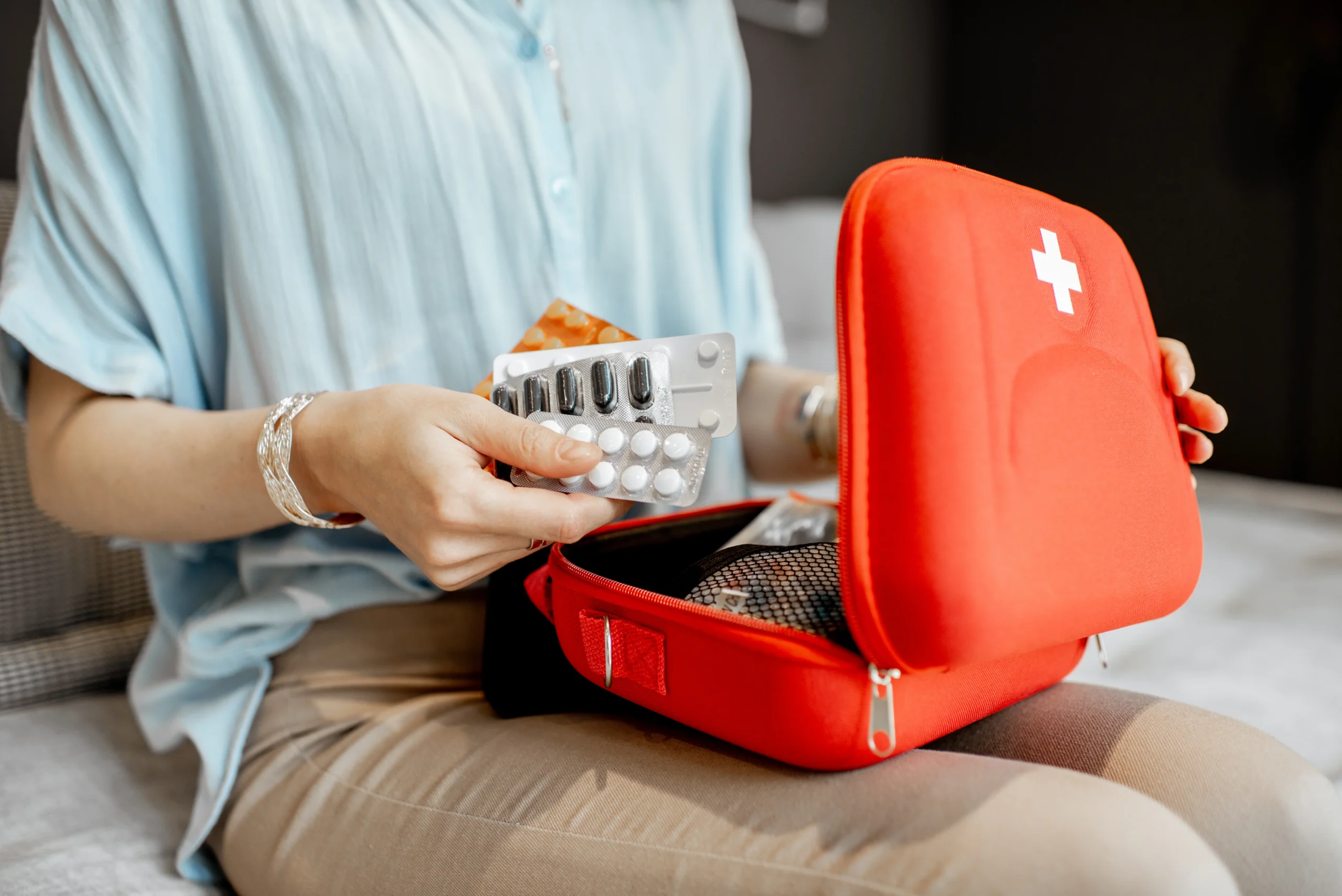

National Poison Prevention Week falls in March, making this a practical time to recheck where prescriptions, OTC medicines, vitamins, supplements and pill organizers are stored—and whether visitors can bring medicines into a child’s reach without realizing it.
Medication storage problems usually develop gradually. A daily medicine moves from a cabinet to a nightstand. Vitamins stay on the counter. A weekly pill organizer sits beside a chair. A grandparent visits with medicine in a purse. Each change can make a product easier for a child or another household member to reach.
March is a good time to reset those habits. California Poison Control marks National Poison Prevention Week from March 15 through March 21, 2026, with a statewide focus on poison awareness and prevention. The goal of a home review is simple: make current medicines easy for the intended patient to manage while keeping them secure from unintended access.
Quick Answer
Before choosing a new pharmacy, search the California State Board of Pharmacy’s official license database and match the exact business name and location. Open the license record and review its status and any listed Board actions. Then call the destination pharmacy with the prescription details you are permitted to share and ask whether you are moving an unfilled prescription, remaining refills or a prescription that needs a new order from the prescriber. Do not cancel or abandon the current pharmacy arrangement until you understand what the new pharmacy can receive and what additional steps may be required.
Why March Is a Useful Time to Recheck Medication Storage
California Poison Control identifies March 15–21, 2026 as National Poison Prevention Week. Its medicine-safety guidance advises households to keep medicines in locked storage, out of sight and reach of children, return products to storage after use, and keep child-resistant caps secured.
This is not a new March household-storage law. It is a safety checkpoint. The California Department of Public Health also emphasizes a broader medication-storage principle in its refrigeration guidance for healthcare facilities: products should be stored according to manufacturer requirements, including temperature, humidity, light and security needs.
- No one-rule-fits-all location
- A secure cabinet may work for many medicines, but product-specific temperature or light instructions still control.
- Security is part of storage
- Keeping a medicine at the right temperature is not enough if a child or visitor can easily reach it.
- Storage should be rechecked
- Household routines, travel, illness and visitors can move medicines away from their usual safe location.
The practical household question is not only “Where do we keep medicine?” It is “Where is every medicine right now, and can the wrong person reach it?”
Choose a Storage Location Young Children Cannot See or Reach
CDC’s Up and Away campaign advises parents and caregivers to store medicines, vitamins and supplements in a location that young children cannot reach or see and to put them away after every use.
California Poison Control goes a step further by advising use of a locked cabinet for medicine storage. A secure location is especially important for products used every day, because frequent use makes it easier to leave them on a counter, table or bedside surface.
“High” Does Not Always Mean “Secure”
Children climb, move chairs and open drawers. A storage area should be difficult to access, consistently used by every adult in the household and appropriate for the product’s storage instructions.
Do not leave medicines on a kitchen counter or at a sick child’s bedside simply because another dose may be needed later. Return them to the secure storage location after each use.
Recheck Caps, Original Containers and Pill Organizers
Child-resistant packaging is designed to slow a child down; it is not child-proof. CDC advises relocking safety caps after every use. California Poison Control also recommends keeping medicines in their original containers with child-resistant caps when appropriate.
Original pharmacy labels carry the patient name, medication name, strength, directions and dispensing information. Do not combine different prescription medicines into one unlabeled bottle just to reduce clutter.
- Relock the cap every time.
If the bottle has a locking cap, close it fully before the medicine leaves your hand.
- Keep labels readable.
A current pharmacy label helps identify the medication and avoids confusion with older bottles.
- Secure pill organizers too.
Many weekly organizers are not child-resistant, so they should be stored in the same secure manner as medicine bottles.
Separate old bottles from current use.
If an older strength or discontinued prescription remains at home, do not leave it mixed with the active supply.
If you use a pill organizer for adherence, do not stop using it solely because it is not child-resistant. Instead, keep the organizer secured and make sure the intended patient or caregiver can identify what belongs in it.
Do Not Forget Purses, Backpacks, Coats and Visitor Medicines
California Poison Control and CDC both warn that visitor belongings can become medication access points. A purse placed on the floor, a backpack on a chair or a coat with a pill bottle in the pocket may be easier for a child to reach than the household medicine cabinet.
Before children visit—or before a guest with medicines arrives—decide where bags and personal items will go. The same check applies during travel, when usual storage habits may not be available.
- Are medicines stored in any purse, tote, briefcase, backpack or coat pocket?
- Are those items placed where a child can reach or open them?
- Is a daily medicine sitting on a nightstand, table or counter for convenience?
- Is a pill organizer being stored more casually than prescription bottles?
- Do grandparents, babysitters or overnight guests know where the secure medicine area is?
- Is the Poison Help number saved where caregivers can find it quickly?
Bring the Label or Product Name When You Ask
Las Palmas Pharmacy can help clarify prescription-label storage instructions, refrigeration questions and pharmacy records for medicines it dispenses.
Follow the Label for Temperature, Moisture, Light and Refrigeration
Not every medicine belongs in the same cabinet, and not every medicine that feels “sensitive” should be refrigerated. Product labeling and manufacturer instructions determine the storage conditions for a specific medicine.
CDPH’s medication-refrigeration bulletin is directed to healthcare facilities, not households. It notes that medications requiring refrigeration are generally expected to be stored at 36°F to 46°F in those regulated settings and stresses adherence to manufacturer storage requirements.
- Room-temperature products
- Follow the labeled temperature range and protect the product from excess heat, moisture or light when instructed.
- Refrigerated products
- Use the product-specific instructions; do not move a medicine in or out of refrigeration based on guesswork.
- Temperature excursion
- If a medicine was left in a hot car, frozen, or stored outside its stated range, contact the pharmacy before deciding whether to use it.
Bathrooms and areas near stoves, windows or heating vents can expose some products to heat or moisture. Choose the storage location based on the label rather than convenience alone.
Know What to Do After a Possible Medication Exposure
If you think a child or another person may have swallowed, chewed or otherwise been exposed to a medicine unexpectedly, do not wait for symptoms before asking for poison guidance. California Poison Control provides free help 24 hours a day at 1-800-222-1222.
Have the medicine container or label available if you can do so safely. Do not induce vomiting or give food, drink or another substance unless Poison Control or an appropriate healthcare professional tells you to do so.
Possible Poison Exposure
Call California Poison Control at 1-800-222-1222 for poison-related questions or suspected exposure. Call 911 for a life-threatening emergency, severe breathing difficulty, loss of consciousness, seizure or another immediately dangerous condition.
Six Questions Patients Can Ask a Pharmacist About Medication Storage
Use the exact medication name and current label whenever possible.
- What storage temperature does this specific prescription require?
- Should this medicine be refrigerated, or should it stay at room temperature?
- Does this product need protection from light, moisture or heat?
- What should I do if the medicine was left outside its labeled temperature range?
- Is this older bottle still part of the active prescription, or was it replaced?
- How should I store a pill organizer or travel supply so children cannot access it?
Frequently Asked Questions
Is March officially Poison Prevention Month?
The national observance highlighted by California Poison Control is National Poison Prevention Week, which runs March 15–21, 2026. This article uses March as a broader household medication-safety checkpoint.
Are child-resistant medicine caps child-proof?
No. Child-resistant packaging is designed to make opening more difficult, but children may still be able to open it. Relock the cap after every use and keep the medicine out of reach and sight in secure storage.
Should all medicines be stored in the refrigerator?
No. Refrigeration is product-specific. Follow the current label, manufacturer instructions or pharmacy guidance. Putting a medicine in the refrigerator when the label does not call for it can be inappropriate for some products.
What should I do if a refrigerated medicine was left out?
Do not guess whether it is still usable. Keep the product and label available and contact the dispensing pharmacy or manufacturer for product-specific guidance about the temperature excursion.
Are weekly pill organizers safe around children?
Many pill organizers are not child-resistant. They can still be useful for the intended patient, but they should be stored securely and out of children’s reach and sight just like medicine bottles.
Who should I call if I think a child got into a medicine?
Call California Poison Control at 1-800-222-1222 right away for a suspected poison exposure, even if you are uncertain. Call 911 for a life-threatening emergency or immediately dangerous symptoms.
Make Safe Storage the Default After Every Dose
A March household review can identify medicines that have drifted onto counters, bedside tables, visitor bags or other easy-access locations. Put current products back into secure storage and follow the label for each medicine’s temperature and handling requirements.