Wildfire smoke, evacuation orders, road closures and power outages can interrupt normal medication routines quickly. Preparing prescriptions before conditions worsen gives patients and caregivers a clearer plan if they have to leave home or reach a different pharmacy.
Wildfires rarely disrupt only one part of daily life. A fire can close roads, force an evacuation, interrupt electricity, change air quality and make a familiar pharmacy difficult to reach. Medication planning belongs in the same go-bag conversation as water, identification, chargers and emergency contacts.
That preparation is especially relevant during California’s dry, windy periods. The National Weather Service notes that Santa Ana winds are most common from September through May in Southern California and can increase wildfire risk because the winds are strong and dry. Elsewhere in the state, wildfire, smoke and evacuation planning can be just as important even when Santa Ana winds are not the weather driver.
Quick Answer
Before wildfire conditions or an evacuation warning, keep at least a seven-day supply of your regular medications when your prescription, insurance rules and refill timing allow. Maintain a current medication list with drug names, strengths, directions, allergies, prescriber and pharmacy contacts. Put medicines and essential medical supplies where they can leave with you quickly, and follow the label for refrigeration or temperature limits. If access to your usual pharmacy may be disrupted, call early rather than waiting until you are down to the last dose.
Why Wildfire and Santa Ana Conditions Can Disrupt Medication Access
California’s January 2025 Palisades Fire showed how quickly fire weather can affect transportation and daily services. CAL FIRE updates documented Santa Ana winds, Red Flag Warnings, evacuation changes, downed infrastructure and road restrictions during the incident. A patient who normally picks up medicine on the way home may suddenly be dealing with a closed route, a temporary relocation or a pharmacy operating under emergency conditions.
Smoke can create a separate problem. California Department of Public Health guidance says wildfire smoke contains fine particles that can affect the lungs and heart. People with asthma or another lung disease are advised to keep at least a seven-day supply of medication on hand and contact a health care provider if nearby wildfire conditions worsen breathing problems.
The practical goal is not to predict exactly when a fire will occur. It is to remove avoidable medication problems before an evacuation or outage makes them harder to solve.
California-Wide Note
Santa Ana winds are primarily a Southern California weather pattern. The medication-preparedness steps in this guide apply more broadly to wildfire, smoke, evacuation and power-outage risks across California.
Start With a Seven-Day Medication Supply When Feasible
CDC emergency-supply materials have long included a seven-day supply of medications as part of disaster preparedness. That does not mean every prescription can simply be refilled a week early. Insurance limits, controlled-substance rules, prescription status, stock and the medication itself can affect what is possible.
Instead of assuming, check how many doses you actually have and compare that amount with your next eligible refill date. If a wildfire watch, Red Flag Warning or evacuation concern is developing, contact the pharmacy before the situation becomes urgent.
- Count what you have.
Check the remaining quantity of each daily prescription instead of estimating from the bottle.
- Review refill status.
Know which prescriptions have refills available and which may require a new order from the prescriber.
- Call before access is disrupted.
Ask about refill timing, stock, transfer options and any insurance issue while normal communication is still available.
- Keep the supply together.
Store emergency-ready medicines in a way that preserves label information and allows you to take them quickly if you evacuate.
Your Current Medication List May Be as Important as the Bottles
During an evacuation, a written or securely stored medication list can help another pharmacy, urgent-care team or caregiver understand what you normally take. FDA emergency-preparedness guidance recommends keeping an up-to-date list of medications, and California public-health guidance also advises including medications and copies of prescriptions in an emergency kit.
Do not write only the medication name. Include enough detail to distinguish one prescription from another and enough contact information to reconnect with your usual care team.
01: Medication name, strength and dosage form.
02: Directions shown on the current prescription label.
03: Known medication allergies or important sensitivities.
04: Prescriber name and office contact information.
05: Usual pharmacy name, phone number and location.
Before Fire Weather Worsens
Check Refill Timing Before You Need to Leave
Las Palmas Pharmacy can help you review refill status, prescription-label storage directions, transfer questions and what information to keep with your medication list.
Some Medications and Medical Supplies Need Extra Planning
Not every medication can sit in the same emergency bag. Some products have temperature limits. Some medical devices need electricity, batteries or additional supplies. Some prescriptions may be difficult to replace quickly because of legal, insurance or stock restrictions.
- Temperature-sensitive medicines
- Read the label and pharmacy instructions before choosing a cooler, ice pack or alternate storage method.
- Inhalers and respiratory medicines
- Keep the medication and any related spacer, nebulizer supplies or written action plan together if they are part of your normal care.
- Diabetes supplies
- Plan for medications plus testing, injection or device supplies you normally rely on.
- Medication-dependent devices
- Include chargers, batteries or manufacturer instructions when a device is required to use or monitor treatment.
Do not improvise a storage temperature or switch a medicine because an emergency is developing. When a product has special storage requirements, ask the pharmacist how the labeled instructions apply to the travel or outage situation you are preparing for.
California Emergency Rules Can Help, but an Emergency Refill Is Not Automatic
California pharmacy law gives pharmacists limited emergency authority in certain circumstances. Business and Professions Code section 4064 allows a pharmacist, using professional judgment, to refill a dangerous drug or device without prescriber authorization when the prescriber is unavailable and interruption of therapy could significantly affect the patient’s well-being.
That authority does not mean every prescription can be refilled early, transferred or replaced on request. The pharmacist must consider the medication, available records, applicable state and federal requirements, prescription status and the circumstances of the emergency. Insurance coverage is a separate issue and may require a plan override or other authorization.
During a formally declared emergency, the California State Board of Pharmacy may also issue temporary waivers or emergency instructions affecting pharmacy operations. Those measures are designed to preserve access when normal requirements are difficult to meet, but patients should still contact the pharmacy or health plan for case-specific instructions.
Do Not Wait for an Emergency Rule
If you already know that evacuation or road closure is possible, call the pharmacy while normal systems are working. Emergency authority is a backstop, not a substitute for early refill planning.
Wildfire Smoke Adds a Medication Planning Issue for People With Lung or Heart Conditions
CDPH advises people with underlying lung or heart problems to reduce smoke exposure and notes that wildfire smoke can worsen asthma symptoms. For people with asthma or another lung disease, the department recommends keeping at least a seven-day supply of medication on hand.
Keep rescue and maintenance medicines where they remain accessible if you have to move to another room, vehicle, shelter or temporary lodging. Bring the devices or supplies that are normally used with them. Follow an existing asthma or COPD action plan if one has been provided by your clinician.
Do not increase, decrease or replace medication because the air is smoky unless your clinician has given you instructions to do so. If breathing problems worsen, follow the medical plan you have been given and seek appropriate care. CDPH advises seeking medical care for symptoms such as chest pain, chest tightness or shortness of breath.
Plan Separately for Refrigerated or Temperature-Sensitive Medicines
Power outages can create medication questions even when a home is not directly threatened by fire. FDA guidance says some medicines, including insulin and certain liquid antibiotics, require refrigeration and may lose potency when storage conditions are not maintained.
The safest approach is product-specific. Keep refrigerator and freezer doors closed as much as possible, know the labeled storage range for the medicine, and contact the pharmacist, prescriber or manufacturer if you are unsure whether a product remained within acceptable conditions.
FDA notes that when a temperature-sensitive drug is necessary to sustain life and no replacement is immediately available, emergency decisions may differ from routine storage practice. That is not a reason to guess. Contact a health professional as soon as possible and replace temperature-compromised medication when advised.
- What temperature range does the label require?
- How long was power unavailable, and was the refrigerator kept closed?
- Was the medicine exposed to direct heat, smoke, water or contamination?
- Does the manufacturer provide specific room-temperature allowances for this product?
- Can a replacement be obtained promptly?
- Who should confirm whether the medicine remains usable?
Medication Go-Bag Checklist for a California Evacuation
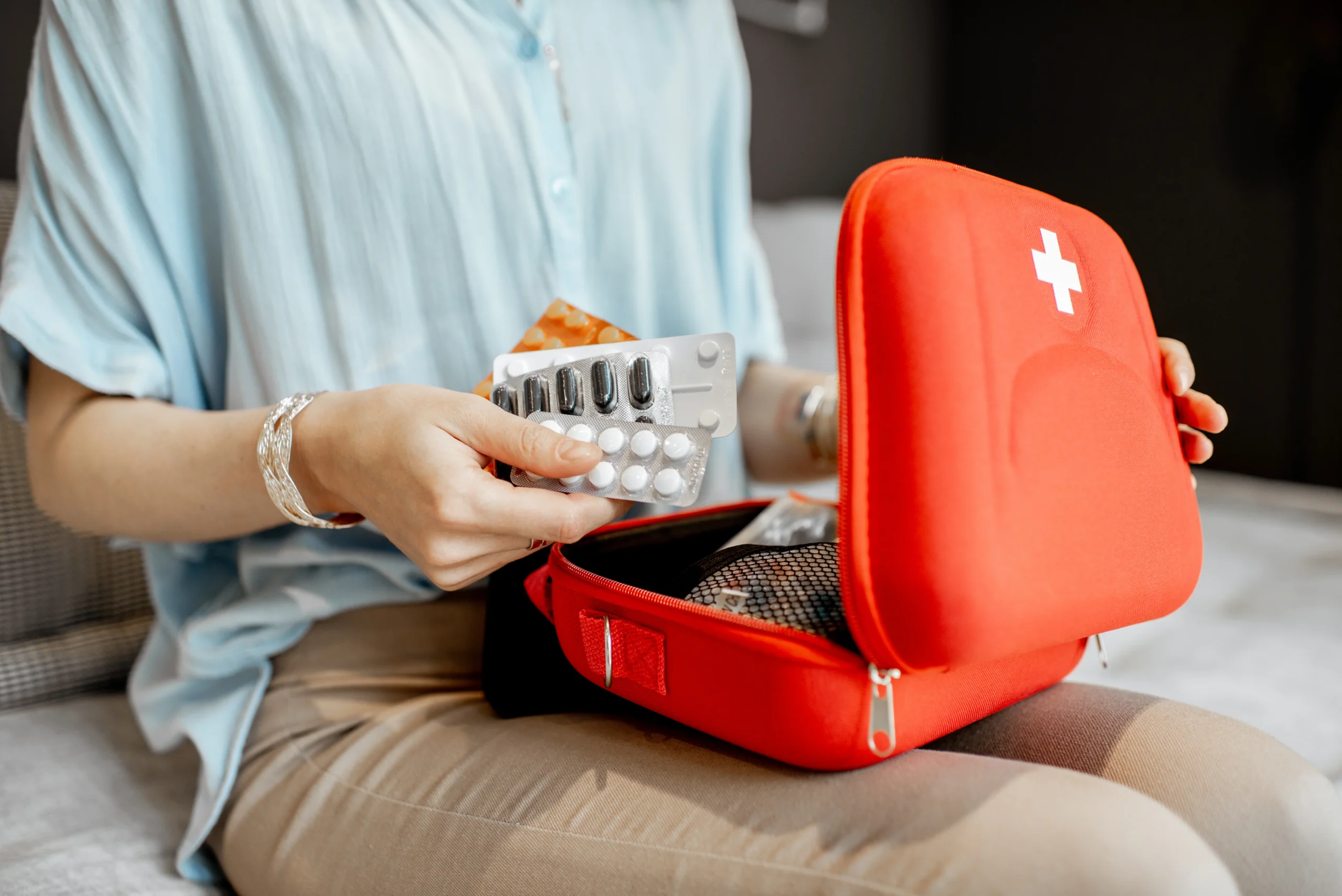
CAL FIRE recommends keeping an emergency supply kit or evacuation bag ready before evacuation becomes necessary. Add medication-specific items to that kit instead of assuming there will be time to gather them after an order is issued.
At least seven days of regular medication when feasible under the prescription and refill rules.
A current medication list with names, strengths, directions and allergies.
Prescriber, pharmacy and health-plan contact information.
Prescription labels or copies of prescription information that help identify each medicine.
Essential administration and monitoring supplies, such as syringes, spacers, meters or device accessories when applicable.
A storage plan for refrigerated or temperature-sensitive medicine based on its actual labeled requirements.
Chargers, batteries or power backups for medication-related devices you normally use.
Health-plan card, identification and receipts if you must obtain medication away from your usual pharmacy.
Keep medication containers dry and protected from ash, smoke, water and direct heat. If a bottle, package or medicine appears damaged after a disaster, do not assume it is safe merely because the label is still readable. FDA advises contacting a pharmacist or health professional when there is concern about contamination or storage conditions.
Frequently Asked Questions
Should every California household keep seven days of prescription medication for wildfire season?
A seven-day medication supply is a common emergency-preparedness target in CDC materials, and CDPH specifically advises people with asthma or another lung disease to keep at least seven days of medication available during wildfire conditions. Whether an early refill is possible depends on the prescription, refill status, insurance rules and applicable pharmacy law. Check your supply before fire weather worsens and ask the pharmacy what can be done.
What information should be on an emergency medication list?
Include each medication’s name, strength, dosage form and current label directions, along with medication allergies, prescriber contact information and the phone number for your usual pharmacy. Also list important devices or supplies used with the medication. Update the list whenever your treating clinician changes the regimen.
Can a California pharmacist refill a prescription if my prescriber cannot be reached during an emergency?
It indicates that the prescriber NPI attached to the claim may not meet the Medi-Cal enrollment requirement being checked. The pharmacy can report the message, while the prescriber and DHCS handle the provider enrollment process.
What should I do with refrigerated medicine during a wildfire power outage?
Follow the storage instructions for that specific product. Keep refrigerator or freezer doors closed as much as possible and avoid guessing about temperature exposure. FDA advises contacting the pharmacist, prescriber or manufacturer if you are unsure whether a temperature-sensitive medicine remains usable. Replacement may be needed depending on the product and the length and conditions of the outage.
Can wildfire smoke affect people who use inhalers or other respiratory medicines?
Yes. CDPH says wildfire smoke can worsen asthma and other respiratory problems. People with asthma or another lung disease should keep medication available, reduce smoke exposure and follow any action plan provided by their clinician. Seek medical care when breathing symptoms become concerning, especially for chest pain, chest tightness or shortness of breath.
Can Las Palmas Pharmacy help if I may need to evacuate?
Las Palmas Pharmacy can help with non-emergency questions about refill status, prescription transfers, medication lists, label storage directions and preparing prescriptions before a disruption. Availability and insurance coverage can vary by prescription. For evacuation orders, fire conditions or medical emergencies, follow local emergency officials and appropriate medical services rather than waiting for a pharmacy response.
Prepare Medications Before the Evacuation Alert
Count your doses, update your medication list and check any special storage requirements while roads, power and pharmacy access are still normal. Las Palmas Pharmacy can help with refill, transfer and prescription-label questions before conditions become urgent.